
LNG Exports + Gas-Fired Electric + Cold Snap = Higher NG Prices
 Everyone wants to know where the price of natural gas will go in the future. Ask one analyst, and he/she will tell you it’s going lower. Another? Staying where it is–for a long time. And yet another will tell you the price just HAS to go higher. Of course “the price” of natural gas is not just one price. Most people refer to the benchmark Henry Hub price, used for trading futures contracts on the NYMEX exchange. All other prices where gas is bought and sold are somehow compared to or even connected with the price of gas at the Henry Hub. We spotted a speculative post on the Seeking Alpha investor’s website from someone we often read, Andrew Hecht, muses that he thinks the price of natgas is heading higher. He makes a convincing case. We boil it down and simplify it to this: an increase in LNG exports, of which we wrote about yesterday (see US Exports Now 2.4% of NatGas Production, Heading for 11% in 2019 //marcellusdrilling.com/2017/08/us-exports-now-2-4-of-natgas-production-heading-for-11-in-2019/), plus scads of new natgas-fired electric plants coming online, which we write about all the time, plus a cold snap across the country, but particularly in the northeast, would necessarily drive natural gas prices at the Henry Hub and other locations MUCH higher. Is he right?…
Read More “LNG Exports + Gas-Fired Electric + Cold Snap = Higher NG Prices”
 New York’s corrupted Dept. of Environmental Conservation (DEC) is running scared. For 19 months the DEC has intentionally delayed granting a tiny, 9-mile spur Millennium Pipeline wants to build in Orange County, NY the necessary federal 401 stream crossing permit it needs. Millennium took the DEC to federal court, but the court refused to get involved, telling Millennium if the DEC is delaying, the Federal Energy Regulatory Commission (FERC) can jump in and override the DEC (see DC Court Tells Millennium FERC Can Override NY DEC Pipeline Delay). So that’s what Millennium did. They asked FERC to grant the stream crossing permits themselves (see
  MDN has highlighted Capstone Turbine Corporation, a California company that manufactures small electric-generating plants that run on natural gas, several times in the past. Our most recent story (in February) shared the news that Capstone had sold three more of their “microturbines” to midstreamers in the Marcellus Shale play (see

 Last week MDN told you about opposition from a neighbor in an industrial park in Lordstown (Trumbull County, OH) to a proposal by Clean Energy Future to build a second natural gas-fired electric plant next door to one already under construction now (see
  Two natural gas-fired electric generating plants (and one coal-fired plant) are already up and running in Prince George’s County, Maryland. In 2012 Maryland put out a call for energy companies to produce more power in the state, and three more projects popped up for Prince George’s County (which borders Washington, DC). The areas where the power plants are located is largely rural. According to a Prince George’s County councilman, those five plants “are going to be in the top five largest taxpayers of the county,” providing funds for schools and public safety. We expect much of the natural gas feeding the four natgas plants will come from the Marcellus/Utica region. Most residents like the plants, but there’s always a few who want to make trouble…
 In June the West Virginia Public Service Commission held a public hearing in Clarksburg, WV on the proposed ESC Harrison County Power Plant project (see
  In September 2016, MDN brought you the sad news that the former head of external affairs and government relations for Competitive Power Ventures (CPV), Peter Kelly, was indicted for bribing New York Gov. Cuomo’s long-time top aide Joseph Percoco to get state approvals for CPV’s $900 million Valley Energy Center natural gas-fired electric generating plant in Orange County, NY (see
 Being famous (and “privileged” and “white”) has its perks. Actor James Cromwell, as we noted yesterday, reported to jail last Friday for refusing to pay a fine and do community service following his illegal activities in blocking construction at the $900 million CPV Valley Energy Center project in Wawayanda, NY (see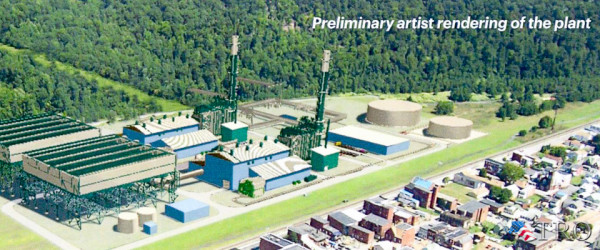

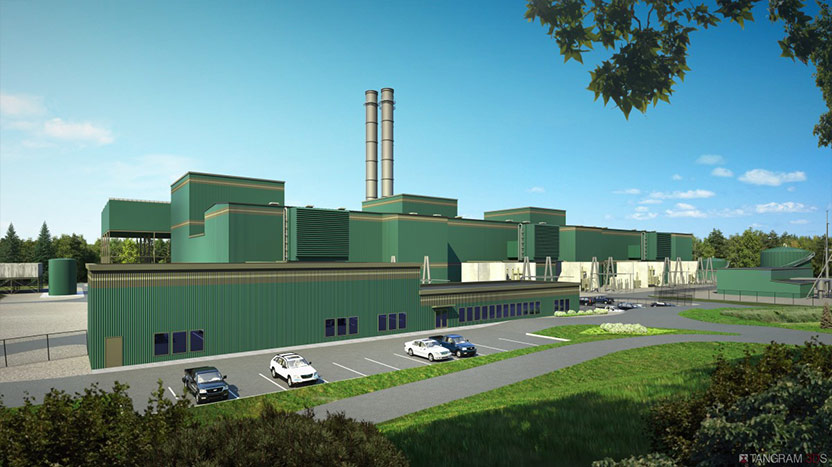
 Last week the Tennessee Valley Authority (TVA) held a dedication ceremony for the Paradise Combined Cycle Gas Plant in Drakesboro, Kentucky. The Paradise plant is a natural gas-fired plant that replaces two now-closed coal plants at the site. The new plant is capable of producing 1,100 megawatts of electricity (really big plant). The cool part, for us, is that Marcellus/Utica gas is either already feeding the plant, or soon will. The plant is fed by a 20-mile pipeline connecting to the Texas Eastern pipeline system (Tetco). We don’t know for sure whether Tetco is now carrying Marcellus/Utica gas south, but we do know that last December the Federal Energy Regulatory Commission (FERC) issued certificates for three Spectra Energy projects to expand Tetco to carry Marcellus/Utica gas to Ohio, Kentucky and Mississippi (see
  A change-up in tactics for Maya van Rossum, THE Delaware Riverkeeper. Until now, Riverkeeper has mostly concentrated it’s efforts on big, federally regulated interstate pipeline projects, like the PennEast Pipeline (see