
3 Options for Blocked NY Marcellus-Fired Electric Plant
 Two days ago MDN told you that New York’s tinhorn dictator, Andrew Cuomo, pulled the rug out from under a fully-permitted and permissioned Marcellus-fired electric plant by directing his corrupt Dept. of Environmental Conservation (DEC) to withhold renewing an air permit previously granted (see Cuomo Strikes Again: Blocks Completed Gas-Fired Plant from Starting). We’ve since learned that the Competitive Power Ventures (CPV) Valley Energy Center, a $900 million, 680-megawatt natural gas-fired electric generating plant in Orange County, NY, was just four days away from throwing the switch and beginning operations. The DEC’s previous delays of the project have already cost the CPV $40 million in missed revenue. How much more pain will Cuomo and his corrupt DEC inflict on the plant? And, what can CPV do now, to overcome Cuomo’s blockage of the project? It appears there are three options: (1) contest the decision via an administrative appeals process; (2) seek a court injunction against the DEC; (3) apply for an EPA permit, which is what the DEC is telling them to do. All three options will take time. Seems to us that option #2 will take the least amount of time. CPV is right now mulling their next steps…
Read More “3 Options for Blocked NY Marcellus-Fired Electric Plant”
 Andrew Cuomo is a tinhorn dictator who must be stopped (politically). NOW. Competitive Power Ventures (CPV) Valley Energy Center is a $900 million, 680-megawatt natural gas-fired electric generating plant in Orange County, NY (near the Hudson River). The plant is fully built, and the Millennium pipeline now flows Marcellus gas to it (see
  For years Energy Solutions Consortium (ESC) has been trying to build several natural gas-fired electric plants in West Virginia, but have been prevented from doing so by Big Coal lawsuits. We recently wrote about this issue, naming names (see
  There is a LOT going on at Dominion Energy that impacts the Marcellus/Utica region. Yesterday Dominion posted its second quarter 2018 update and held a conference call with investors to discuss what happened during 2Q18, and what to expect in coming quarters. Discussed on the call: (1) The Cove Point LNG export plant went online in 2Q18 and so far has shipped 19 cargoes of LNG–60 billion cubic feet of gas! (2) The $1.3 billion Greensville County, VA gas-fired electric plant is 95% built and will go online later this year. (3) The Atlantic Coast Pipeline and Supply Header Project is under construction and on track to be online by fourth quarter of 2019. (4) The SCANA Corporation merger is moving along, and a big decision from a judge is coming by Aug. 7 about whether or not SC can unilaterally force SCANA to lower electric rates by 15%. If the judge tosses that law and the 15% price reduction is out, the merger is in. If the price reduction stays, the merger is (our conclusion) questionable. Yeah, there’s a lot going on. Below are excerpts from the quarterly conference call, the full 2Q18 update, and the latest slide deck…
 Macquarie Infrastructure Corporation, part of Macquarie Bank, is selling 100% of the Bayonne Energy Center (BEC) gas-fired power plant in Bayonne, New Jersey for $900 million to an unnamed buyer. BEC is a 644 megawatt gas-fired electric generation plant constructed in 2012 and expanded earlier this year. BEC distributes power into New York City via a cable that runs from Bayonne, NJ beneath New York Harbor to a substation in Brooklyn. Macquarie bought the plant in 2015 for $720 million, and now they’re flipping it, making $180 million in the process. Which we suppose is good news for Macquarie. But also somewhat strange–at least to us layman. In 2016, Macquarie bought most of the Lordstown Energy Center plant in Trumbull County, OH (see
  There is an ongoing legal squabble in Trumbull County, OH over a proposed second Utica gas-fired electric plant in Lordstown. Clean Energy Future (CEF) is currently building the Lordstown Energy Center, and has been since June 2016 (see
  Although this story concerns California, it is a preview of what’s coming to New England. Because of ongoing record-high heat in Cali, the Los Angeles Department of Water and Power (DWP) is telling residents to either “voluntarily” stop using electricity, or DWP is going to cut electricity to different communities on a rolling blackout basis. The cancer of anti-fossil fuel hatred has more fully metastasized in Cali than elsewhere in the country, and therefore Cali is an instructive case study. California, if it were it’s own country (now there’s a thought!), would be the fifth-largest economy in the world–larger than the United Kingdom, India and Brazil. Cali is the third largest consumer of gasoline and diesel on the planet, behind only China and the United States. And yet Cali persists in blocking new gas-fired electric plants, blocking pipelines, and shutting down existing oil and gas drilling. They are, in a word, insane. And now their insanity is on display for the world to see. Because of the heat wave and lack of natural gas supplies, natgas prices in Cali have zoomed to nearly $40/Mcf (thousand cubic feet). Residents now face either “voluntary” reduction in electric use–or forced blackouts. We take no pleasure (well, maybe a little pleasure) in saying Cali is reaping what it has sown…
 It takes a long time to build a natural gas-fired electric power plant–especially a big one. We began writing about one of the largest coal-to-gas conversion projects in the country, happening in the heart of PA Marcellus country, back in February 2014 (see
  The outspoken Bill Siderewicz, builder of a string of gas-fired electric generating plants in Ohio and elsewhere, is (surprise!) speaking out. Siderewicz, president of Boston-based Clean Energy Future, is the builder of the Lordstown Energy Center in Trumbull County, a project begun in 2016 and now nearing completion (see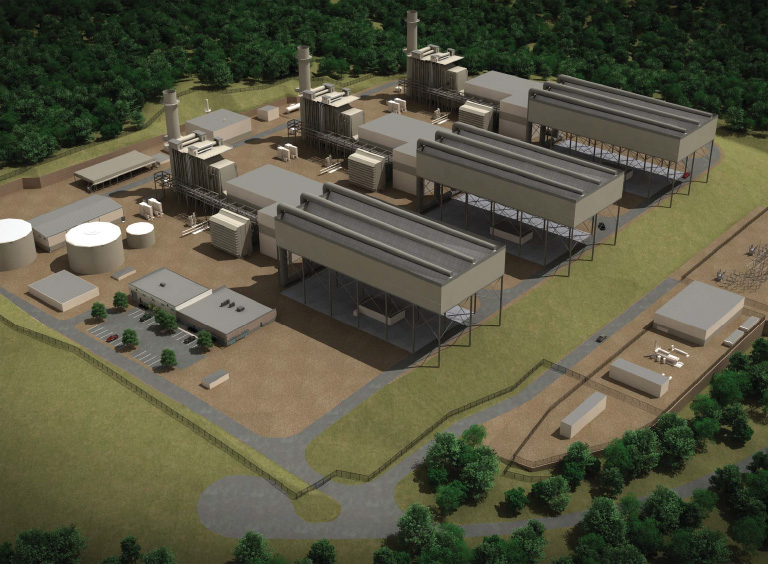
 This is a truly sad story. Because of delays from lawsuits and regulators, power generator NRG said last week it has officially given up on restarting a shuttered coal-fired electric plant near Buffalo, in the Town of Dunkirk. There had been plans to convert the plant to burn natural gas, but due to delays, it didn’t happen. NRG closed the coal-fired plant in 2016, which was an economic nuclear bomb for Dunkirk–they get 40% of their tax revenue from that one plant. New York State “generously” shucked out $5.5 million so Dunkirk wouldn’t collapse economically. But doing that year after year will get old quick. Dunkirk needs that plant. Because of delays due to a lawsuit by a competitor (now dropped), NRG needs to restart the project from scratch, which means reconnecting the plant to the electricity grid. Estimated reconnect costs go as high as $115 million! The cost of “transmission upgrades,” according to the NY grid operator. The cost to reconnect would be almost as much as the project cost itself (see
  We have nothing against solar energy–honestly. Yes, in one sense solar competes with natural gas, but hey, let the best energy source win! Truth be told, we need all energy sources, not just one. So please understand this is not a “bash solar” story. However, we do have a problem when politicians and anti-fossil fuel zealots insist we MUST use one source of energy over another. That’s just not American. And it doesn’t make economic sense either. You may hear that solar is cheap and getting cheaper. Some claim solar now produces electricity at a lower cost than natural gas. Not true. Here’s a comparison. Earlier this week Broome County celebrated the startup of a “large” solar farm on 20 acres of county-owned land in Conklin, NY. The official ribbon cutting was a big affair with the county executive claiming the county will save $140,000 a year with the facility–a facility that’s a year-and-a-half late going online. Fair enough. Who doesn’t want to save $140K a year, right? Not that a single taxpayer in Broome County will notice the 10 cents per tax bill they end up saving. Meanwhile, over the past ten years in Susquehanna County, PA (just south of Broome County, shares a border with Broome), natural gas drilling has been going great guns. In Susquehanna County, a single driller, Cabot Oil & Gas, has put $1.5 billion into the pockets of private landowners through signing bonuses and royalties, and has spent another $3.5 billion on drilling (over $5 billion total spent)–all in Susquehanna County. It is an economic miracle. Tax revenues in the county have gone through the roof! Millions have poured into tax coffers because of the gas industry. Cabot, a single driller, is providing 2.5% of all the natural gas produced in the U.S.–from Susquehanna County. And that’s just one driller! There are more drillers in Susquehanna. We’d estimate that at least $7-$8 billion has flowed into the county over the past 10 years. Mind blowing. And yet, here in the Binghamton area, local media has a blackout and refuses to report on Susquehanna County’s economic miracle. Meanwhile, Broome residents are told to get all excited about saving $140K a year. We’re being asked to jump up and down and feel good about a few economic cracker crumbs when 15 miles away everyone eats economic filet mignon. And now a group of antis masquerading as a solar group is trying to snow even more Broome residents into thinking solar is our energy savior. They’re selling a bill of goods…
 In August 2016, energy giant Tenaska (headquartered in Omaha, NE) broke ground to build a 925-megawatt natural gas-fueled power plant in South Huntingdon (Westmoreland County), PA (see
  Dominion Energy, headquartered in Richmond, VA, is a large utility and pipeline company providing ~6 million customers in 19 states with natural gas and electricity. Dominion not only flows energy to customers, it also generates it. In 2016, Dominion brought online a brand new, 1,358 megawatt, natural gas-fired generating plant in Brunswick County, VA (see