
Chester County, PA Town Floats Illegal Pipeline Ordinance
 Uwchlan Township in Chester County (near Philadelphia) has put itself on a path to get sued. The town is in the process of proposing and adopting new zoning ordinances that govern how pipelines can get built within town boundaries. The problem, of course, is that they don’t have that right. Federal pipeline projects are governed by federal law and the Federal Energy Regulatory Commission. State pipeline projects are governed by the state’s Public Utility Commission. Local yahoos can’t just take it on themselves to overturn federal and state law. Sorry boys and girls, it doesn’t work that way. You’ll need to suppress your inner anarchist. Some of the things the town wants sounds pretty tame: install secure fencing at the site, have an evacuation plan ready. But some things are certain litigation waiting to happen: pipeline operators must compensate the town for “any loss of tax revenue that results from a decline in real estate values” caused by construction the pipeline. And how, prey tell, will the town calculate that? Home values go up and down with the wind–year in and year out. Many factors beyond a pipeline affect property values. This is real hubris on the part of Uwchlan…
Read More “Chester County, PA Town Floats Illegal Pipeline Ordinance”
 There is a growing storm of opposition to a plan put forward by the Pennsylvania Senate in the current budget bill to fix the problem of long delays in issuing permits by the state Dept. of Environmental Protection (DEP). Enough traitorous Republicans in the Senate joined with just about all of the Democrats in the Senate to pass a budget bill that slaps new taxes on natural gas–a severance tax on drillers and a gross receipts tax on consumers (see
  Yesterday MDN brought you the news that the radical Sierra Club had prevailed in a federal lawsuit against a trio of pipeline projects in the southeast (see
  In March of this year, Williams filed a full, official application for the Northeast Supply Enhancement project (see
  Not only did the Pennsylvania Senate pull a real boner by voting for a severance tax and gross receipts tax (see
  Rover is a $3.7 billion, 711-mile natural gas pipeline that will run from PA, WV and eastern OH through OH into Michigan and eventually into Canada. While Phase 1A of the pipeline is essentially done and ready to begin service by the end of this month (see
  PA residents in Lancaster County have a keeper in freshman Senator Scott Martin. Back in May MDN reported that Martin was cooking up legislation to send the cleanup bill for illegal protests–to the protesters (see
 Anti-fossil fuel activists attempting to stop the unstoppable Rover Pipeline are doing their best to smear and prejudice people against the project. Rover has had its share of problems. We’ve chronicled those problems–like leaking 2 million gallons of drilling mud in Ohio when performing underground horizontal directional drilling (see
  Anti-fossil fuelers, aided and abetted by liberal local media, continues the drumbeat to pressure the Virginia Dept. of Environmental Quality to either block, or greatly slow down, approvals needed to build both the $5 billion, 594-mile Dominion Atlantic Coast Pipeline (ACP) project and the $3.5 billion, 301-mile Mountain Valley Pipeline (MVP). Both pipelines start in West Virginia. ACP crosses through Virginia and stretches into North Caroline. MVP terminates in southern Virginia. Some oppose the projects due to an insane hatred of fossil fuels (the same fossil fuels that make their existence and protest possible). Others don’t want a pipeline cutting across their favorite horse pasture. Ruins the look, ya know. There have been a blizzard of lawsuits and legal actions to try and stop both projects (see
  A national group of antis calling themselves “conservative” are attempting to meddle in the affairs of Pennsylvania. If you’ve been reading MDN for any time, you know about the current huge, stinking mess of a budget in Pennsylvania. Republicans, which control both the House and Senate, passed an unbalanced budget of $32 billion. Problem is, there’s only $30 billion of projected revenue. So after passing the spending part of the budget, they now have to “come up with” $2 billion to cover the difference. The pressure has been intense to punish the successful Marcellus industry by stealing even more of their money (PA already takes an overly generous portion of their profits). Senate Republicans caved to the pressure and floated a spending plan that includes a severance tax (see
  In a disappointing, but perhaps not all that unexpected decision (full copy below), the U.S. Court of Appeals for the Second Circuit on Friday ruled against the Constitution Pipeline and their lawsuit against the Cuomo-corrupted New York Dept. of Environmental Conservation (DEC). The DEC dithered, for years, on a decision about whether or not to grant stream-crossing permits (Section 401 permits, a federal Clean Water Act thing) to the Constitution Pipeline, a $683 million, 124-mile pipeline from Susquehanna County, PA to Schoharie County, NY carrying Marcellus gas. The Federal Energy Regulatory Commission (FERC) authorized the project in 2014. Since that time the DEC delayed, and eventually denied permits for the project (see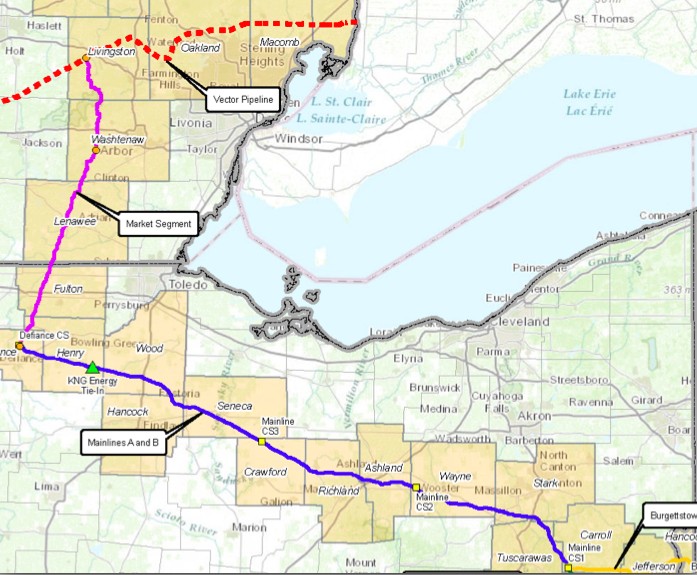
 The West Virginia Legislature has appointed a new Joint Committee on Natural Gas Development, composed of Senators and Delegates, to put their collective heads together to see how they can encourage more oil and gas development in the Mountain State. The committee will meet tomorrow for the first time. The effort is being supported by the West Virginia Oil and Natural Gas Association (WVONGA). In general, it certainly seems like a good idea–WV needs more drilling. However, WVONGA plans to use the committee as a platform to push its “modernized mineral efficiency laws”–i.e. forced pooling lite. As we reported last week, WVONGA is making an all-out push for new forced pooling laws in 2018 (see
  MDN has enthusiastically covered the story of Millennium Pipeline’s challenge of the New York Dept. of Environmental Conservation’s (DEC) refusal to (so far) grant a federal Clean Water Act stream crossing permit for a short, 7.8-mile pipeline from Millennium to natgas-fired electric plant currently under construction in Orange County, NY. States are given a year to respond to a request for such a permit, and the DEC was long past that date. So Millennium took the DEC to court–the U.S. Court of Appeals for the District of Columbia Circuit. In June the court dismissed the lawsuit by Millennium, which at first blush may seem like a blow. But it was the reasoning and opinion of the judges in dismissing the case that will change everything in New York. The judges said there is no case because if, as Millennium says, the DEC is denying the water permits, the Federal Energy Regulatory Commission (FERC) itself has the power to jump back in and simply override NY DEC and issue the permits (see