
Study: Old Conventional Wells Impact PA Streams More Than Fracking
 A Syracuse University study (full copy below) reveals that conventional oil and gas extraction in Pennsylvania poses a greater long-term threat to stream biodiversity than modern shale fracking. By analyzing over 6,800 aquatic samples, researchers found that legacy infrastructure (old conventional oil and gas wells) is more strongly linked to declining ecosystem health and the loss of sensitive species. While public concern often centers on newer fracking methods, these findings highlight the persistent impact of older, conventional wells. The study, titled “The Legacy of Conventional Oil and Gas Development Outweighs Shale Gas Impacts on Stream Biodiversity,” emphasizes prioritizing the regulation and remediation of abandoned well sites to protect freshwater ecosystems, ensuring that environmental stewardship is based on long-term ecological data rather than assumptions. Read More “Study: Old Conventional Wells Impact PA Streams More Than Fracking”
 The 2026 International Energy Agency (IEA) Ministerial Meeting marked a significant turning point as the U.S. demanded a shift from climate-focused advocacy toward “energy realism.” Energy Secretary Chris Wright threatened withdrawal unless the Agency prioritizes energy security over aspirational Net Zero scenarios. And he did so as IEA’s corrupt leader, Dr. Fatih Birol, sat just a few feet away. Wright’s pressure led the IEA to reinstate its “Current Policies Scenario,” acknowledging that fossil fuel demand may grow through 2050 despite transition efforts. As the Agency expands with new members like Colombia, it faces a mandate to align its data-driven research with real-world energy addition rather than idealized transitions, ensuring its continued relevance to global energy investment and security.
  Yesterday, the Pennsylvania Independent Fiscal Office (IFO) released its latest quarterly Natural Gas Production Report for October through December 2025 (full copy below). There were 129 new horizontal wells spud (drilled) in 4Q25, a big increase of 46 wells (+55%) compared to 4Q24. Natural gas production volume was 1,934 billion cubic feet (Bcf) in 4Q25 (same as 3Q25), up 63 Bcf (+3.4%) from 1,871 Bcf produced in 4Q24. The average Pennsylvania spot hub price was $3.08, an increase of $1.07 (+53%) from the prior year’s $2.01. All in all, it was a great fourth quarter for the PA Marcellus. The numbers are going in the right direction. However, the big news is annual production.
  West Virginia continues to cement its status as a national energy powerhouse, ranking as the fifth-largest natural gas producer in the U.S. and providing 10% of the country’s total natgas supply. The 2025 “Gas Facts” report (copy below) from the Gas and Oil Association of WV (GO-WV) highlights a record production of 3.27 trillion cubic feet, fueling an industry that supports 73,000 jobs and contributes $14.7 billion to the state economy. The sector generates hundreds of millions in tax revenue for schools and infrastructure, alongside $1 billion in landowner royalties. Driven by counties like Wetzel and Tyler, the state remains vital to national energy security.
  The U.S. Energy Information Administration (EIA) issued its latest monthly Short-Term Energy Outlook (STEO) yesterday. The STEO is the agency’s monthly best estimate of where energy prices and production will head over the next 12 months. There was a major revision to the agency’s prediction about the spot price (at the Henry Hub) for natural gas in 2026. Just last month, EIA predicted the HH spot price would average $3.46 per million British thermal units (see
  A Cleanview report reveals that nearly 75% of planned on-site power for U.S. data centers is natural gas-fired as operators bypass traditional grid connections. Driven by surging AI demands and grid delays of up to seven years, this trend involves 46 projects totaling 56 gigawatts. While developers publicly highlight renewables, immediate capacity remains dominated by gas due to its reliability. Development is concentrated in gas-rich regions like Texas and Pennsylvania. To overcome equipment shortages, some firms use creative solutions, such as repurposed jet engines. This shift underscores natural gas’s vital role in supporting the rapid expansion of American AI infrastructure.
 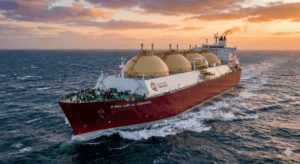 McKinsey & Company’s 2025 LNG Buyers Survey (full copy below) reveals a strategic shift toward flexibility and risk mitigation as global markets stabilize with upcoming supply from North America and the Middle East. Faced with geopolitical uncertainty, buyers are prioritizing supply diversification and flexible contract terms, specifically regarding destination and volume. While demand is expected to rise in Asia due to price-sensitive coal-to-gas switching, European demand will likely decline as renewables expand. To manage volatility, 70% of buyers are pursuing a mix of short- and long-term contracts (instead of just long-term). Overall, the survey emphasizes that adaptive procurement strategies are essential for navigating today’s evolving energy landscape.
  The Marcellus/Utica rig count gained 1 rig seven weeks ago in the Ohio Utica, bringing the regional total to 39 rigs. For the past seven reports in a row, the M-U has maintained that count—the most rigs it has operated in more than a year. Pennsylvania has held at 18 active rigs for ten consecutive weeks. Ohio has operated 14 rigs for seven straight weeks (its highest in over a year). And West Virginia maintained 7 rigs, which it has operated since May 30, 2025. There were 24 rigs targeting the Marcellus and 15 targeting the Utica last week. The national count regained 1 rig last week, bringing the total back up to 544 active rigs.
  Enverus
 JobsOhio, a private, nonprofit corporation that works on behalf of the state to drive job creation and new capital investment in Ohio by attracting business, contracts its economic research to Cleveland State University (CSU) to keep tabs on the Utica Shale industry. JobsOhio released the latest CSU updated report earlier this week (full copy below), showing that more than $114.6 billion has been invested in Ohio across natural gas, natural gas liquids, and petrochemical supply chain industries since 2011. Ohio’s shale energy sector drew approximately $3.5 billion in fresh capital between July and December 2024.