
U.S. Hit New Record for Energy Production in 2025; NatGas #1 Source
 U.S. energy production reached a record 107 quadrillion British thermal units in 2025, up 3.4% from 2024 and marking the fourth straight annual record high. Growth was led by all-time highs in natural gas, crude oil, natural gas plant liquids, and unreliable renewables. Dry natural gas output rose more than 4% to 39 trillion cubic feet, with gains concentrated in Appalachia, the Permian, and Haynesville. Incidentally, natural gas has been the largest source of U.S. domestic energy production since 2011. Who knew?! Read More “U.S. Hit New Record for Energy Production in 2025; NatGas #1 Source”
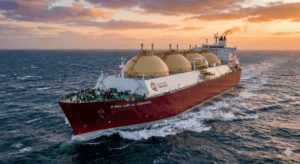 What happens on the other side of the world sometimes affects the Marcellus/Utica. So far, the Iran war has not affected prices (or demand) in the M-U for natural gas. However, if the war continues to drag on for months, it could potentially affect us by affecting the price of LNG on the world market. About one-fifth (20%) of global LNG trade depends on the Strait of Hormuz, with effectively no other way to get it out. Oil can, potentially, find other pathways out of the Persian Gulf (via overland pipelines). But such is not the case with LNG from Qatar.
  Nearly half of North America’s energy leaders say political risk is the #1 barrier to growth. Yet confidence in the region rose modestly, making North America the only region in the world where confidence is rising. What’s behind this shift? Based on insights from 1,000+ global energy leaders and expert analysis, DNV’s 2026 Energy Industry Insights report shows where energy investment is accelerating, how organizations are balancing energy security with transition goals, and what this means for near?term strategic decisions.
  The U.S. Energy Information Administration (EIA) forecasts U.S. natural gas net exports will keep rising through 2027, driven by expanding LNG capacity and stronger pipeline shipments to Mexico. Net exports are projected to reach 18.7 Bcf/d in 2026 and 20.5 Bcf/d in 2027. LNG exports should average 17.0 Bcf/d in 2026, then climb again in 2027 as new projects, including Corpus Christi, Golden Pass, Port Arthur, and Rio Grande, ramp up. Europe remains the leading destination, while Mexico’s power and LNG growth support pipeline demand. Imports stay minimal, and reduced Canadian imports reflect new Canadian LNG projects and rising Appalachian production serving Northeast markets.
 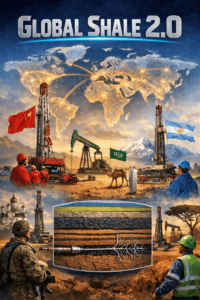 Wood Mackenzie reports that geopolitical tensions, particularly in the Middle East, are driving a renewed global focus on international shale exploration to enhance energy security and diversify supply. Six countries are prioritizing unconventional (shale) resource development: Algeria for European supply, and the UAE, Mexico, Australia, Turkey, and Indonesia for domestic energy independence. This “Global Shale 2.0” differs from past attempts due to improved technology, a clearer understanding of viable plays, and less competition from new Permian-scale discoveries, encouraging investment where regulatory and fiscal terms align with national interests.
 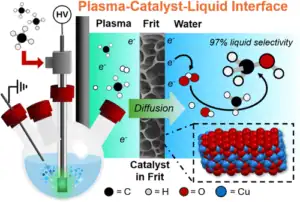 From time to time, we highlight research with the potential to impact the Marcellus/Utica region. In 2023, we told you about Japanese researchers discovering a new (and cheaper) way to convert natural gas into methanol at room temperature in water using a special enzyme (see
  The U.S. Energy Information Administration (EIA) issued its latest monthly Short-Term Energy Outlook (STEO) yesterday. The STEO is the agency’s monthly best estimate of where energy prices and production will head over the next 12 months. There was a revision to the agency’s prediction about the spot price (at the Henry Hub) for natural gas in 2026 and 2027. Just last month, EIA predicted the HH spot price would average $3.76 per million British thermal units (MMBtus) this year, and $3.85 next year (see
  The Trump administration’s proposed Fiscal Year 2027 budget would establish four Centers of Excellence at the National Energy Technology Laboratory (NETL), focusing on oil and natural gas, coal, critical minerals, and geothermal energy. Pittsburgh’s South Park facility will house the oil and gas center, while Morgantown, West Virginia, will host the coal center. NETL’s infrastructure funding will rise 2% to $58 million, but research operations will face an 8% cut to $80 million. Programs supporting coal-impacted communities and clean hydrogen hubs would be eliminated. Industry groups, including the Marcellus Shale Coalition and Pennsylvania Coal Alliance, praised the administration’s energy-focused direction.
 Dr. Kelvin Kemm is a South African nuclear physicist and past Chairman of the South African Nuclear Energy Corporation (Necsa). In an article on the Committee For A Constructive Tomorrow (CFACT) website, Kemm highlights a political exchange in which Senator John Kennedy exposed a climate advocate’s lack of knowledge about atmospheric CO2 concentrations. Kemm clarifies that CO2 levels are merely 0.04% of the Earth’s atmosphere, illustrating this with a 10,000-golf-ball analogy in which only one “yellow-dotted” ball represents human-added emissions since the 1860s.
 In 2025, U.S. marketed natural gas production reached a record average of 118.5 billion cubic feet per day (Bcf/d). This growth was largely driven by a 60% increase in Henry Hub spot prices, which averaged $3.52/MMBtu. The Appalachia (Marcellus/Utica), Permian, and Haynesville regions collectively accounted for 67% of total production and 81% of the annual increase. Appalachia remained the top producer, aided by the new Mountain Valley Pipeline, accounting for 31% (36.6 Bcf/d) of marketed natural gas production. However, the Permian is nipping at our heels.
  The INGAA Foundation’s 2025 North American Midstream Infrastructure Report highlights the critical need for over $1 trillion in natural gas pipeline and related infrastructure investments through 2052 to meet rising energy demands in the United States and Canada. Driven by increased electricity demand from data centers and growing LNG exports, the study projects a need for 37,000 miles of new transmission pipelines and 103,000 miles of gathering lines. Even under a low-carbon scenario, natural gas remains foundational.
  Can we PLEASE now put to bed the pervasive lie spread by anti-shale people that drill cuttings (the leftover rock and dirt that comes out of the ground when drilling a shale well) are somehow glow-in-the-dark radioactive and if disposed of in a landfill will cause people who live near such a landfill to die from radiation poisoning? A two-year study by the Pennsylvania Department of Environmental Protection (DEP) concluded that radium levels in landfill wastewater (leachate) do NOT pose a risk to human health.