
Greene County (PA) | Health Impacts | Hydraulic Fracturing | Industrywide Issues | Pennsylvania | Research | Washington County
Penn State Radium Study Clears Fracking, Fingers Road Salt
 A new Penn State study went looking for radium from fracking in southwestern Pennsylvania drinking water. It tested 91 private wells and springs in Washington and Greene counties and found exactly zero samples above the EPA limit — and the radium it did find carries the chemical fingerprint of the rock the water sits in, not Marcellus brine. You wouldn’t know that from Penn State’s press release headline, which falsely blares, “Natural gas drilling could raise salt levels, in turn boosting radium in water.” The study itself refutes the headline! Read More “Penn State Radium Study Clears Fracking, Fingers Road Salt”
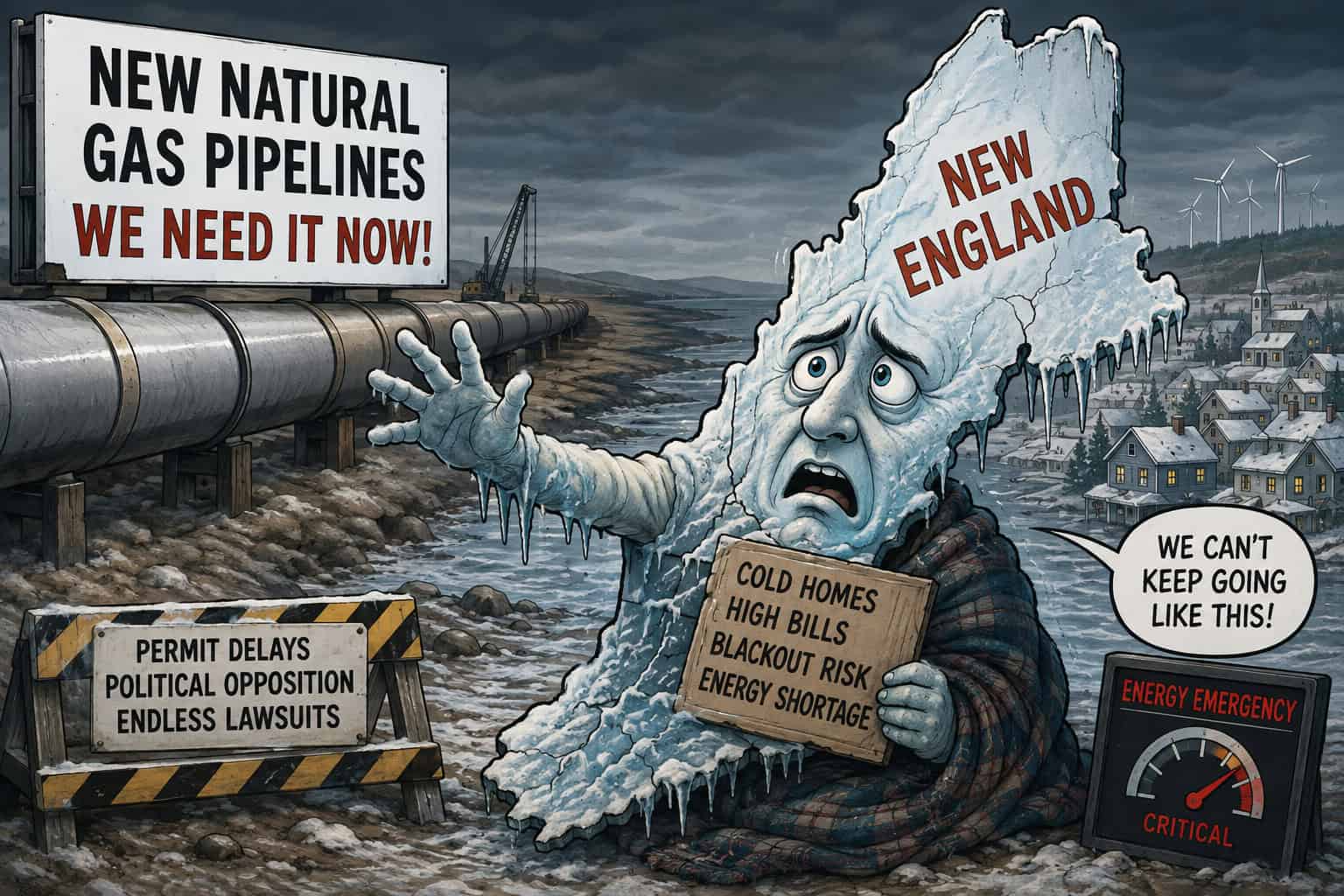
 The independent watchdog that grades the PJM electric grid put out its half-year report card last Thursday under the cheerful headline “Market Monitor Finds PJM Wholesale Electricity Markets Competitive.” Read down three paragraphs, and you find the opposite — the capacity market flunked, three years running, and the Monitor blames data centers. Buried further still is a number that ought to end a certain argument in Harrisburg for good: the biggest single driver of PJM’s price spike wasn’t natural gas. It was the wires.
  A free-market think tank in New Jersey has published a report that says out loud what MDN readers figured out years ago: the Garden State keeps its lights on with natural gas — a lot of it, Marcellus gas — while chasing a 2035 clean-electricity mandate propped up by offshore wind that does not exist and batteries that have barely been built. The report, Reliability Before Retirement: Reassessing New Jersey’s 2024 Energy Master Plan, comes from the Garden State Initiative (GSI), a Morristown-based nonprofit that pushes free-market policy in one of the least free-market states in America. Author Anurag Bhat is no fracking cheerleader — he’s a sustainability-credentialed analyst who co-wrote GSI’s 2025 critique of the same Energy Master Plan (EMP). Which makes the findings that much more useful to us.
  The U.S. Energy Information Administration (EIA) released its August Short-Term Energy Outlook (STEO) on Tuesday — the agency’s monthly toss at the energy dartboard. Last month EIA nudged its Henry Hub natural gas price forecast up a few pennies. This month it took a real bite out of it. EIA now expects Henry Hub to average $3.44/MMBtu in 2026 (down from $3.67 last month) and $3.31/MMBtu in 2027 (down from $3.49). For the current quarter, the number is $2.87/MMBtu — a full 50 cents below what the agency predicted a month ago. The short version for landowners and royalty owners: gas is going to be cheap this fall. The longer version is more interesting, and it’s a story about where the gas is coming from.
  The last 18 months have been about as good as it gets for anyone who moves Marcellus and Utica molecules. President Trump’s Executive Order 14154 killed the Biden LNG export pause on day one. FERC rewrote its environmental review procedures in June 2025 to speed things up. And FERC finally drove a stake through Order No. 871, the Biden-era rule that let Big Green freeze construction on an approved pipeline just by filing an appeal (see
  For the past two years we’ve heard the same complaint on repeat: those greedy data centers are jacking up your electric bill. State legislators have introduced data center construction bans. Towns have passed moratoriums. A Gallup poll found roughly 70% of Americans don’t want a data center anywhere near them. The White House even got seven big tech companies to sign a “Ratepayer Protection Pledge” this past March. Turns out the whole premise may be backward. A new working paper from researchers at the Electric Power Research Institute (EPRI) — Asa Watten, John Bistline, and Geoffrey Blanford — looked at the actual data from 2015 through 2024 and found data centers caused average residential electricity rates to fall. Not rise. Fall.
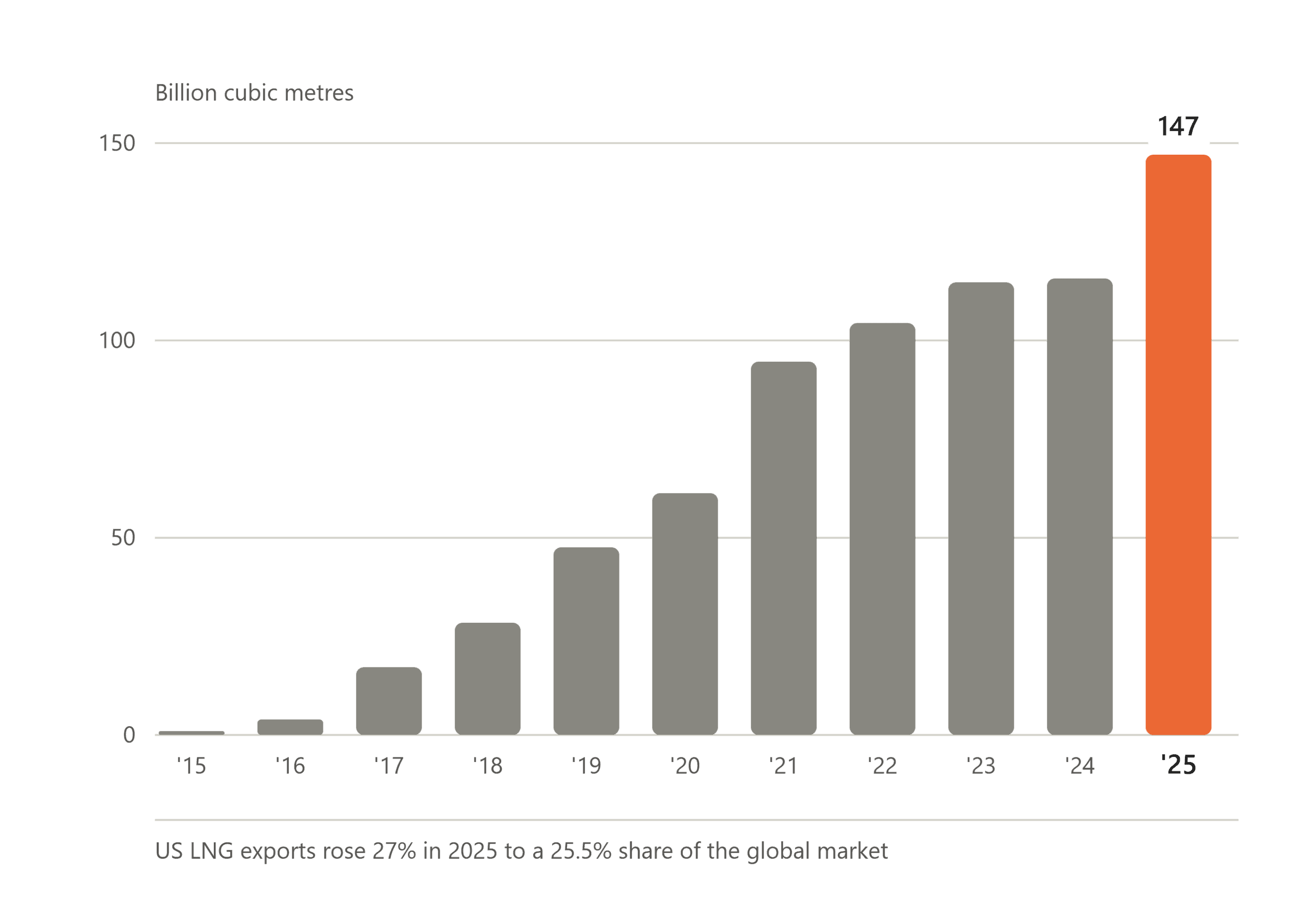
  A new S&P Global Energy study (full copy below) projects U.S. LNG will become the nation’s second-largest net export industry by 2031, trailing only civilian aircraft and parts. Feedgas demand for exports is expected to double to 36 Bcf/d within five years — 25% above the prior base case — as the U.S. surpasses a one-third share of the global market. Through 2040, LNG should support 555,000 jobs annually, add $1.4 trillion to GDP, and generate $2.9 trillion in business revenues, $206 billion in taxes, and $630 billion in labor income, on more than $1 trillion of supply-chain investment. Household gas costs rise just 1.6% from 2026-2031, and new Northeast pipeline capacity could cut peak winter prices more than 20%.
  The International Gas Union’s 2026 World LNG Report shows global LNG trade hit a record high of 436.98 million tonnes (Mt) in 2025, up 6.3%—the strongest growth since 2022—driven by a 25.3 Mt surge in North American exports and Europe’s return as the key balancing market. Canada and Mauritania–Senegal became first-time exporters. Investment in new supply reached a six-year high. The LNG fleet grew 8.4% to 804 vessels, with 301 newbuilds on order, keeping freight rates depressed, while bunkering infrastructure expanded. Despite disruptions from the Gulf conflict that damaged infrastructure and the closure of the Strait of Hormuz, the IGU says LNG’s long-term demand outlook through 2035 remains intact.
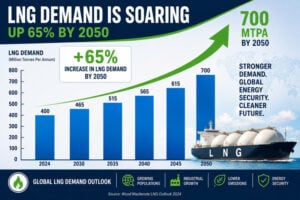 Shell, which dropped “Royal Dutch” from its name after leaving the Netherlands in 2022 due to high taxes and overregulation, is one of the world’s supermajors (oil and gas driller). Shell is also one of (perhaps THE) largest producers and vendors of LNG, or liquefied natural gas, worldwide. The company has just released its tenth annual LNG Outlook 2026 (full copy below), which highlights key trends in 2025 and hauls out the crystal ball to predict where things are heading over the next 25 years. Shell’s annual LNG outlook says shipping disruptions in the Strait of Hormuz from the Iran war—which shut in roughly one-fifth of global monthly LNG supply—could keep 2026 global LNG trade flat if flows normalize within three months, with growth resuming in 2027.
  Global research firm Wood Mackenzie warns that a decade of cheap U.S. natural gas is ending, with Henry Hub prices—historically stuck between $2 and $4 per MMBtu—expected to approach $5 by 2035. The shift is driven by surging demand from LNG exports and AI data centers. U.S. LNG exports jumped from 0.5 Bcf/d in 2016 to 15.0 Bcf/d in 2025, with capacity expected to nearly double by 2031. Meanwhile, power-sector demand could require an additional 17 Bcf/d by the mid-2030s. Supply-side tailwinds—prime drilling acreage, cheap associated gas, and annual productivity gains—have largely run their course. WoodMac says $5 gas remains globally competitive.
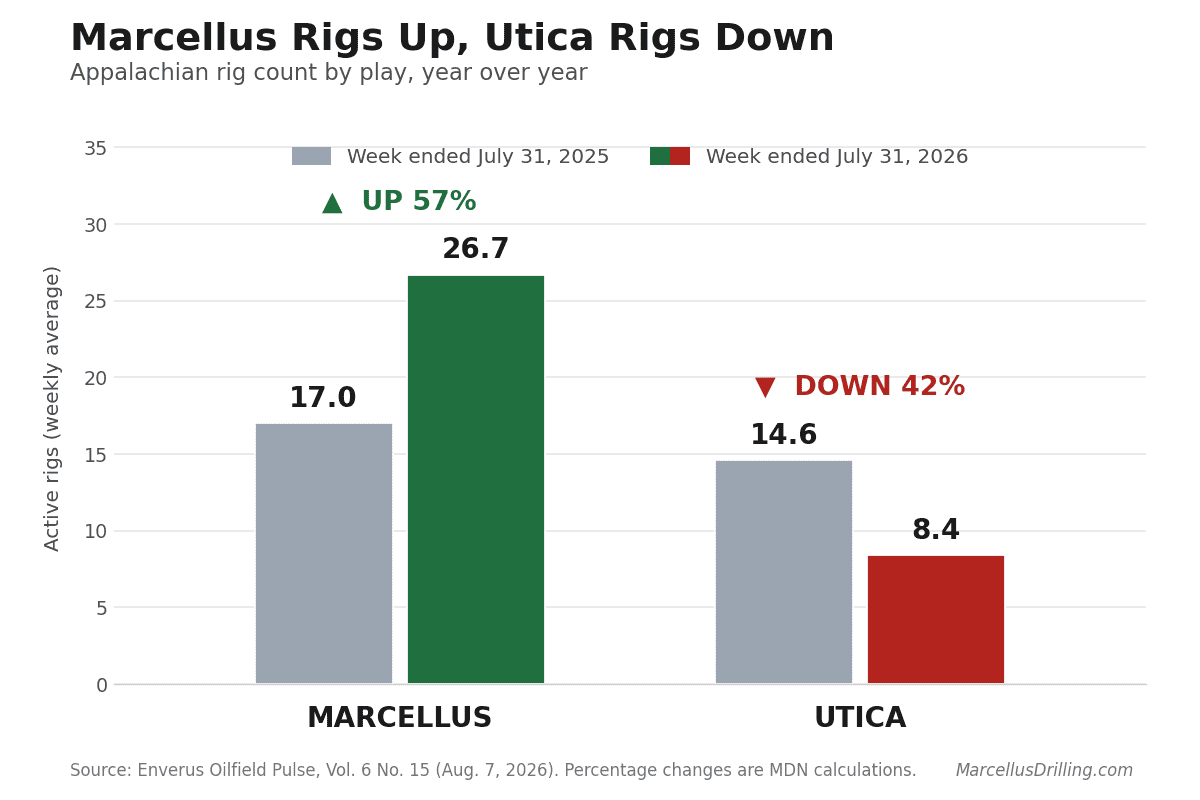
  Last week was (once again) noteworthy for the Baker Hughes rig count. Although the Marcellus/Utica count didn’t budge, the national count increased by another 7 rigs. The national count has risen over the last three weeks — by 18 rigs! The new national count, 580, is also the highest the combined count has been since May 2025. The combined M-U rig count remained at 36 active rigs for the eighth consecutive week. The M-U’s chief competitor, the Haynesville, maintained its count of 55 active rigs, operating 19 more than the M-U.