
NETL Picks 2nd Morgantown Site for Additional Fracking Research
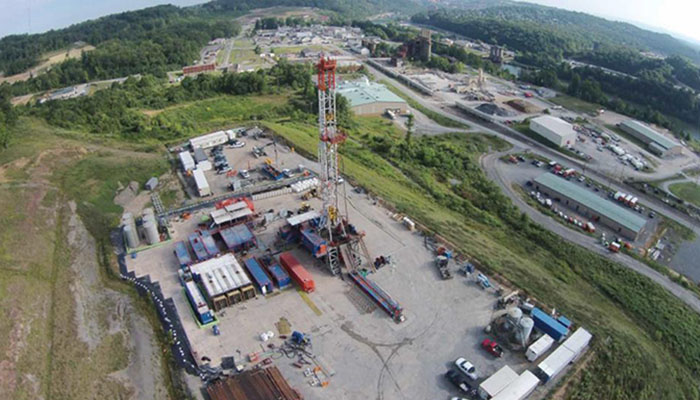
Important research on fracking by West Virginia University (WVU) and the National Energy Technology Laboratory (NETL) in Morgantown, WV continues. Last year we told you that NETL and its Marcellus Shale Engineering and Environmental Laboratory (MSEEL) program are working on “mastering the subsurface”–learning what happens at the smallest level of fracturing shale, so they can improve recovery rates using new processes and materials (see NETL Morgantown Working on Breakthrough Shale Production Techniques). In addition to improving recovery, they’re also looking for ways to cut down on water use. Since there’s a fair bit of water already trapped in shale, NETL is experimenting with carbon dioxide foam as a way of using less water. They’ve even experimented with using natural gas itself to frack rock. Great work being done by NETL/MSEEL. So far that work has happened at one live, fracked shale gas well near Morgantown, drilled by Northeast Natural Energy. Now comes word that researchers are setting up a second test site, also in the Morgantown vicinity (Blacksville). As before, the aim “is geared toward improving gas recovery from horizontal drilling and hydraulic fracturing at sites throughout the region”…
Read More “NETL Picks 2nd Morgantown Site for Additional Fracking Research”
 The Pennsylvania Department of Environmental Protection (DEP) recently published its 2017 Oil and Gas Annual Report. This is the second year in a row the DEP has published the report in an interactive, electronic (i.e.online) format ONLY, with a stated purpose “to improve public access to well information.” While it’s interesting to have the report issued online only, it’s not as useful as a PDF or printed document, in our humble opinion. What does the report show? There were 2,028 unconventional well drilling permits issued in 2017, up an astonishing 707 (54%) from 2016. What a turnaround! There were 203 conventional well drilling permits issued in 2017, up 45 (28%) from 2016. The number of well inspections hit an all-time high of 36,288 inspections (up 2% from 2016). Below we have the DEP announcement about the new 2017 report, along with select charts & information–so you don’t have to wade through the (somewhat confusing) report yourself. We call it the MDN Guide to PA’s 2017 Oil and Gas Annual Report…
 The Pareto Principle is alive and well in the Buckeye State. You may know it as the 80/20 rule, or in this case, the 75/25 rule. The rule that states roughly 80% of the results come from 20% of the effort. Last week MDN brought you the latest update from the Ohio Dept. of Natural Resources–their second quarter 2018 report showing all production coming from the Ohio Utica Shale (see
  Although the push is on to get Marcellus molecules to new markets where they can fetch higher prices, there is one group who has benefited in a major way from an overabundance of cheap, clean-burning Marcellus Shale gas. That would be the residents and businesses located in the great state of Pennsylvania. Industry group Consumer Energy Alliance has just published a new report that reveals PA residents and businesses have saved a cumulative $30.5 billion from 2006-2016 as a result of the decreasing price of natural gas in the state. Can you imagine the economic impact! What president or governor or state legislator wouldn’t salivate over a cash infusion of $30 billion over ten years! It’s mind-blowing. And it’s all thanks to the Marcellus Shale. And that $30B is just the savings that went into folks’ pockets (and got spent on other things). That number doesn’t even take into consider the billions upon billions of dollars paid out in signing bonuses, royalties, and drilling work done. The Marcellus industry has single-handedly lifted many PA residents out of poverty. Hey, how much revenue and how many jobs and how much energy savings have groups like Delaware Riverkeeper, Sierra Club, Clean Air Council, Food & Water Watch, PennEnvironment, PennFuture and other radical Big Green groups generated for PA? What’s that? They’ve actually COST the state money? Think about that the next time you read about these so-called environmental groups and how much they “care” about the Keystone State…
 Did you know there are 16 major, announced pipeline projects in the northeast?! We recently happened across a handy list of those projects, a list published by the Northeast Gas Association less than a month ago. The list includes a description of what will get built, who’s doing the building, and the target in-service date. A few of the projects are in limbo (Constitution, Access Northeast), but most are either under construction or soon will be. We dig this kind of list–well laid-out, concise, and useful. And we think you will too. Here’s the name of the pipelines in the list: Access Northeast, Atlantic Bridge, Atlantic Sunrise, Constitution, Eastern System Upgrade, Empire North Expansion, Northeast Gateway, Northeast Supply Enhancement, Northern Access, PennEast, Portland XPress, Rivervale South to Market, Station 261, Wright Interconnect, Valley Lateral Project. Click to view the list, with full details…
 More fake “research” on drilling, courtesy the anti-drilling Southwest Pennsylvania Environmental Health Project (EHP). This is the same group of antis who brought us the so-called list of the harmed (in 2013) and last year launched a faux health registry that attempts to link everything from the sniffles to “performance issues” to nearby fracking (see
  We find the latest “bash fracking” so-called study just published by Duke University to be, well, rather amusing. This is not Duke “researcher” Avner Vengosh’s first bash fracking study (see
  Records continue to be shattered. On Monday our favorite government agency, the U.S. Energy Information Administration (EIA), issued our favorite monthly report, the Drilling Productivity Report (DPR). The DPR is the EIA’s best guess, based on expert data crunchers, as to how much each of the U.S.’s seven major shale plays will produce for both oil and natural gas in the coming month. The Marcellus/Utica region (called Appalachia in the report) continues to see production go through the roof. As has been happening for the past 6 months or so, production in the Marcellus/Utica region will grow another roughly 1/3 billion cubic feet (Bcf) in the coming month. If you add up new gas production for all seven major plays, the U.S. will produce an additional 1 Bcf/d in September, same as was added in August. That’s 1 Bcf more in September than we produced in August, or 2 Bcf/d more in September than what we produced in July. Mind blowing! No less impressive is U.S. oil production from shale. This month oil production will grow another 93,000 barrels per day, hitting a new all-time high of 7.5 million barrels per day of production–just from shale (not from offshore). Once again, new records for gas (and oil) will be shattered in September…
 Industry trade associations are not impressed with a proposed 250% hike in shale permit fees in Pennsylvania and they’re saying so. PA Gov. Tom Wolf’s Dept. of Environmental Protection (DEP), the agency charged with overseeing oil and gas drilling in the state, blindsided the shale industry in February with a proposal to hike the fee required when submitting an application to drill a new shale well (see
  The answer to the question posed in our headline for which skills are most valued (and missing) in new employees looking to work at companies involved in the Marcellus/Utica industry may surprise you. Would the answer be, detailed industry knowledge, like knowing what mud logging, wire lines and Christmas tree (wellheads) are? Nope. Employers can teach those things on the job. How about subject-specific skills, like knowing how to weld (if you work in the field), or the difference between debits and credits (if you work in the accounting department)? Obviously if you apply for a welding job, or an accounting job, you’ll need to know something about those specific areas. But no, we’re talking about what kinds of skills ALL new employees should have, regardless of which area they work (in the field or in the office)–skills that so often are missing in new hires. Would you believe those skills are: writing, speaking and time management? Yep, according to a study done by RAND Corporation looking at how employers and colleges in the Marcellus/Utica region are preparing workers for the shale workforce, they found a skills gap in workers who don’t know how to properly write, speak and manage their time effectively…
 The usual suspects from Johns Hopkins University, working with researchers from the University of California, Berkeley, have completely soiled themselves this time. It’s really kind of embarrassing. In a “study” just published in Nature, researchers claim they have found a link between living near fracking sites in Pennsylvania and an increased incidence of being *mildly* depressed. We get mildly depressed just reading this drivel. Maybe there’s a link between junk science and mild depression? Launch a study! The research team this time around includes a fellow from the Post Carbon Institute, a rabidly anti-fossil fuel organization that has called fracking a “virus.” You can tell just how biased and false this study truly is just based on the wackos who published it. The “study” is titled, “Associations of unconventional natural gas development with depression symptoms and disordered sleep in Pennsylvania” (full copy below). It’s not even real research. They used a bunch of medical records from a local hospital network (Geisinger) and didn’t actually interview anyone themselves. Totally made up. Total fiction. That’s what you need to know about the latest attack on Marcellus drilling…
 It’s probably self-evident to most people that if you slap a ban on new leasing of state land for shale drilling, as was first done by liberal Democrat Ed Rendell, and later solidified by liberal Democrat Gov. Tom Wolf, it will result in (tada!) less drilling on state land. That’s the conclusion of an updated report just issued by the Dept. of Conservation and Natural Resources (DCNR). The “Shale Gas Monitoring Report” (full copy below) was first published in 2014. An updated second edition of the report was just issued by DCNR. It shows: gas development on state forest lands has “slowed considerably” since 2014; even though roads to interior parts of forests have been improved (paid for by shale drillers), some folks would rather have “pristine” dirt roads full of potholes instead; there has been a growth of “invasive” plants, perhaps carried into forests by hitching a ride on drilling equipment; drilling hasn’t affected the quality of nearby creeks and rivers. Here’s an overview of the report, followed by a copy of the full 202-page report…
 Northeast Natural Energy (NNE) is a small-to-midsized driller headquartered in Morgantown, WV. It’s a young company, drilling its first shale well in 2013. In April 2017 MDN reported that NNE had obtained $300 million of investment from two investment firms (see
  In July 2012, the PA Department of Environmental Protection (DEP) announced a one-year study that will look at impacts on air quality from Marcellus drilling and the infrastructure (pipelines and compressor plants) that comes with shale gas drilling (see