
PennFuture Tries to Bully Allegheny County re Lease Revenue
 The true colors of PennFuture, a radical anti-drilling group, are now revealed for all to see. In June, MDN warned you that Big Green groups like PennFuture are attempting to “weaponize” a recent PA Supreme Court ruling (see PA Anti Strategy: Weaponize Recent Court Ruling Against Shale Dev). The Supremes, in a sharply divided decision, sided with a virulent anti-drilling group, the Pennsylvania Environmental Defense Foundation, against the state, saying that any revenue generated from leasing and drilling on *state-owned land* must be used solely for conservation and the environment (see PA Supreme Court Hands Antis Partial Victory re State Land Drilling). The decision is based on the Oil and Gas Lease Fund Act, which states any revenue from oil and gas leases (and signing bonuses) generated for the Commonwealth (that is, for the state of Pennsylvania) “shall be placed in a special fund to be known as the ‘Oil and Gas Lease Fund’ which fund shall be exclusively used for conservation, recreation, dams, or flood control or to match any Federal grants which may be made for any of the aforementioned purposes” (see Radical Enviros Now the Tail Wagging the PA DCNR Dog re Funding). Radical groups have wasted no time. PennFuture is now bullying Allegheny County (Pittsburgh area) by saying any revenue raised by leasing county land for drilling, like parks and airports, must be spent on Big Green causes groups like PennFuture approves of, and not anything else. Which is ludicrous. However, they are citing the recent Supreme Court decision and using it as a bludgeon to force a change in the way lease revenues are spent. In other words, those revenues are now a poison pill. If municipalities like counties and local towns can’t spend lease money the way they want, it removes the incentive to lease those properties in the first place…
Read More “PennFuture Tries to Bully Allegheny County re Lease Revenue”
 Bit by bit, piece by piece, Shell is getting landowners in Beaver County, PA to sign easements for its 94-mile Falcon Ethane Pipeline–a pipeline with two “legs” that will feed Shell’s mighty ethane cracker plant. MDN exclusively broke the news in February 2016 that Shell had begun to sign leases with landowners for the pipeline (see
  As MDN reported in June, the Pennsylvania Supreme Court of Appeals, in a sharply divided 3-2 decision, sided with virulent anti-drilling group Pennsylvania Environmental Defense Foundation against the state in saying that any royalties generated from drilling on state-owned land MUST be used solely for conservation and the environment (see
  In early June, MDN brought you the news that officials with Ascent Resources (formerly American Energy Partners) and Chesapeake Energy said their respective companies are putting a renewed focus on Jefferson County, OH in the coming months (see
  Here’s a case in Ohio that has the potential to impact Utica Shale, as well as conventional, leases. According to OOGA (the Ohio Oil and Gas Association) it has the potential to affect “the validity and viability of thousands of oil and gas leases across the state.” In brief, a conventional gas well was drilled on property in Washington County, OH in 1951. The landowner later agreed to exchange royalty payments for free, unlimited gas to her home. Leases can be terminated if they stop producing profitable amounts of oil and gas. Between 1977 and 1981 there was no commercial sale of gas from the well–but the landowner kept getting her free gas. Using that five-year period of time of no commercial output, the landowner filed paperwork to declare the lease has been terminated and reverts back to her, the landowner. The driller says she continued receiving her “royalty payments” (i.e. free gas) even though nothing was sold from the well–and that’s enough to keep the lease in effect. There appear to be strong arguments on both parts, and apparently this arrangement of receiving free gas in lieu of royalty payments is not uncommon in Ohio. So the Ohio Supreme Court will decide, having recently heard oral arguments…
 We’re going to take a stab at this, and we are not confident we will get it 100% right. With that as a warning, we recently reported that a case brought by landowners in northeastern PA against Chesapeake Energy over unwarranted royalty deductions suffered a bit of a setback (see
  Something truly amazing is happening in rural Susquehanna County, PA, nestled in the northeastern corner of the state (shares a border with Broome County, NY, where MDN is located). At a special event yesterday held in Montrose, the county seat, Cabot Oil & Gas announced a major milestone. Cabot has, over the past ten years, paid out $1 billion in royalties and another $500 million in lease bonuses. Did you catch that? In a single decade, Susquehanna County has received a $1.5 BILLION economic stimulus in private money flooding into the county–from just one of the major drillers working in the county. And that doesn’t include $3.1 billion spent on equipment and crews to do the drilling (a number we verified with Cabot)! There are other companies drilling in Susquehanna County as well. In very real, practical terms, that means school taxes have not gone up–in years. Property taxes have actually gone DOWN. Mortgages have been paid off. Kids have gone to college–without incurring years of debt hanging over them when they graduate. Story after story was shared of how Cabot’s drilling program has resulted in radically changed (for the better) lives in Susquehanna County. Cabot has pulled some 3 trillion cubic feet of natural gas out of what Cabot rep George Stark says is “the sweetest spot to be” in the country. Little known factoid: A single company (Cabot) drilling in one county (Susquehanna) produces nearly 3% of the entire natural gas output in the United States. Amazing! You know what’s even more amazing? Binghamton media blocked all reporting about this major news….
 Earlier this week MDN reported on the recent West Virginia Supreme Court decision to reverse it’s earlier decision and allow EQT (and by extension, other drillers) to deduct some post-production expenses from royalties paid to landowners (see
  Last December the West Virginia Supreme Court ruled in a case to disallow Marcellus driller EQT from deducting post-production expenses from royalty checks, even with signed contracts in place (see
  In a decision that will thrill drillers, but anger landowners, the West Virginia Supreme Court decided last week to overturn its own previous decision (from just last December) and allow driller EQT to deduct post-production expenses from royalty payments. Last December MDN reported on the huge West Virginia Supreme Court decision against driller EQT that disallows EQT from deducting post-production expenses from royalty checks, even with signed contracts in place (see
  Peters Township, the most populous township in Washington County, PA, is one of the seven selfish towns that sued the state in 2012 over the zoning provisions in the then-new Act 13 law, eventually winning at the PA Supreme Court level (see
  Sometimes we wish we had gone to law school–to better understand some of the cases involved with oil and gas. This is one of those times. When you read words like “arbitrability,” the eyes start to glaze over. We’ll do our best to summarize some important news for landowners who want to sue Chesapeake over shorted royalty checks. Starting in 2008, Chesapeake Energy, under then-CEO Aubrey McClendon, began leasing acreage in northeastern Pennsylvania for shale drilling. Said drilling happened and in 2013, Scout Petroleum purchased royalty rights from some NEPA landowners. That is, Scout took over receiving the royalty payments in return for giving those landowners an up front, lump sum. In 2014, when it became obvious Chesapeake was using aggressive deductions from royalty payments (i.e. landowners were getting hosed), Scout filed a lawsuit against Chesapeake, requesting (under the lease language) that their grievances against Chessy be arbitrated AND (not specifically under the lease language) that Scout and thousands of other landowners be lumped together into class action arbitration (see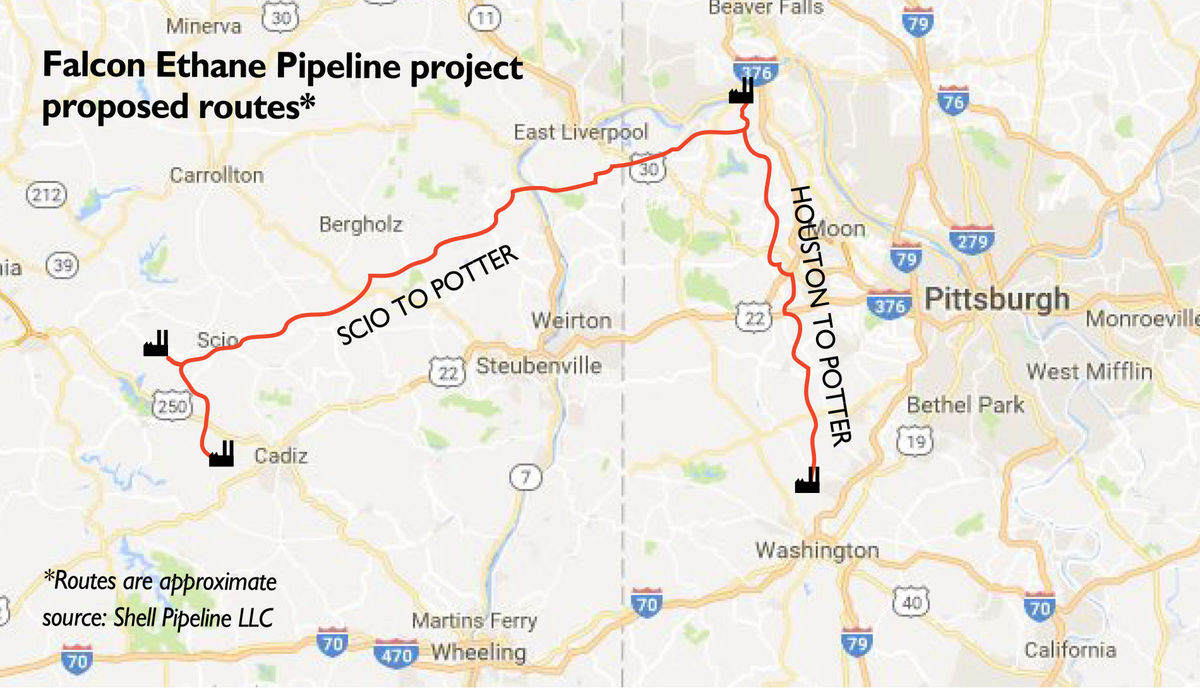
 It’s not often we read about lease offers these days. We’re sure they happen regularly, but the only ones you read about are offers made to lease publicly owned land. Such offers for public land are a useful gauge for private landowners. So when we noticed a story about an offer made by Arsenal Resources to the North Central West Virginia Airport (Bridgeport), our eyes and ears perked up. The opening offer is for 188.5 acres (out of 500 acres) with a $1,500 per acre signing bonus and 14% royalty on anything produced. The Benedum Airport Authority, charged with managing the airport and property, told the Authority’s attorney to counter offer–they want 15% royalties…
  Yesterday the five justices of the West Virginia Supreme Court reheard a case involving post-production deductions from royalty payments. Last week we reported that the court *might* rehear the case this week–if they didn’t grant a late-breaking motion to dismiss the rehearing (see