
PA DEP Says 3 ME2 Spills Violate Agreement with Big Green
 It looks like Big Green has succeeded in conflating a mole hill into a mountain in Pennsylvania. In early August, Sunoco Logistics struck a deal with with several Big Green groups to provide stricter regulation for Mariner East 2 Pipeline’s underground drilling (see Sunoco Strikes Deal with Devil, “Settles” with Anti Groups re ME2). Part of the deal says if Sunoco experiences two leaks of drilling mud at the same location, they must shut down drilling in that location and wait for the state Dept. of Environmental Protection to further review drilling plans before they can restart. On August 24th there was a 50-gallon drilling mud spill into the Susquehanna River in Dauphin County related to ME2. A quick reminder: drilling mud, or “bentonite,” is non-toxic–the same stuff found in toothpaste and kitty litter. The 50-gallon spill would be like spilling 50 one-gallon jugs (maybe 10 bags) of kitty litter into the enormous Susquehanna River–a non-event. However, the Philadelphia-based Clean Air Council cried foul over the spill (see Big Green Group Makes Big Deal Out of Tiny ME2 Mud Spill). And now the state Dept. of Environmental Protection (DEP) has agreed, saying that spill plus spills in two other locations violate Sunoco’s agreement with Big Green…
Read More “PA DEP Says 3 ME2 Spills Violate Agreement with Big Green”
 FirstEnergy, based in Akron, OH, is one of the nation’s largest investor-owned electric systems, serving customers in Ohio, Pennsylvania, New Jersey, West Virginia, Maryland and New York. FirstEnergy owns a variety of regulated and non-regulated power generation plants. Last November the company announced it wants to sell five power generating plants, four of them natural gas-fired plants in Pennsylvania, plus a hydroelectric plant in Virginia (see
  The Republicans in the Pennsylvania House of Representatives have done the hard work that PA Senate Republicans failed (or refused) to do: they have just introduced a budget bill that doesn’t raise a single tax, including no horrible severance tax–and yet they will balance a wildly overspent budget. How will they accomplish this feat of Houdini magic? By tapping into the bloated extra money budgeted but not spent by numerous state agencies. For example: mass transit, ports, rails and infrastructure accounts have a cumulative extra $507 million sitting in bank, unused. Why not reallocate it? Hazardous waste and industrial cleanups, agriculture, environmental, conservation and recycling programs have an extra $440.5 million laying around. Why not reallocate it? Etc. House Republicans, unlike their traitorous Senate counterparts, have “found” $2.4 billion in money laying around, unused in other accounts, that they plan to reallocate to the state budget. Genius! This is why House Speaker Mike Turzai should be PA’s next governor, not the inept Tom Wolf…
 In January 2016 Pennsylvania Gov. Tom Wolf and his now-fired Secretary of the Dept. of Environmental Protection (DEP), John Quigley, introduced an awful four-point plan to supposedly reduce methane emissions by 40% over the next five years (see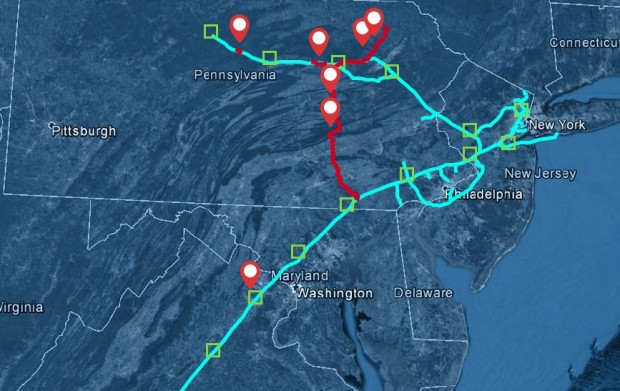
 It looks like Pennsylvania’s conventional (non-shale) oil and gas drillers will get a reprieve from onerous new drilling rules–at least until next year. PA Gov. Tom Wolf has been obstinate in demanding onerous new drilling rules for the conventional, as well as unconventional (shale) drilling industry since he took office. Reworked drilling rules for both conventional and shale drillers were done and ready to go under previous Gov. Tom Corbett. Then Corbett lost to Wolf, and Wolf demanded changes to the common sense rules everyone had already agreed to (see
  Yesterday MDN brought you the news that Range Resources and the Pennsylvania Dept. of Environmental Protection (DEP) have officially “settled” something we thought was already settled–alleged methane migration from a well Range drilled in 2011 (see
  Last week MDN brought you the news that THE Delaware Riverkeeper had lost a federal lawsuit against Kinder Morgan’s Orion Project to expand the Tennessee Gas Pipeline in northeast Pennsylvania (see
 The Allegheny Institute is out with another top notch policy brief. This one tackles the state’s existing impact fee and addresses the issue of why revenues from the impact fee have slid over the past several years. The Institute is not denigrating the impact fee, but lauding it as a better system of taxation than a severance tax. The Allegheny Institute exists to conduct research, education and advocacy work in a mission to defend taxpayers and businesses against burdensome taxation, inefficiency and intrusiveness of an ever expanding government–a pretty tall order because government at all levels is always expanding, like a voracious monster. Think of the Allegheny Institute as a mini version of the Heritage Foundation–focused specifically on Pennsylvania. The newest brief, titled “Shale Gas Impact Fee Revenue Continues to Slide” (full copy below) takes an honest, and hard look, at the impact fee. Researchers conclude that slapping a severance tax on top of the impact fee would be a disaster and violate the state’s commitment to drillers when they passed the impact fee…
 The Pennsylvania Dept. of Environmental Protection has put drillers (and everyone) on notice that it will bump up the fee to file for a permit to drill a Marcellus Shale well. Prior to 2013, the permit fee for a new Marcellus well was $3,200. In 2013 the DEP bumped it up by 56%, to $5,000 (see
 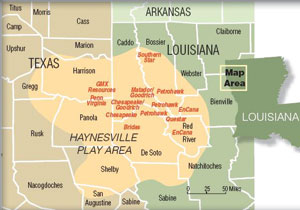 The Haynesville Shale, found in East Texas and Louisiana, last week surpassed the Marcellus for total number of active drilling rigs. That’s the first time the Haynesville has had more active rigs than the Marcellus since 2011–six years. What’s up with the “sleepy” Haynesville? It’s not so sleepy anymore. Last year one of the biggest and best drillers in the Marcellus, Range Resources, paid $4.4 billion to buy out and take over a Louisiana driller (see
  We have more evidence that a so-called “Conservative” environmental group, calling themselves Conservatives for Responsible Stewardship, is anything but conservative. Let’s strip the euphemisms away, shall we? Conservatives for Responsible Stewardship is a group of liberal Democrats pretending to be conservative Republicans. It is a pretense. A lie. How do we know? It all goes back to the budget bill passed by the Pennsylvania Senate. Republicans, which control both the House and Senate in Pennsylvania, passed an unbalanced budget of $32 billion. Problem is, there’s only $30 billion of projected revenue. So after passing the spending part of the budget, the legislature (i.e. Republicans) now have to “come up with” $2 billion to cover the difference. The pressure has been intense to punish the successful Marcellus industry by stealing even more of their money (PA already takes an overly generous portion of their profits). Senate Republicans caved to the pressure and floated a spending plan that includes a severance tax (see
  In March, Big Green group THE Delaware Riverkeeper (leftist political lobbying arm for the William Penn Foundation that funds it) filed a lawsuit in the U.S. Court of Appeals for the Third District requesting the court overturn a Clean Water Act permit granted by the U.S. Army Corps of Engineers for Kinder Morgan’s Orion Project in northeast Pennsylvania. Yesterday, in a humiliating defeat, the Third Circuit rejected Riverkeeper’s request and ruled the Army Corps was well within its right to grant the permit (full copy of the ruling below). In October 2015, Kinder Morgan’s Tennessee Gas Pipeline (TGP) filed their official, full application with the Federal Energy Regulatory Commission (FERC) seeking approval for the Orion Project (see