
Antero Resources | Arsenal Resources | Ascent Resources | Carroll County | Coterra Energy (Cabot O&G) | Encino Energy | Energy Companies | EOG Resources | EQT Corp | Greene County (PA) | Guernsey County | Harrison County | Harrison County | Indiana County | INR/Infinity Natural Resources | Marion County | Marion Natural Energy | Ohio | Pennsylvania | Range Resources Corp | Susquehanna County | Washington County | Weekly Permits | West Virginia | Wetzel County
27 New Shale Well Permits Issued for PA-OH-WV Jun 23 – 29
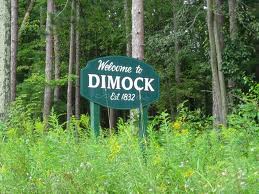
 For the week of June 23 – 29, the number of permits issued to drill new wells in the Marcellus/Utica rose slightly from the previous week. There were 27 new permits issued across the three M-U states last week, up three from 24 issued two weeks ago. The Keystone State (PA) issued 10 new permits. Six of the ten permits went to EQT for a single pad in Greene County. Two permits were issued to Range Resources for a pad in Washington County. And one permit each was issued to Coterra Energy in Susquehanna County (in Dimock!), and Infinity Natural Resources in Indiana County. Read More “27 New Shale Well Permits Issued for PA-OH-WV Jun 23 – 29”

 Coterra Energy CEO Tom Jorden had a sit-down interview at the 2025 J.P. Morgan Energy, Power, Renewables and Mining Conference on Tuesday of this week. Coterra is the successor company of Cabot Oil & Gas after Cabot merged with Cimarex Energy in October 2021 (see
  A Boston-based company, Gradiant, issued a press release to make a really big, really important announcement: The company’s lithium business, called alkaLi, will design, build, own, and operate a commercial lithium production facility in the Marcellus Shale Formation of Pennsylvania beginning in early 2026. The
  The highly functional and responsible Susquehanna River Basin Commission (SRBC), unlike its highly dysfunctional and irresponsible counterpart, the Delaware River Basin Commission (DRBC), continues to support the shale energy industry by approving water withdrawals and consumptive use for responsible and safe shale drilling. The SRBC published a notice in the June 21 Pennsylvania Bulletin that the Executive Director of the SRBC renewed 38 general water use permits in May for individual shale gas well drilling pads in Bradford, Cameron, Clearfield, Lycoming, Susquehanna, Tioga, and Wyoming counties in Pennsylvania. So far in 2025, the SRBC has issued or renewed 225 general water use permits for shale gas development.
 Coterra Energy, formed by the merger of Cabot Oil & Gas (drills for natural gas in the Marcellus) and Cimarex Energy (drills for oil in the Permian and Anadarko basins), issued its first quarter 2025 update last week. There was a lot of news coming from the update. However, two things stood out for us: (1) Coterra confirmed that talks to revive the Constitution Pipeline project are underway now, and (2) the company is drilling again in the PA Marcellus and may add another $50 million to 2025’s planned $300 million budget for the Marcellus.
  We spotted a couple of stories, one by PBS and another by the financial publication Barron’s, covering the “groundswell” of opposition to resurrecting the 124-mile Pennsylvania-to-New York Constitution Pipeline project. According to a letter signed by “233 environmental and community groups,” the proposed pipeline poses “a serious threat to state sovereignty.” Here’s the first thing to note: Enviro-lefties file paperwork to form a “group” of one or two people. It looks great on letterhead to list hundreds of organizations, implying thousands of people. However, it would be more accurate to say “233 individuals” instead of 233 groups of people. At any rate, we will repeat an observation we have made almost since beginning to write the MDN site in 2009: Many in the anti-fracking and anti-pipeline movement are old (sometimes young) hippies looking to relive the glory days of Vietnam protests.