
“Survival” – PIOGA Expands Membership to Industrial End Users
 The sudden slowdown in drilling activity not only affects drillers, oilfield services companies, midstreamers and the many supply chain companies (restaurants, hotels, fencing, etc.) that service them–it also affects trade associations. Last November America’s Natural Gas Association merged with the more flush American Petroleum Institute (see Two Top O&G Trade Groups to Merge: ANGA & API). In January the Center for LNG announced it is merging with the Natural Gas Supply Association (see CLNG Merges with NGSA, Gets New Director from Former ANGA). Not every association is looking to merge in order to stay alive. The Pennsylvania Independent Oil & Gas Association (PIOGA), headed by the fearless Lou D’Amico, is hurting. Membership (and along with it, dues) is down 40% in the past two years. Ouch. But Lou isn’t looking to merge, instead, he’s looking to expand. That is, expand the types of members that belong to PIOGA. Traditionally small conventional drillers have been the bulk of PIOGA’s membership. Shale drillers, to some extent, have joined too. But with conventional drilling taking a nosedive, Lou needs to cast the net wider–so he’s now looking for industrial customers, manufacturers and the like, who are big users of natural gas, to join…
Read More ““Survival” – PIOGA Expands Membership to Industrial End Users”

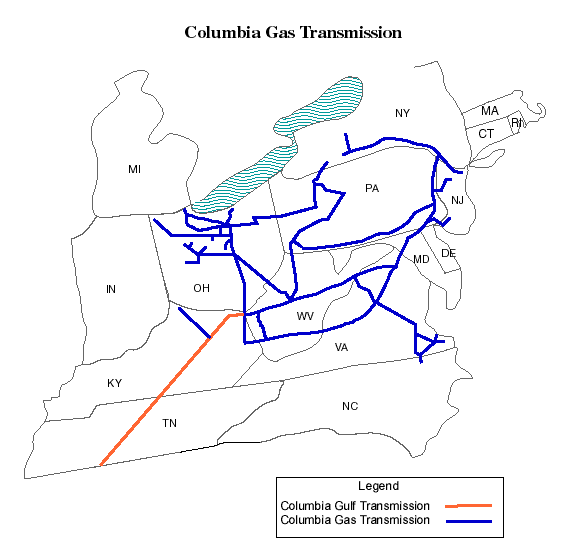
 Pennsylvania State Rep. Martin Causer (R-Turtlepoint) testified before the U.S. House Committee on Agriculture in Washington, DC on Wednesday, April 13. Causer was there to tell the House Agriculture Committee that new pipelines are desperately needed in the farm country he represents. We have a copy of Rep. Causer’s masterful testimony below…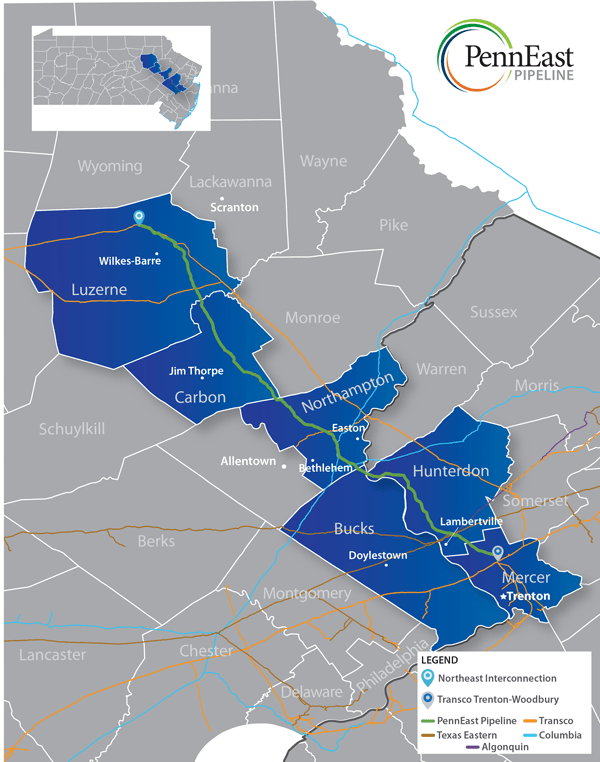


 More trouble may be ahead for drillers in the Marcellus, Utica and beyond. Fitch Ratings has just released a report that says the Office of the Comptroller of the Currency (OCC)–a federal agency–is set to downgrade the ratings of loans for many exploration and production (E&P) companies that are considered “high yield” (HY). If the outstanding loans these companies have (and most of them, if not all of them, have outstanding loans), the downgrade means it will be much more difficult for drillers to get their hands on new money. And if they can somehow get their hands on new money, it’s going to cost them a lot more to do it, i.e. higher interest rates. Word on the street is that banks are feeling the pressure from the Federal Reserve and the OCC and will “reduce most energy company credit lines by roughly 20-40 percent this month.” Ouch. Banks have pretty much quit financing coal projects. According to one source, “Crude oil and natural gas productions may not be far behind.” Here’s the low down…
 Yesterday MDN brought you a copy of a fascinating new study published by the Interstate Natural Gas Association of America (INGAA). The new study is titled “North American Midstream Infrastructure Through 2035: Leaning into the Headwinds” (see
  MDN is strongly in favor of property rights. “You don’t tell me I can’t allow drilling a shale well or a pipeline–and I don’t tell you that you must allow it.” That’s always been our guiding philosophy. It pains us when pipeline companies use eminent domain to force landowners to allow a pipeline to be built. Having said that, it’s a pipeline! It’s underground. Farmers can plant crops over top of it after it’s in the ground. After a few years, you’re hard pressed to even tell where the pipeline is buried! We say if there’s widespread opposition to pipelines in a given community, don’t bother building it there. However, if there’s a handful of holdout landowners (often driven by global warming insanity), eminent domain may be justified. Life is complex. These issues are complex. Again, forcefully using eminent domain against any landowner–even the stupid anti-drilling ones–pains us. We don’t like it. But eminent domain is part of our laws, created to benefit wider society. We spotted an article about some Massachusetts landowners who equate opposing Kinder Morgan’s Northeast Energy Direct pipeline with being patriotic, like the patriots from the original Boston Harbor Tea Party revolt. We had to laugh…
 Once a month our favorite government agency, the U.S. Energy Information Administration (EIA), issues a Short-Term Energy Outlook (STEO). The EIA issued their latest edition on Tuesday. We have a full copy below. We’ve grabbed out the section on natural gas because it includes a couple of key points: (1) U.S. natural gas inventories just finished the winter heating season at their highest level ever, and are expected to be at a record high at the start of next winter heating season in November. (2) This summer natural gas consumption for electricity generation is expected to reach a record high. Here’s the natgas section of the STEO, along with a copy of the full report…
 In March MDN told you that Alpha Natural Resources (ANR), primarily a coal company with 27,400 acres of Marcellus/Utica Shale leases, was throwing in the towel and calling it quits (see