
Gaslighting Mass. Governor Says She’s Never Blocked Pipelines
 In 2022, then-Massachusetts Attorney General (now Governor) Maura Healey bragged she had “stopped two gas pipelines from coming into this state” and that she opposes new natgas infrastructure in the state. Her claim is captured on video. She now says she has “never stopped gas pipelines from entering the state” and that natural gas is an essential energy source in Massachusetts. Healey is taking fire from both sides for gaslighting (lying about) her opposition and now supposed support for natural gas pipelines. Read More “Gaslighting Mass. Governor Says She’s Never Blocked Pipelines”
 In September, NextDecade Corporation announced it had reached a final investment decision (FID) to move forward with construction of Train 4 at its Rio Grande LNG export facility in Brownsville, Texas, within the Port of Brownsville (see
  Nations at a meeting of the UN’s International Maritime Organization voted to delay by one year a decision on a global tax on carbon emissions from shipping. The U.S. campaigned against the measure, with President Donald Trump and other officials arguing it was an “untenable global carbon tax” that would harm the U.S. economy. The delay, a major win for Trump, was backed by 57 countries, including the U.S., Saudi Arabia, Iran, and Russia, while European nations and the UK, which had supported the regulations, were on the losing side of the vote.
  OTHER U.S. REGIONS: New Jersey’s wind debacle; NATIONAL: U.S. natural gas futures snap losing streak; INTERNATIONAL: Oil ends third straight weekly loss; Polish judge denies Nord Stream suspect extradition.
  For the week of October 6 – 12, the number of permits issued to drill new wells in the Marcellus/Utica dropped significantly from the previous week. There were only seven new permits issued across the three M-U states last week, down from 32 issued two weeks ago. The bottom fell out of the new permits issued. In fact, only one state, Pennsylvania, issued new permits last week. Both Ohio and West Virginia issued no new permits. Last week marked the third consecutive week with no new permits issued in WV. Is someone asleep at the switch in the Mountain State?
  Yesterday, West Virginia and Diversified Energy unveiled a new public-private partnership to solve one of the most persistent environmental problems in oil- and gas-producing regions. WV Governor Patrick Morrisey and Diversified CEO Rusty Hutson, Jr., announced the creation of the Mountain State Plugging Fund, a unique, non-taxpayer-funded approach designed to retire an estimated 20,000 abandoned oil and gas wells permanently. By capping this old infrastructure, the state will significantly reduce the risk of groundwater contamination and stop the release of methane.
  Pennsylvania is aggressively positioning itself as a leader in the AI data center race with an ambitious $92 billion, state-level initiative (see
 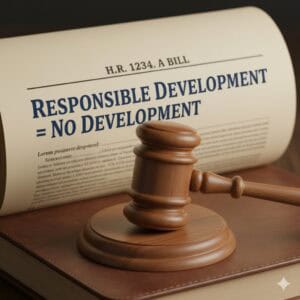 Earlier this week, a seven-member, all-Democrat group of Pennsylvania House of Representatives members announced a six-bill legislative package aimed at regulating the “responsible development” of artificial intelligence (AI) data centers in the state. “Responsible development” is code for “no development” of new AI data centers. The proposed onerous legislation focuses on environmental and community impacts related to the centers’ water and energy use, emergency preparedness, community standards, and transparency. Don’t be fooled. This is an attempt to throttle new data centers to prevent more natural gas from being used to power them.
  Venture Global’s Calcasieu Pass (CP) LNG export facility in Louisiana began operations in March 2022 (see
 Ohio Republican Senators have introduced Senate Bill (SB) 219, the first significant update to Ohio’s oil and gas laws since the Kasich administration more than a decade ago. SB 219, introduced by Sen. Al Landis, aims to reform Ohio’s orphaned oil and gas well program. The bill proposes establishing the Oil and Gas Resolution and Remediation Fund, funded by filing fees and penalties, to protect orphan well funds from being raided by the state legislature (as often happens now). The bill also streamlines notification procedures for abandoned wells, requiring only publication in a newspaper or on the ODNR website. Additionally, the bill accelerates drilling by eliminating the Ohio Department of Natural Resources’ (ODNR) discretion to deny expedited project reviews and by making road-use agreements with local governments voluntary and capped at three years.
  Ohio Democrat House members have introduced a bill to solve a problem that doesn’t exist. House Bill (HB) 399 would ban fracking under Lake Erie (which has NEVER been proposed or even thought of), and ban fracking under state-owned parks, which is now happening. With respect to drilling under (not on) state-owned parks, when it happens, nobody knows it’s happening (see
  Pennsylvania state Rep. Greg Vitali, a radical Democrat and the majority chairman of the state House Environmental & Natural Resource Protection Committee, introduced legislation (H.B. 1946) this week that would increase the current setback distances for unconventional oil and gas wells in Pennsylvania from 500 feet to 2,500 feet, effectively banning all new shale drilling in the state. Period. End of sentence. And Vitali (and the other radicals who have signed on to the bill) know it. The bill doesn’t stand a chance in the Republican-controlled Senate, but that’s not the point. The point is (a) fundraising, and (b) there is no other reason, except fundraising.