
Energy Companies | Energy Services | Energy Transfer Partners | Industrywide Issues | Pennsylvania | Pipelines | Processing Plants | Shell | Statewide PA | Sunoco Logistics
Mariner East Pipe, Shell Cracker Can Restart Construction May 1
 Great news! The Mariner East 2 pipeline project along with Shell’s mighty ethane cracker project will once again be able to restart their stopped construction. At least according to our reading of the law. As you may know the Pennsylvania Dept. of Community and Economic Development (DCED) has been “reviewing” waiver requests to allow all work to resume for both ME2 and the cracker project (see PA DCED First Grants Then Rescinds ME2 Pipe Construction Waivers and Shell Files for Waiver to Restart PA Cracker Work w/Fewer Workers).
Read More “Mariner East Pipe, Shell Cracker Can Restart Construction May 1”
 The first phase (of three) for Sabal Trail, a $3.2 billion, 515-mile interstate natural gas pipeline in Florida, Georgia, and Alabama to deliver Marcellus gas to the southeast, came online in June 2017 (see
  The U.S. rig count continues in a freefall, losing massive numbers of rigs each week. Over the past month rigs have gone down 47, then 45, then (gulp) 80, and then 74 (see
  Eighteen Pennsylvania State Senators sent a letter to Gov. Tom Wolf on April 21 asking Wolf to direct the state Dept. of Environmental Protection (DEP) to stop trying to ram through a new tax on carbon that will kill the state’s flourishing natural gas-fired electric generating plants.
 We’ve recently brought you a number of stories about Chesapeake Energy and their falling stock price (see
  Reuters recently published a story called “Bankruptcy looms over U.S. energy industry, from oil fields to pipelines.” Until now the main focus and chatter has been about shale oil drillers and how they will, or will not, survive the low oil price apocalypse. What we haven’t heard much about (until now) are pipeline companies. As the article points out, midstream companies are not immune to the price crash nor (for some) to bankruptcy.
 MARCELLUS/UTICA REGION: Update regarding Ohio landmen professional registrations; OTHER U.S. REGIONS: U.S. oil firm Continental Resources halts shale output, seeks to cancel sales; NATIONAL: COVID-19 mitigation efforts result in the lowest U.S. petroleum consumption in decades; Patterson-UTI sees 60% decline in activity as oil prices crater; For natural gas, negative U.S. crude is manna from heaven; How the futures market impacts physical crude oil; US energy independence can still lead the way; INTERNATIONAL: U.S. natural gas to be world’s priciest amid virus upheaval.
 Disgusting anti-fossil fuel lunatics have hassled the Keystone XL oil pipeline in the Midwest with frivolous lawsuits for years. Last week an Obama-appointed liberal judge serving in Montana, U.S. District Judge Brian Morris, vacated a permit for the Keystone project, once again stopping construction. The permit vacated was issued by the U.S. Army Corps of Engineers and is called a Nationwide Permit 12–the equivalent of a Section 401 permit under the Clean Water Act–allowing projects like pipelines to be built across or under streams, rivers and “wetlands” (swamps). The problem with the judge’s action is that it potentially affects all pipeline projects across the country using an NP12 permit–including the delayed Mountain Valley Pipeline (MVP), a 303-mile Marcellus/Utica gas pipeline from West Virginia to southern Virginia.
 Virginia Natural Gas (VNG), a company that serves customers in northeastern Virginia, wants to build new natural gas infrastructure in Prince William and Fauquier counties. VNG is seeking state approval to build 24 miles of new pipeline and two new compressor stations (expanding a third compressor), connecting to the mighty Transco pipeline system to flow Marcellus/Utica gas to the region. The Header Improvement Project, as it’s called, will help service VNG’s 300,000 natural gas customers and is needed to deliver natural gas to two proposed new gas-fired power plants.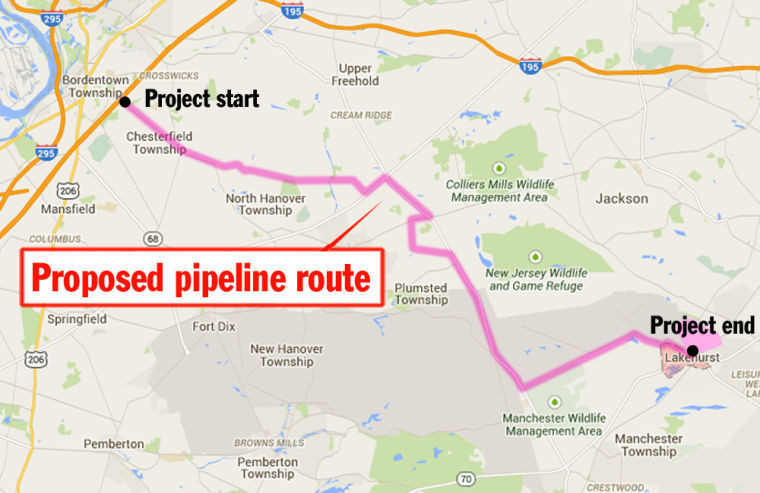
 The Narragansett Indian Tribe in Rhode Island won’t be smoking the peace pipe any time soon. The Tribe tried to block construction of Tennessee Gas Pipeline’s (TGP) Connecticut Expansion pipeline project as a violation the National Historic Preservation Act by not protecting “ceremonial stone landscapes” supposedly found along the path of the pipeline (see
  Marcellus/Utica propane flows from eastern Ohio and southwestern Pennsylvania all the way to southeastern PA via the Mariner East pipelines (ME1 and ME2). A petrochemical facility operated by Braskem America in Marcus Hook (near Philadelphia) processes some of that propane, turning it into polypropylene–the raw plastic used to make N95 masks, hospital gowns, and sanitary wipes–items in critical demand right now to protect health care workers against the COVID-19 coronavirus. This will bring tears to your eyes as it did ours: Some 40 workers at the Braskem plant voluntarily decided to stay at the plant for 28 days straight–working 12-hour shifts–not leaving once during that time so they could be sure of no COVID contamination while they worked to make polypropylene that in turn would be used to make personal protective equipment for healthcare workers. We salute them one and all!
 Michael Moore, the uber-leftist filmmaker, has just trained his sights on destroying his own leftist brethren in the Big Green movement. Two days ago Moore released a full-length documentary on Youtube called “Planet of the Humans” (embedded below) questioning the claims of “green” wind and solar farms, pointing out the environmental destruction being caused by so-called “renewables.” Moore is no longer on the Christmas card list of Big Green groups after this one.
 Yesterday MDN told you that miracle of miracles, the Pennsylvania Dept. of Environmental Protection (DEP) has finally, after more than two years of evaluation, granted a permit to build a wastewater injection well in Plum Boro in Allegheny County, near Pittsburgh (see