Critics Warn Trump’s Ohio Gas Power Plant Project is Too Big
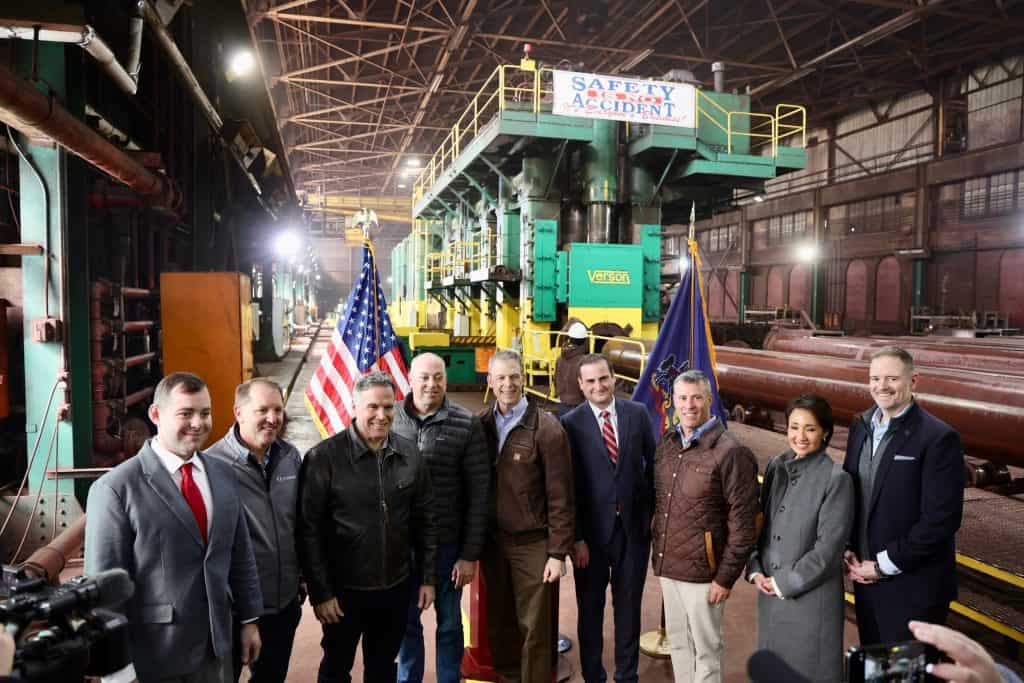
 President Donald Trump’s proposal for a $33 billion, 9.2-gigawatt gas power plant in Ohio—funded by Japanese investment, including SoftBank—aims to address soaring energy demands from data centers (see Trump Announces Largest-Ever U.S. Gas-Fired Plant Coming to Ohio). As the largest gas-fired power plant in the U.S., it promises a massive surge in electricity to the PJM grid. However, so-called competitors fear this “muscular industrial policy” will crowd out private capital and imperil smaller projects. Leave it to the left (Bloomberg) to find the dark cloud for every Trump silver lining. If Trump announces a $33 billion investment in Ohio for power generation, it’s bad because it will offend smaller competitors. If Trump announces the sun is shining, it’s bad because we need more rain. If Trump announces a cure for cancer, it will be bad because it will put hospitals and doctors out of business. Such is the twisted view of the left. Read More “Critics Warn Trump’s Ohio Gas Power Plant Project is Too Big”
 Today, we revisit a topic that (at first glance) is a bit complex: a federal EPA regulation called Subpart OOOOc (“Quad O”), which addresses methane emissions from existing sources. Under the Biden administration, Quad O was twisted and used in an attempt to force oil and gas drillers, especially small conventional drillers, out of business. The policy was set, and the individual states were instructed to bring their own regulations and policies into compliance. But then the Democrats lost the White House. No worries…the Dems running the Pennsylvania Department of Environmental Protection (DEP) eagerly developed onerous regs to comply with the Biden EPA’s Quad O standards. The DEP’s regs are ready to go and could be adopted at any time. However, the Trump EPA delayed implementation of Quad O until 2027 while it works to revise or scrap it.
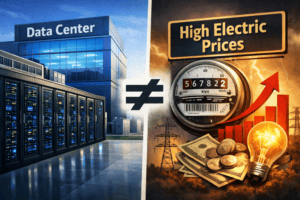 Despite political rhetoric scapegoating data centers for rising electricity costs, EIA data reveals that electricity price hikes began long before the data center industry’s expansion. States with high concentrations of data centers, such as Virginia and Texas, maintain residential electric rates below the national average, while Vermont has the fewest facilities but significantly higher costs. An excellent article appearing on RealClearEnergy identifies systemic issues—including aging infrastructure and regulatory inertia—as the true drivers of rising bills. Rather than blaming data centers, the article argues for modernizing the grid and aggressively increasing energy production to meet growing demand. Technology can actually create a more efficient, lower-cost electrical system.
 Natural gas markets are currently facing significant storage deficits for the first time in a year, following the severe disruptions caused by Winter Storm Fern. Record-breaking withdrawals, including a weekly high of 360 Bcf, have pushed inventories 130 Bcf *below* the five-year average due to spiked heating demand and production freeze-offs. This supply-demand imbalance triggered a 300% surge in Henry Hub prices, which peaked at nearly $14.00. However, as production recovers and forecasts predict warmer late-February temperatures, analysts expect market volatility to stabilize and cash prices to gradually converge with front-month contracts as supply concerns ease.
 J.P. Morgan recently facilitated a $5 billion financing package for VoltaGrid, a U.S. energy company specializing in advanced natural gas and behind-the-meter microgrid solutions (think small gas-fired power generators). This funding, comprising $2 billion in senior secured notes and a $3 billion asset-based loan, supports VoltaGrid’s goal to deploy 4 gigawatts of power by 2028. These decentralized energy systems address surging electricity demands from AI and data centers by providing resilient, on-site generation that reduces grid strain. And yes, there is a connection to the Marcellus/Utica region.
 Yeah, well, you knew this was coming. Last week, President Trump and EPA Administrator Lee Zeldin announced the “largest deregulatory action in American history” by officially revoking the Obama EPA’s 2009 “endangerment finding” (see
 MARCELLUS/UTICA REGION: INR appoints Thomas Marchetti as VP of investor relations; Ohio school launches oil field safety training program; OTHER U.S. REGIONS: New England lawmakers weigh plug-in solar as Europe’s model spreads; NATIONAL: U.S. natural gas futures end lower in choppy trade; Why data centers don’t have to be the villain; USA renews threat to withdraw from IEA; Which USA oil major produced the most in 2025?; EPA begins rolling back Biden’s “good neighbor” rule; After years of buybacks, Big Oil is drilling again; Solar and wind aren’t real power sources, they’re intermittent fuel-savers; INTERNATIONAL: Crude surges as Iran risks grow; Amsterdam to enact ban on fossil fuel and meat advertising in public spaces; ‘Climate cult’ hurts Europe’s economy, US energy secretary tells AFP; Gavin Newsom and UK’s Ed Miliband aim to burn their nations on the altar of eco-lunacy.
 President Donald Trump unveiled the first projects under a $550 billion trade deal with Japan yesterday, including a $36 billion investment in U.S. energy and minerals. In exchange for a 15% reduction in tariffs on imports, Tokyo will fund initiatives in Texas, Ohio, and Georgia to revitalize the industrial base. The centerpiece is a record-breaking $33 billion natural gas power plant in Piketon (Pike County), Ohio, operated by SoftBank’s SB Energy. This 9.2-gigawatt facility—the largest in U.S. history—is designed to create thousands of jobs and support the surging energy needs of data centers and artificial intelligence applications. It will produce enough electricity to power every single home in Ohio! It’s massive.
 Energy Transfer LP (ET) owns and operates one of the largest and most diversified portfolios of energy assets in the U.S., with approximately 140,000 miles of pipeline and associated energy infrastructure. ET’s strategic network spans 44 states, with assets in all major U.S. production basins, including the Marcellus/Utica. The company issued its fourth quarter 2025 update yesterday. Based on the 4Q earnings call transcript and presentation, ET continues to view the M-U (Appalachian) region as a “great business” and remains the “dominating player” in natural gas liquids (NGL) in the M-U (and nationwide).
 In early 2024, we reported that Penn America Energy CEO Franc James, the potential builder of the proposed Penn LNG export facility in the Philadelphia area, said that he “pumped the brakes” on the project but that it wasn’t dead yet (see
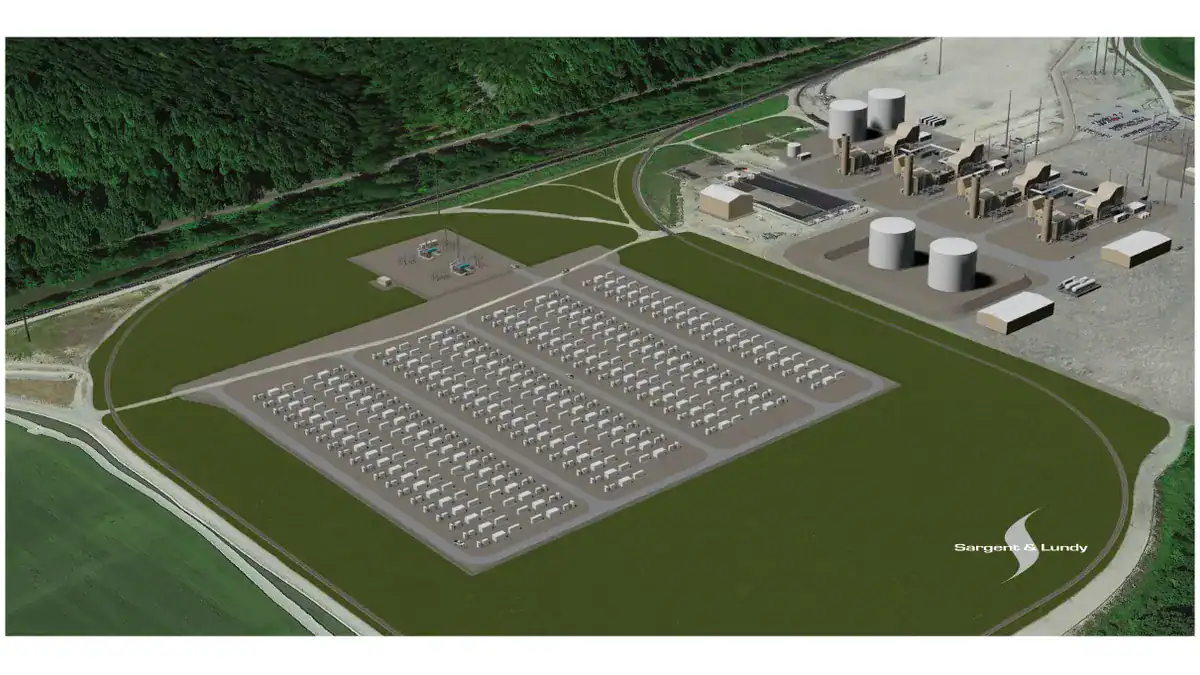
 This is disappointing. The United Mine Workers of America (UMWA) held a press conference yesterday in Charleston, WV, to oppose new natural gas power plants in West Virginia, citing concerns over coal job losses and community instability. UMW International President Brian Sanson criticized proposed projects by Mon Power and FirstEnergy, arguing that these gas-fired facilities threaten thousands of mining careers while providing only “temporary” construction jobs and minimal permanent staffing. He is urging state and federal lawmakers to enact codified legal protections for the coal industry.
 Yesterday, CNX Resources announced it is issuing new “notes” (we call them IOUs) to raise money to buy back and redeem other notes coming due soon. The old notes are due in 2029. The new notes would be due and payable in 2034. CNX is “rolling over debt,” a common practice among large corporations, especially in capital-intensive industries such as energy and natural gas production. The company hopes to raise $500 million with the new notes to pay off the old ones. The question is, why do companies do this? Why keep rolling over debt every few years?