
Huge New Marcellus-Fired Power Plant Coming Near Richmond, VA
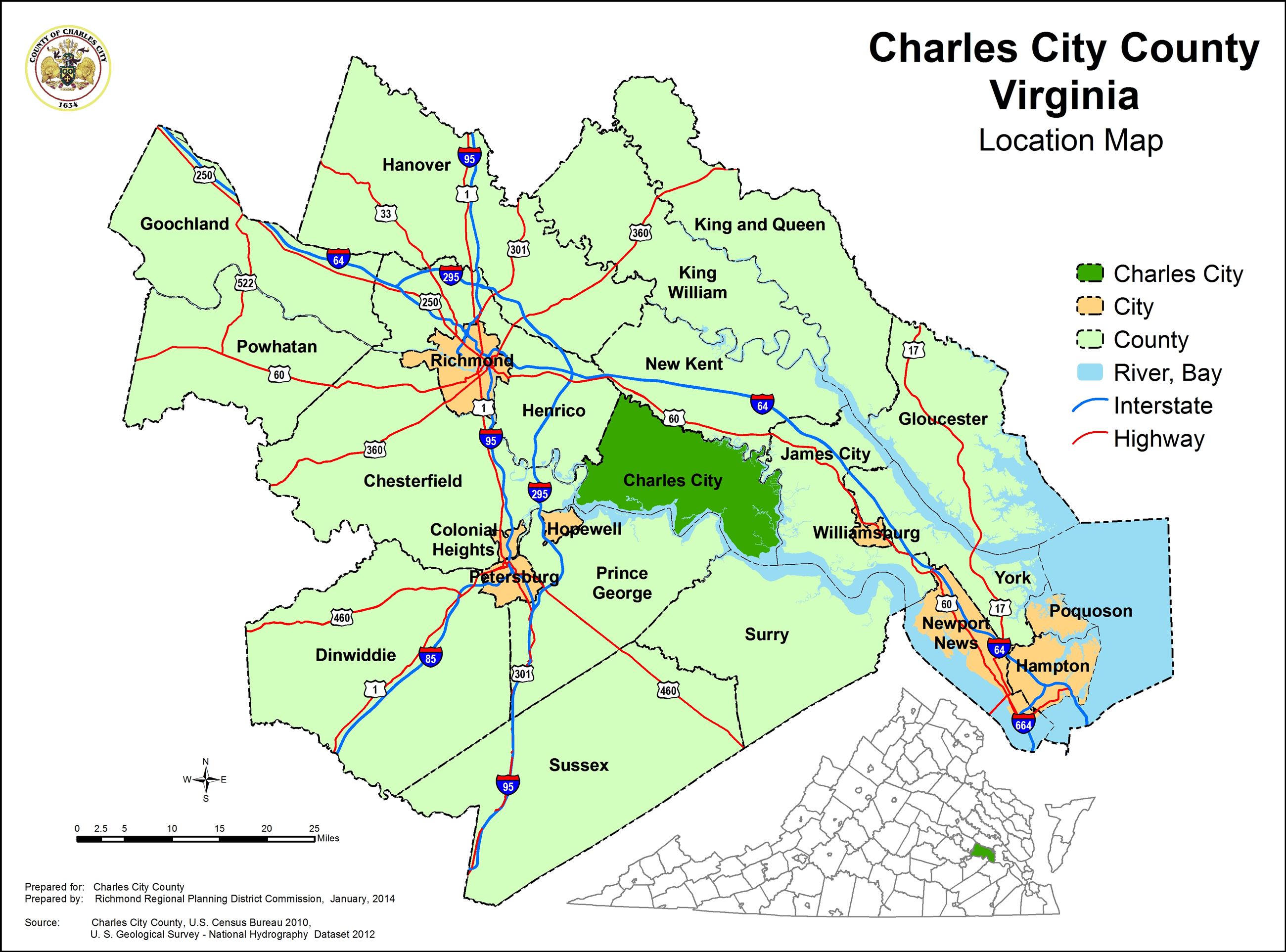
While it’s been in the planning stages since 2016, we’ve only just become aware of an important new (mammoth) Marcellus-fired electric generating plant coming to Charles City County in Virginia. What’s that? Never heard of “Charles City” County? Neither had we. The county is located southeast of Richmond and west of Jamestown. It is bordered on the south by the James River and on the east by the Chickahominy River. The Chickahominy Power Station, as it’s called, will be a 1,650 megawatt state-of-the-art natural gas-fired power plant. The facility is owned and being developed by Balico, and built by Gemma Power Systems. According to a press release announcing Gemma’s involvement with the project, “The project will be powered exclusively by clean natural gas from the Marcellus shale formation.” That’s cool! We’re not exactly sure which pipeline(s) will flow Marcellus gas to the plant, but it’s good to know that our gas will power it. This is a huge plant. It ties as being the largest natgas-fired plant ever, along with the 1,650 MW Apex Power plant being planned for Guernsey County, OH (see Country’s Biggest NatGas Power Plant Breaking Ground in OH Oct-Nov). Here’s more on the coming Chickahominy Power Station near Richmond…
Read More “Huge New Marcellus-Fired Power Plant Coming Near Richmond, VA”
 Sources talking to the Pittsburgh Business Times have tipped the paper that EQT recently idled something like five fracking crews, and that Range Resources recently idled a top hole drilling rig. Oh oh. Is this an early sign that the gas patch is slowing down again? Are we heading into a downturn? Don’t panic. Although there has been some scaling back, both companies say activity levels and most importantly, production levels, are not jeopardized by their actions. Instead, the moves are about “saving money” and “increasing efficiencies.” The truth is, as technology and strategies continue to improve over time, drillers don’t have to drill as many holes in order to produce the same or more than they produce now. The companies in the Marcellus/Utica patch are getting leaner–more efficient at what they do, and how they do it. Yeah, it sucks when local jobs get whacked due to “efficiencies,” but ultimately it’s a good sign. It means the companies are getting stronger and will stick around for the long term–providing jobs and economic benefits in the communities where they work for years to come…
 Shell delivered some good news at last week’s Northeast U.S. Petrochemical conference in Pittsburgh: The Falcon ethane pipeline will get built next year (see
  A recent article in the left-leaning Roll Call (official publication for Washington, D.C. swamp dwellers) attempts to paint the Trump Administration as out of step with the people he wants to help in West Virginia. The article says Trump’s strategy to prop up failing coal and nuclear plants is an attempt to boost coal mining jobs in WV, but is running counter to the state’s strategy of embracing the natural gas industry. Perhaps they have a point. However, what’s most interesting about the article is not the ginned up conflict between Trump and WV, but how the article spotlights WV’s two U.S. Senators–Republican Shelley Moore Capito and Democrat Joe Manchin–and their continuing role in trying to make a $10 billion NGL (mostly ethane) storage hub facility become a reality. The storage hub will be a jobs magnet with some estimates that it will create more than 100,000 new jobs in the state. The storage hub will also draw manufacturers looking to locate near ethane crackers, as a source for plastics used in their manufacturing process. Capito, in her comments, attempts to gloss over the rivalry between coal and natural gas, saying “all those rivalries have gone by the wayside.” Er, a, we beg to differ. But leaving aside the coal v. natgas focus of the article, we found two very interesting items. (1) The Dept. of Energy loan guarantee that would cover $1.9 billion of the estimated $10 billion cost to build it is a much bigger deal that we had realized. Why? Because any project that wins such a guarantee has gone through a rigorous review process. Winning such a guarantee is like conferring a triple A rating on the project for others who will consider investing in the project. It gives them confidence that the project has been thoroughly vetted and is low risk. (2) Manchin, in speaking with DOE Sec. Rick Perry, is using an interesting and novel argument to convince Perry the storage hub is a good thing to do. Manchin said when hurricanes hit the Gulf Coast, it knocks out petrochemical industry there, with a cascading effect across the U.S. Cracker plants (fed by the storage hub) in the northeast, are not susceptible to hurricanes. So Manchin’s pitch to Perry is this: Keep the Gulf Coast crackers cooking for products to export to other countries, but let’s build the storage hub (and crackers) in the northeast, so our country’s petchem industry isn’t adversely affected by a major hurricane…
 Many (most?) electric generating companies in the U.S. are regulated–highly regulated. They’re guaranteed a certain, predictable level of (low) profits. But in return for guaranteed profitability, every single thing they do is monitored and authorized in triplicate, with one or another government agency reviewing anything and everything that happens. It’s the deal they’ve struck with the regulatory devil. Vectren is one such regulated utility in the great state of Indiana. Vectren operates the F. B. Culley Generating Station, a 369 megawatt (MW) coal power plant located in Warrick County, Indiana. They plan to close the coal-fired plant in 2023. In its place, they want to build a 900 MW natgas-fired plant and a 50-acre solar farm. Building the gas plant and solar farm would cost Vectren (meaning ratepayers) $940 million. The cost is passed on to ratepayers because Vectren is regulated. That’s the way it works. The bargain struck with the devil. The gas-fired plant will be cleaner than coal, more efficient, cheaper to operate, and better for the environment. We suspect Utica/Marcellus gas would help feed the plant. And yet, anti-fossil fuel wackos oppose the plan to switch to cleaner-burning natgas. Would they prefer no electricity?…
 Perhaps the proposed legislation by PA Rep. Dan Moul (Republican from Gettysburg) to gut not only the DRBC (Delaware River Basin Commission) of its power to regulate groundwater, but also to gut the SRBC (Susquehanna River Basin Commission), is not so far off the mark after all (see
  In March, MDN brought you the news that the Federal Energy Regulatory Commission (FERC) had taken “significant action” to address the Trump tax cut legislation enacted last December (see
  The “best of the rest”–stories that caught MDN’s eye that you may be interested in reading: PA PUC hosts natgas distribution emergency exercise; NY a cautionary tale for other states re shale gas; Chevron, Exxon worry warts over trade war; NERC says grid resiliency keeps on improving, without coal/nuke bailout; US reduces emissions while emissions from all other Paris accord counties goes up; will a hot summer boost natgas prices?; start treating natgas like the national treasure it is; China to be top natgas importer by 2019; regs & taxes causing drillers to leave Canada and drill for oil across the border in the US; and more!