
Expand Buys Gas Marketer Twin Eagle for $1.25B – Why M-U Should Care
 Expand Energy, the largest natural gas producer in North America and a giant in the Marcellus/Utica, announced yesterday that it has signed a definitive agreement to buy Twin Eagle Holdings for $1.25 billion in cash from private equity owner Five Point Infrastructure. Twin Eagle is not a driller. It doesn’t own a single well. It’s a physical gas marketer — a middleman that buys gas from producers, moves it through pipelines and storage, and sells it to utilities, power plants, and factories. Twin Eagle markets more than 5 Bcf/d (billion cubic feet per day), controls 44 Bcf (billion cubic feet) of storage and roughly 2 Bcf/d of firm pipeline capacity, and serves over 1,000 customers across the U.S. and Canada. The deal is expected to close in the third quarter. When it does, Expand becomes the country’s biggest gas seller as well as its biggest gas producer. Read More “Expand Buys Gas Marketer Twin Eagle for $1.25B – Why M-U Should Care”
 The highly functional and responsible Susquehanna River Basin Commission (SRBC), unlike its dysfunctional and irresponsible counterpart, the Delaware River Basin Commission (DRBC), continues to support the shale energy industry by approving water withdrawals and consumptive use requests for responsible, safe shale drilling. The SRBC published a notice in the July 25th Pennsylvania Bulletin that the SRBC approved and/or renewed 21 general water use permits in June for individual shale gas well drilling pads in Clearfield, Lycoming, Sullivan, Susquehanna, Tioga, and Wyoming counties.
  In April, we brought you the news that the Federal Energy Regulatory Commission (FERC) had issued a Draft Environmental Impact Statement (DEIS) for the Kosciusko Junction Pipeline Project (see
  Ameren Missouri (a subsidiary of Ameren Corporation) announced yesterday that it has filed an application with the Missouri Public Service Commission (MoPSC) to build the West Alton Energy Center, a 2,100-megawatt (MW) combined-cycle natural gas power plant. The company expects the plant to come online in 2031, pending regulatory approval, and to create more than 1,000 construction jobs plus roughly 45 permanent positions. Ameren will build it right next door to its existing coal-fired Sioux Energy Center in West Alton, Missouri — sitting at the confluence of the Missouri and Mississippi rivers just upriver from St. Louis — so it can reuse the transmission connections and other equipment already on site. Company officials pitched the project as around-the-clock, in-state generation that will “work alongside our other resources” as older plants retire and demand climbs. Translation: Missouri needs power that shows up whether or not the wind blows or the sun shines.
 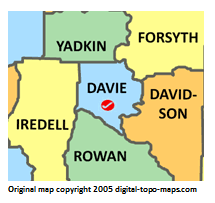 In January, MDN broke the news that Duke Energy was eyeing a 1,360-megawatt (MW) gas-fired power plant on 1,600 acres in Davidson County, North Carolina (see
  There’s terrific news brewing in Grant County, West Virginia — with an asterisk roughly the size of a cooling tower. Word circulated over the weekend that Dominion Energy plans to build a brand-new natural gas-fired power plant at its Mt. Storm complex, the same site where three coal-fired units have been cranking out electrons since 1965. The key detail: the gas plant would run alongside the coal units, not replace them. That’s more power, not swapped power. We like that math.
  Chesapeake Utilities Corporation (NYSE: CPK) and its subsidiary Peninsula Pipeline Company (PPC) announced on July 13 a new intrastate natural gas pipeline project in South Florida called the Florida Energy Pathway, or FEP. The line will be 24 inches in diameter, running from Palm Beach County to Miami-Dade County. It’s already anchored by firm commitments of nearly 250,000 dekatherms per day from multiple investment-grade shippers. (A dekatherm, or Dth, is a heat measurement roughly equal to a thousand cubic feet of natural gas — so think of it as about 250 MMcf/d, or 250 million cubic feet per day.) Upstream supply will come courtesy of Florida Gas Transmission’s Phase IX expansion. The price tag is around $1.2 billion, with an in-service date of 2030. Chesapeake plans to sell off up to 49% of the project to one or more partners. CEO Jeff Householder pinned the need on Florida’s booming population, its growing economy, and “significant energy supply constraints” in the south Florida market.
  MARCELLUS/UTICA REGION: How infrastructure can unleash Ohio’s energy dominance; New PA methane rules being developed for oil and gas operations; OTHER U.S. REGIONS: Argent LNG wins DOE approval to export to free-trade agreement countries; NATIONAL: U.S. natural gas futures extend losses; Hybrid sales rise while battery electric sales remain lower after tax credit expiration; CIEL’s latest report makes the case for #EveryoneKnew; The war on data centers jeopardizes our economy and national security; Reuters recycles the myth of cheap renewables; Climate lawfare comes for American energy and your wallet; INTERNATIONAL: Brent tumbles nearly 9% on diplomacy; Oil tankers reroute to Egypt amid Houthi threat; Iran war risk keeps US LNG cargo values near three-year highs; Academic says get used to a few blackouts to keep costs down.