
EIA Nov. STEO Cuts 2027 Henry Hub Price to $2.88; M-U DUCs Plunge
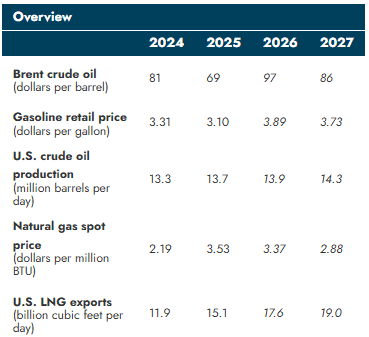 The U.S. Energy Information Administration (EIA) released its November Short-Term Energy Outlook (STEO) on Tuesday, and the news for gas prices is, well, more of the same. A warm start to November means less gas burned for heat, more gas left in storage, and lower prices. EIA now expects the Henry Hub spot price to average $2.87 per MMBtu (million British thermal units) from November through March, 16% less than it predicted just a month ago. EIA also cut its 2027 price forecast by 28 cents. Meanwhile, Appalachian drillers keep working down their stockpile of drilled-but-uncompleted wells (DUCs) at a startling pace. The count has fallen below 500 for the first time since 2022. And because we still miss EIA’s old Drilling Productivity Report, our “DPR Replacement” section is back this month, with all four charts. Read More “EIA Nov. STEO Cuts 2027 Henry Hub Price to $2.88; M-U DUCs Plunge”
 The Delaware Riverkeeper’s war against permits for a pipeline that’s already built and flowing gas has hit another brick wall. On Nov. 10, the full U.S. Court of Appeals for the Third Circuit refused to rehear a case the Riverkeeper lost in October over Pennsylvania permits for Williams’ Transco Regional Energy Access Expansion (REAE) project. That’s three straight losses for Big Green in this fight, and the October ruling the court left standing is “precedential,” meaning it binds future cases. It’s a big win for pipeline builders, and it may be an even bigger one for anyone tired of radicals waving Pennsylvania’s Environmental Rights Amendment around.
 Remember Ohio Senate Bill (SB) 294? We told you about it more than a year ago (see
 Remember when “the evil BlackRock” (MDN’s words) bought the Portland Natural Gas Transmission System (PNGTS) back in 2024 (see
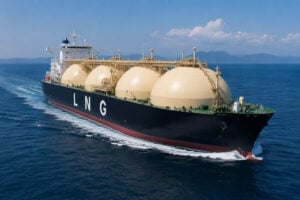 Venture Global (VG), the Louisiana LNG exporter and one of the biggest buyers of natural gas in the country, reported its third-quarter 2026 results earlier this week. The numbers were the company’s best ever: $2.6 billion in adjusted EBITDA, $4.8 billion in revenue, and 124 LNG cargoes shipped. For Marcellus/Utica readers, two items stand out. First, VG is paying a premium to get enough gas into its Plaquemines plant, which is fed by two pipelines that carry Northeast supply. Second, VG wants to add a new business: off-grid, gas-fired “AI utility” power for data centers. If it all gets built, that could mean well over a Bcf/d of new gas demand.
 Chesapeake Utilities Corporation (CPK) released its third-quarter 2026 update last week. (Not to be confused with the old Chesapeake Energy, now Expand Energy.) CPK is a Delaware-based utility that sells natural gas across the Delmarva Peninsula. That gas reaches Delmarva on CPK’s own interstate pipeline, Eastern Shore Natural Gas (ESNG), which picks it up in southeastern Pennsylvania from Transco, Texas Eastern (TETCO) and Columbia Gas Transmission, all of which have ready access to Marcellus/Utica supply. CPK also runs pipelines in Ohio. The quarterly numbers were solid: net income rose 11%. For the M-U region, the news includes a new $75 million ESNG expansion (covered in a separate post on Tuesday), a Delmarva LNG storage facility that’s nearly done but $25 million pricier, and progress on CPK’s Ohio pipeline to a data center.
 Europe’s two lawmaking bodies are now officially at odds over how long to delay the EU’s crazy methane import rules. Last Friday (Nov. 6), ambassadors for the EU’s 27 member governments (the Council) agreed, on their third try, to back a one-year delay. That sides with the European Commission (the EU’s executive branch) and against the European Parliament, which voted 341-225 on Oct. 22 for a three-year delay (see
 Here’s a fact worth bragging about at the next family dinner: the longest onshore horizontal shale wells ever drilled in the U.S. are all right here in the Marcellus/Utica, and the line between “record” and “routine” keeps moving. Five-mile laterals, unheard of a few years ago, are now showing up in quarterly earnings reports like any other line item. And they matter. A new UBS research report says longer laterals and faster drilling are a big reason U.S. drillers can keep growing production without adding many more rigs. So who holds the belt, who wants it, and what does it mean for landowners, service companies and pipelines? We put together a scorecard.
 Every October, right on schedule, the United Nations’ World Meteorological Organization (WMO) rolls out its annual Greenhouse Gas Bulletin. And every October, the headline is the same: “Record!” This year’s edition, the 22nd, landed on Oct. 27. It says carbon dioxide (CO2), methane, and nitrous oxide all hit new highs in 2025. Within hours, CBS News, New Scientist and a pile of other outlets were running it. The timing is no accident. WMO says outright that the bulletin is meant to inform negotiators at the COP31 climate confab in Antalya, Türkiye, which opened Nov. 9 and runs through Nov. 20. With the blabfest now in full swing, and with a fresh batch of global emissions numbers out this week, let’s look at what the report actually says, and what the headlines left out.
 MARCELLUS/UTICA REGION: Will Pennsylvania seize the data center moment?; OTHER U.S. REGIONS: Slow Golden Pass LNG ramp means winter growth may have to wait; Texas politicians broke ERCOT, now Hinojosa wants to freeze rates; NATIONAL: U.S. natural gas futures settle lower after gains; Democrats will wage war on affordable energy; Permitting reform bill advances closer to Senate finish; FERC’s LaCerte weighs in on midterms, PJM and utility monopolies; State battles pitting natural gas vs. electric may go national; US energy firm CEOs express confidence in permitting bill passage in Congress; Democrats went from ‘climate hushing to now claiming the midterms were all about climate’; Drones to surveil grids for data centers, infrastructure for oil and gas; INTERNATIONAL: Oil rebounds amid mixed Iran war signals; COP31 leaders try out new sales pitch for climate action – do it for the economy; Poland’s Orlen ends long-term QatarEnergy LNG contract over delivery failure; Public support for UK oil, gas higher than ever, OEUK says; Academic rot on energy/climate issues; China targets global gas turbine market as AI power demand explodes.