
Northern Access Pipeline Court Case Further Threatens NY DEC

A new threat against the New York Dept. of Environmental Conservation’s authority over pipeline projects is coming from yet another federal court. Last month MDN brought you the huge news that the U.S. Court of Appeals for the District of Columbia Circuit dismissed a lawsuit brought by the Millennium Pipeline against the NY DEC for delaying a decision to authorize a 9-mile pipeline Millennium wants to build from their main pipeline to an under-construction natgas-fired electric plant in Orange County, NY, called the Valley Lateral Project. Which may, at first blush, seem like a defeat. It was anything but a defeat. The justices, in their decision, said that the Federal Energy Regulatory Commission (FERC) has the right and responsibility to step back in and issue the water crossing permits themselves, overruling the NY DEC, if FERC so chooses (see DC Court Tells Millennium FERC Can Override NY DEC Pipeline Delay). A second court case in a different federal court, the U.S. Court of Appeals for the 2nd Circuit, is now progressing. That case was brought by National Fuel Gas Company in April against the NY DEC for a similar reason: delay and denial of federal 401 stream crossing permits for NFG’s Northern Access Pipeline project (see NFG Sues NY DEC in Fed Court re Northern Access Pipe Rejection). That case is now advancing and the lawyers for NFG are quoting the decision from the Millennium case as precedent for a ruling by the 2nd Circuit Court that the DEC cannot arbitrarily stop a federally-permitted pipeline project…
Read More “Northern Access Pipeline Court Case Further Threatens NY DEC”
 It’s been a while since we’ve updated you on a little-known (but rapidly becoming better known) company called JKLM Energy. In May 2016, the last time we wrote about JKLM, we told you the company had successfully drilled and was flowing gas from Potter County, PA’s first Utica Shale well (see
  Earlier this week MDN told you the news that corporate raider Jana Partners, along with the Cohen family (of Atlas Energy fame), are colluding to try and stop the merger/sale of Rice Energy to EQT (see
  When EQT and Rice Energy announced a deal in June for EQT to buyout and merge in Rice to create the largest natgas-producing company in the U.S., it seemed like a match made in heaven (see
 In May, Noble Energy dropped a bombshell that it is selling its 100% interest in 385,000 Marcellus/Utica acres and wells producing 415 million cubic feet equivalent of natural gas in West Virginia and Pennsylvania for $1.225 billion to “an undisclosed buyer” (see
  In January, MDN reported on a well pad fire at Rice Energy’s Papa Bear well pad in Somerset Township (Washington County), PA (see
  Atlas Energy, a once-major driller in the Marcellus Shale, sold much of their Marcellus operations to Chevron in 2011 (see
  In early June, MDN brought you the news that officials with Ascent Resources (formerly American Energy Partners) and Chesapeake Energy said their respective companies are putting a renewed focus on Jefferson County, OH in the coming months (see
 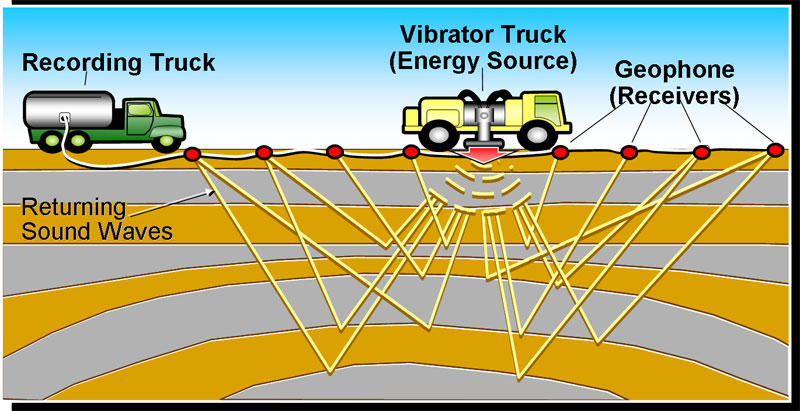 One of the first steps before a company decides to drill for shale gas (or oil), is to conduct a seismic survey–bouncing sound waves through the rock layers a mile or more down–to “see” what the geology looks like. It helps drillers target locations with the best possibility of success, which is a good thing for everyone (no unnecessary “misses” when drilling a well). One of objectives of the original Act 13 law passed in PA in 2012 was to provide uniform zoning ordinances for the oil and gas industry, so drillers don’t have to work with a crazy quilt patchwork of zoning requirements in every new town in which they drill. That failed when seven selfish towns filed a lawsuit that ultimately went to the PA Supreme Court, where the towns won the right to pass their own zoning regulations for oil and gas drilling (see
  It was more than six months in the making, but finally the Pennsylvania Dept. of Environmental Protection has granted Shell a permit that allows the facility to discharge wastewater and storm water into the Ohio River. Which may sound like Shell just got a permit to pollute the Ohio River–but that’s not what is happening. Shell is building their mighty $6 billion ethane cracker on a site formerly used as a zinc smelter. The old Horsehead Corp. plant held a permit that allowed the plant to discharge wastewater with some total dissolved solids (TDS) into the Ohio. When Shell bought the site, they also inherited the Horsehead permit for wastewater discharge. Shell filed a plan back in December with the PA DEP to modify that permit for the forthcoming cracker plant (see
  A week ago yesterday, EQT and Rice Energy announced some of the biggest news we’ve every reported: EQT is buying out and merging in Rice Energy, to create the largest natural gas producing company in the United States (see
  Green and Washington counties, south of Pittsburgh (Allegheny County), have long been considered the “core” of Marcellus Shale play in southwestern PA. The wells there get GREAT results–a mix of dry and wet gas (wet gas being natural gas liquids, like ethane, propane and butane). But one company, PennEnergy Resources, says the data shows that the same great Marcellus deposits are located underneath the great City of Pittsburgh itself, and in the towns north of the city (Allegheny County). And PennEnergy can prove it, with their own well results. Does that mean Pittsburgh itself may one day get drilled under?! Don’t hold your breath on drilling under Pittsburgh any time soon. However, according to Greg Muse, chief operating officer for PennEnergy, there’s plenty of gas to be drilled just north of the city–and the deposits are just as good as those south of the city. Muse also said PennEnergy is looking to either take the company public, merge with another company, or sell…
 The Mountain Valley Pipeline (MVP) is a $3.5 billion, 303-mile pipeline that will run from Wetzel County, WV to the Transco Pipeline in Pittsylvania County, VA. The project, which filed an official application with the Federal Energy Regulatory Commission in October 2015, is being built by EQT, NextEra Energy and several other partners. The project has faced stiff opposition from landowners in both West Virginia and Virginia. Although the project is not yet fully approved by the Federal Energy Regulatory Commission (FERC), the project did get a favorable Draft Environmental Impact Statement from FERC last September (see