
Mass. Electric Ratepayers Get a Brutal Lesson in Economics 101
 According to José Costa of the Northeast Gas Association, Massachusetts’ high energy bills (some of the highest in the country!) stem from infrastructure constraints rather than price volatility. That is, Democrat politicians like Gov. Maura Healey have blocked new pipelines with additional capacity from entering the state. Although the nearby Marcellus Shale produces abundant, affordable natural gas, New England’s pipeline system operates at capacity during extreme winter cold. These physical bottlenecks restrict gas delivery, driving up spot prices to nearly 17 times Pennsylvania’s levels. The same supply with far more demand equals soaring prices. It’s Economics 101. Read More “Mass. Electric Ratepayers Get a Brutal Lesson in Economics 101”
 Google has partnered with Voltus to fund a three-year, 100-megawatt (MW) so-called “virtual power plant” in the PJM Interconnection (roughly the Marcellus/Utica region). VPPs are designed to address soaring data center demand. Voltus will “aggregate” distributed energy resources from residential, commercial, and industrial customers. We call foul. So-called VPPs are fake—they don’t actually exist. They simply use existing grid electricity taken from other sources. Creating a VPP just takes a little software and a lot of apathy from citizens to make it work. Google will, in essence, pay other electricity consumers to shift or forgo energy use. Google says it’s faster and more cost-effective to buy electricity from other electricity users rather than build an actual, honest-to-God power plant.
  ISO New England’s Internal Market Monitor reported that total wholesale electricity costs in New England reached $15 billion in 2025, up 48% from 2024. The increase was driven by higher natural gas prices, tighter supply, changes in the resource mix, and shifts in market design. Day-ahead energy prices averaged $71.81/MWh, up 73%, while real-time prices rose 67% to $65.89/MWh. Natural gas prices more than doubled to $6.27/MMBtu. Carbon taxes added $1.1 billion to energy costs. Boiling it all down, aside from carbon taxes, high natgas prices are the main culprit. The report (full copy below) has some thoughts about why natgas prices are so high in New England.
 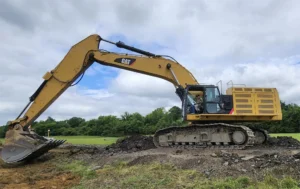 Homer City Generation announced the early completion of demolition and excavation work at its Indiana County, Pennsylvania, site, marking a major milestone in transforming the former coal-fired power plant into a gas-fired power plant and AI data center complex. Over nine months, partner Independence Excavating led 130 union workers and 65+ pieces of equipment to recycle over 112,000 tons of scrap material and excavate approximately 3 million cubic yards (comparable to the Great Pyramid’s volume), all while maintaining zero safety incidents.
  Data center developers are turning to behind-the-meter natural gas generation as grid interconnection delays now exceed five years, making traditional utility connections commercially unworkable for AI-scale (hyperscale) facilities. Natural gas turbines and engines provide continuous, dispatchable baseload power that unreliable renewables cannot deliver at the required scale and reliability. However, this shift transforms data centers from energy consumers to energy producers, requiring sophisticated gas supply strategies including managing basis risk, securing firm pipeline transport capacity, evaluating supply reliability during site selection, and structuring contracts that accommodate volume growth.
  Pennsylvania families face rising electricity bills despite the state’s abundant energy resources. In an excellent op-ed, Bradford County Commissioner Doug McLinko explains that local utilities like Penelec and PECO don’t control electricity costs—they only deliver power. Prices are set by PJM Interconnection’s regional market, where costs are soaring as baseload power plants retire while demand from manufacturing, data centers, and AI surges. Pennsylvania produces massive natural gas from the Marcellus Shale but lacks sufficient modern power plants to convert it into electricity.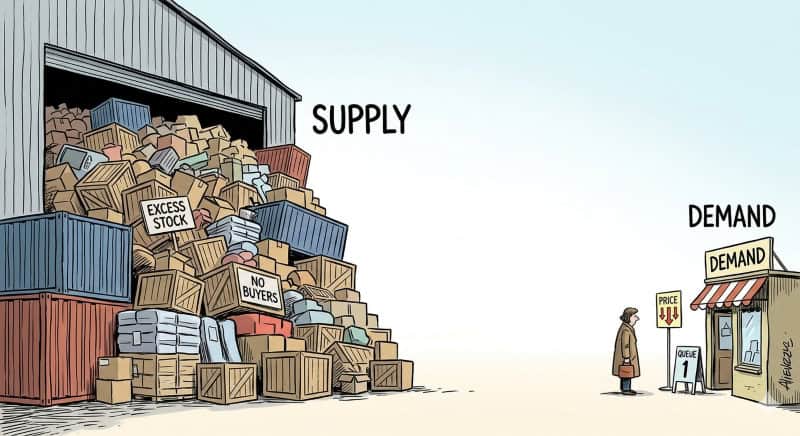
 East Kentucky Power Cooperative (EKPC) has officially broken ground on Liberty Station, a $500 million natural gas-fired power plant located in Casey County, Kentucky. Expected to be operational in late 2028, this project represents the cooperative’s first new greenfield power plant since the 1980s. The facility will use twelve large generators to produce electricity for approximately 95,000 homes (214 megawatts), significantly improving grid reliability for over 1 million customers across 89 counties. Running primarily on natural gas with ultra-low-sulfur diesel backup, the station will create over 20 high-paying, full-time jobs and deliver clean and reliable energy to rural residents.
  U.S. Secretary of Energy Chris Wright issued an emergency order on May 21 directing PJM Interconnection and Constellation Energy to keep Units 3 and 4 at Pennsylvania’s Eddystone Generating Station (near Philadelphia, in Delaware County) operational through the summer. Effective from May 25, 2026, to August 22, 2026, the mandate aims to ensure grid reliability. This directive follows four previous 90-day orders that have kept the aging, dual-fuel units online to support energy security. The DOE asserts that despite planned retirements, these 380-MW units remain essential for stabilizing the regional power supply. Big Green wants to close them down.
  Duke Energy, headquartered in Charlotte, N.C., is one of the largest U.S. energy holding companies, serving 8.7 million electric customers and 1.8 million gas customers across six states. While the company dabbles in unreliable renewables like solar and wind, its bread-and-butter, go-to source for new electric power generation is natural gas, which it gets from the Marcellus/Utica. We’ve reported on many of Duke’s announced new gas-fired power plant projects (
 Yesterday was the day. The third AI Energy Conference (which sold out) was held at the Hilton Garden Inn Pittsburgh/Southpointe in Canonsburg, PA. One of the speakers, Travis Wright, Vice President of Energy and Sustainability for QTS, said that everyday smartphone use depends on data centers. They are essential infrastructure for modern life. Blackstone-owned QTS, which operates major facilities nationwide and is planning a 1,700-acre data center campus in Luzerne County (Wilkes-Barre area), sees Appalachia as a promising market due to its workforce, energy resources, and suitability for AI-focused facilities.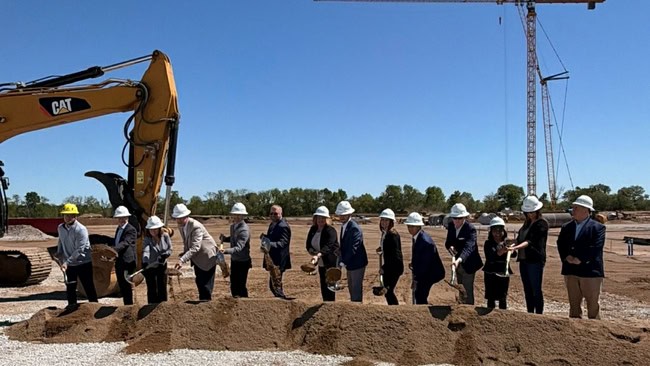
 Good news! The Public Service Commission (PSC) of South Carolina approved a joint application by Dominion Energy and Santee Cooper to build Canadys Station, a natural gas combined-cycle facility in Colleton County. The plant will generate approximately 2,200 megawatts (2.2 GW) — enough to power over one million homes — addressing the state’s growing energy demand. It will be built on the site of a former Dominion Energy coal plant, roughly 40 miles northwest of Charleston (the “Lowcountry” region), eliminating the need for new land clearing.
  Pennsylvania Governor Josh Shapiro has been blaming the PJM Interconnection grid for the soaring costs of electricity when his own policies are to blame, even threatening to pull out of the cooperative (see
  In February 2024, members of the South Carolina Public Service Commission approved a proposed project to build a 2,200-megawatt (MW) gas-fired power plant in the state’s Lowcountry, in Colleton County (see