
New 953-MW Utica-Fired Power Plant Goes Online in Lordstown, OH
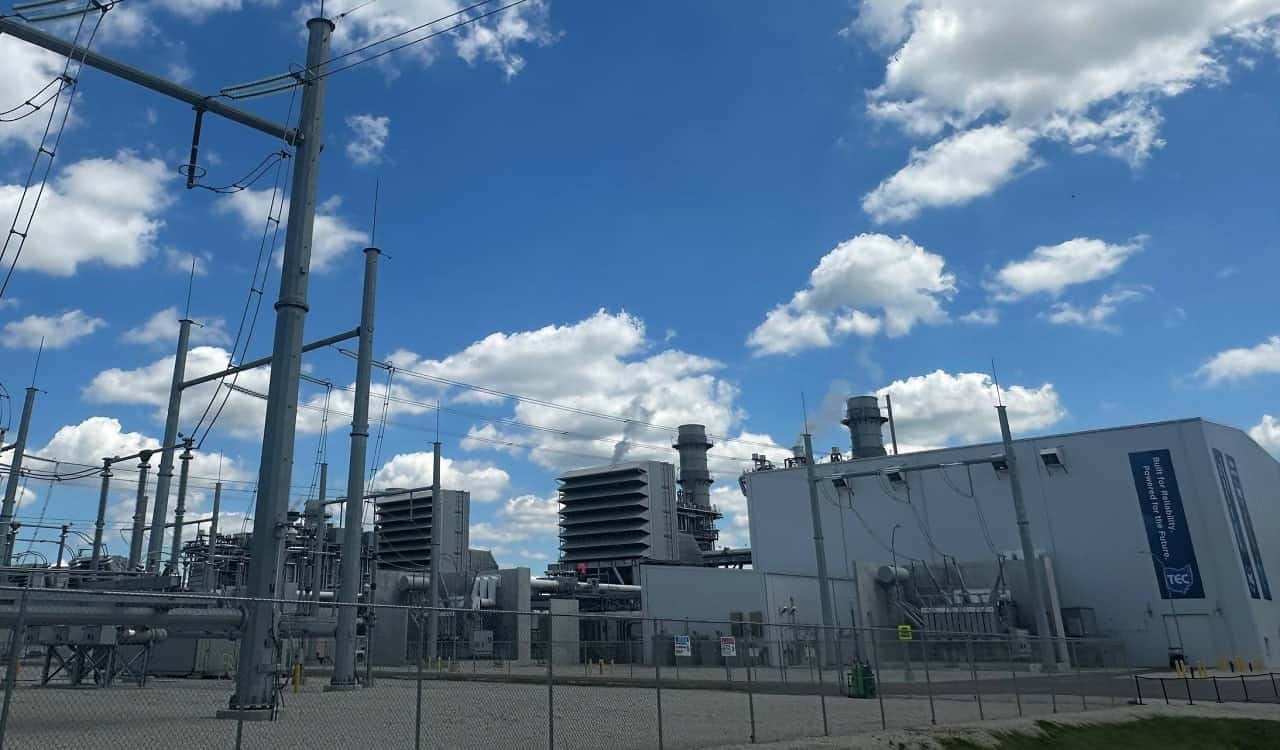
In January 2017, Clean Energy Future (CEF), based in Massachusetts, announced it would build a second Utica gas-fired power plant in Lordstown next to the Lordstown Energy Center (see Details on Newly Announced Trumbull Energy Center Electric Plant). In late 2022, the project finished securing its financing ($1.2 billion), and construction began (see Trumbull Energy Center Secures Financing, Construction Begins ASAP). The good news is that the plant, fed by Utica Shale gas, began operations earlier this year. However, the project’s owners celebrated its official launch yesterday. Read More “New 953-MW Utica-Fired Power Plant Goes Online in Lordstown, OH”
 Just yesterday, MDN brought you the great news of the economic and jobs boom happening in Indiana County (Homer City), for a gas-fired AI data center project happening at what was Pennsylvania’s largest coal-fired power plant complex (see
  The Tennessee Valley Authority’s preliminary 2026 Integrated Resource Plan calls for adding 7 to 26 GW of natural gas capacity through 2040, citing load growth—driven largely by data centers and AI—that already outpaces its reference forecast and approaches its higher-growth scenario. TVA also plans up to 5 GW of nuclear, 1-5 GW of storage, 2-5 GW of unreliable renewables, and 2-3 GW of efficiency and demand response. It recommends pursuing solar while suspending wind, extending nuclear licenses, and continuing to operate its coal fleet.
  Earlier this month, Homer City Generation announced the early completion of demolition and excavation work at its Indiana County, Pennsylvania, site, marking a major milestone in transforming the former coal-fired power plant into a gas-fired power plant and AI data center complex (see
  In March, we told you about a deal made by Maryland Eastern Shore developer TeraWulf to acquire the retired Morgantown Generating Station in Charles County (on the Potomac River), proposing to transform the site into a massive natural gas-powered data center campus (see
  Last week, the Federal Energy Regulatory Commission (FERC) launched a sweeping investigation into how power grids and utilities divide the soaring costs of supplying electricity to data centers. FERC issued six “show-cause” orders directing regional grid operators—PJM, SPP, MISO, CAISO, ISO New England, and NYISO—to prove that data center connection rates are “just and reasonable” and shield ordinary ratepayers from cost-shifting, or face federal fixes. FERC wants regional grids to speed up data center connections while protecting residential ratepayers. And they WILL do it, or else.
 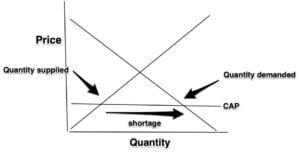 Pennsylvania’s Senate Republicans are speaking truth to power, calling out PA Democrat Governor Josh Shapiro’s policies as one of the primary reasons why PA residents pay more for electricity. And Joshie doesn’t like being called out. State Senate President Pro Tempore Kim Ward argues the state is losing out under a roughly $325-per-megawatt-day price cap on PJM Interconnection’s capacity auctions, approved by the federal government after a lawsuit by Gov. Josh Shapiro (see
  Invenergy announced Wednesday it is surrendering offshore wind leases in New Jersey, New York, California, and Maine, pivoting instead to natural gas and geothermal projects. Under a settlement with the Justice and Interior Departments, the Chicago-based developer will receive a $765 million partial refund (money it paid the government for the leases) and will invest in gas-fired plants in Indiana, Wisconsin, Iowa, Kansas, and Missouri, as well as Western geothermal projects. Big Wind is out, natgas is in! Wow, what a change.
  In February 2024, members of the South Carolina Public Service Commission (PSC) approved a proposed project to build a 1,020-megawatt (MW) gas-fired power plant in the state’s Lowcountry, in Colleton County (see
 New York State, with its bizarre energy policies, has officially bankrupted yet another company. Danskammer Energy, which operates a gas-fired peaker power plant along the Hudson River in Newburgh, NY, had tried for years to upgrade the plant (since 2018), but finally threw in the towel in June 2024 (see
  The name Philadelphia Gas Works (PGW) pretty much says it all. PGW is a natural gas utility serving the Philly region. PGW is the country’s oldest and largest municipal-owned gas company, serving 500,000 customers. It’s NOT an electric company; it’s a natural gas company. Yet PGW is now seriously considering two strategies to reduce “carbon emissions” as part of its Low Carbon Pathways project. The first option involves full electrification, shifting from natural gas to electric systems for heating, cooking, and appliances. Again, PGW has ZERO electric infrastructure in place. In Philadelphia, PECO (formerly the Philadelphia Electric Company) is the sole local utility company responsible for delivering electricity. In other words, PGW is considering committing suicide (going out of business) by giving all of its business to PECO. Bring out Old Sparky.
  In February, President Donald Trump unveiled a record-breaking $33 billion natural gas power plant in Piketon (Pike County), Ohio, to be operated by SB Energy, a subsidiary of Japan’s SoftBank (see
  Earlier this year, the board of commissioners in Montour County, PA, voted unanimously to reject Talen Energy’s request to rezone empty agricultural land near Talen’s Montour Power Plant for a proposed data center (see
  In February 2025, the Federal Energy Regulatory Commission (FERC) approved a plan by PJM Interconnection, the country’s largest electric grid (which covers all or parts of 13 states, including PA, OH, and WV), to fast-track the addition of new gas-fired power plants (see