
Dominion’s Mt. Storm Gas Plant Is Real – And Bigger Than Announced
 Two days ago, we brought you word of a big new gas-fired power plant headed for Dominion Energy’s Mt. Storm complex in Grant County, WV (see Big New Dominion Gas-Fired Plant Coming to Mt. Storm, WV). At the time, we had politicians talking and no paper. We flagged it with an asterisk the size of a cooling tower. The asterisk is gone. On Tuesday, Gov. Patrick Morrisey made it official, and it turns out Dominion had already filed the paperwork — a 435-page Major Source Construction Permit application submitted July 24 to the WV Department of Environmental Protection’s Division of Air Quality (permit application R14-0043, facility ID 023-00003). We’ve read it. Here’s what’s in it, including a couple of things the news coverage got wrong. Read More “Dominion’s Mt. Storm Gas Plant Is Real – And Bigger Than Announced”
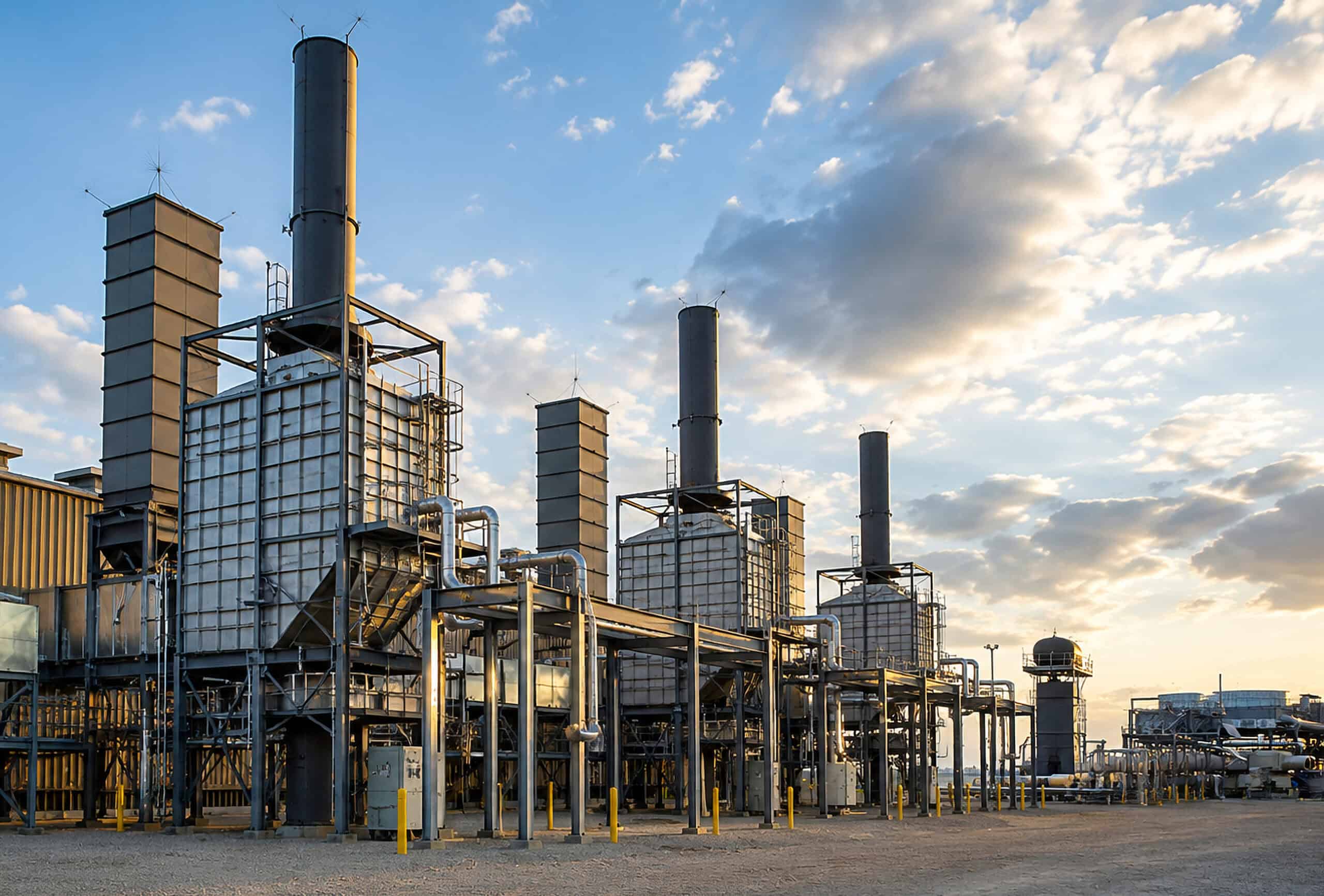
 DTE Energy reported second quarter 2026 results yesterday, and before we dig in, one piece of housekeeping. DTE used to be an M-U player in a big way — it owned gathering systems in the Marcellus and Utica plus half of the NEXUS pipeline. That business walked out the door on July 1, 2021, when DTE spun it off as DT Midstream (see
  Back in March, we told you about two radical green groups — the Southern Environmental Law Center and the Sierra Club — running to court to block new gas-fired turbines at Georgia Power’s Plant Bowen in Bartow County, Georgia (see
 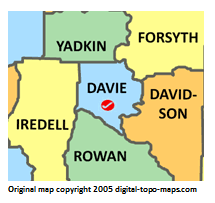 In January, MDN broke the news that Duke Energy was eyeing a 1,360-megawatt (MW) gas-fired power plant on 1,600 acres in Davidson County, North Carolina (see
  There’s terrific news brewing in Grant County, West Virginia — with an asterisk roughly the size of a cooling tower. Word circulated over the weekend that Dominion Energy plans to build a brand-new natural gas-fired power plant at its Mt. Storm complex, the same site where three coal-fired units have been cranking out electrons since 1965. The key detail: the gas plant would run alongside the coal units, not replace them. That’s more power, not swapped power. We like that math.
 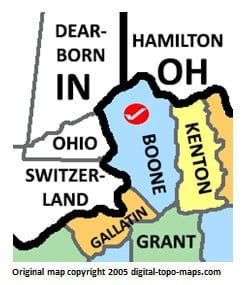 Texas Gas Transmission, LLC, a subsidiary of Boardwalk Pipelines, LP, wants to build the Dearborn County Lateral Project — roughly 12 miles of new 20-inch natural gas pipeline that begins at Texas Gas’s existing system in Dearborn County, Indiana, dips south across the Ohio River into Boone County, Kentucky, then hops back over the river into Hamilton County, Ohio. The destination is Vistra Corp.’s Miami Fort Power Plant, a coal-fired station slated for shutdown until someone had the good sense to convert it to natural gas instead. The lateral would move 265,000 dekatherms per day (Dth/d) of firm transportation service. A dekatherm is roughly one thousand cubic feet of gas, so call it about 265 MMcf/d (million cubic feet per day). Texas Gas filed with FERC in late May. Boone County leaders are not thrilled.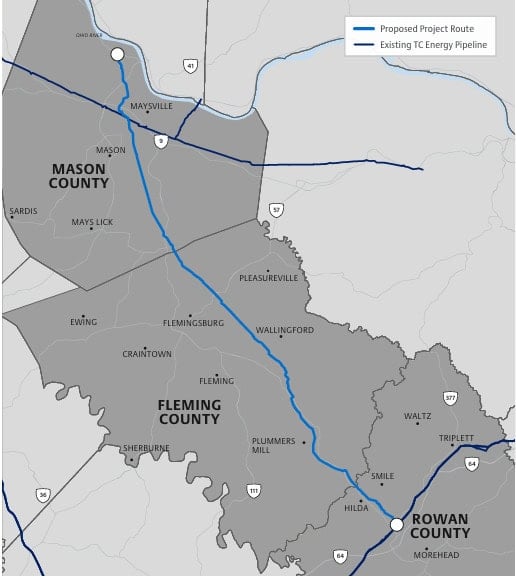
 Georgia Power announced yesterday that it will serve a new OpenAI data center project in Effingham County, Georgia — about 45 minutes from Savannah — expected to create thousands of jobs and billions of dollars in local investment. The $20 BILLION OpenAI facility will need roughly 3,200 megawatts (3.2 GW) of power, and OpenAI has agreed, under a 25-year deal, to provide up to 1,000 MW (1 GW) of flexible demand response, allowing Georgia Power to curtail deliveries during peak periods. The utility calls it among the largest single-facility demand response commitments in the U.S. OpenAI will cover full infrastructure and electric service costs with financial assurances, consistent with Georgia PSC rules. And yes! There is a direct connection to the Marcellus/Utica. Get ready; your future ChatGPT queries may be powered by M-U molecules!
  As part of Kinder Morgan’s second-quarter update, the company made an important announcement that (until now) it had not made. Namely, on May 26, 2026, TGP (Tennessee Gas Pipeline) placed in service its approximately $235 million Cumberland Pipeline project. The 30-inch pipeline is a 32-mile lateral originating from TGP’s existing 100 Line in Dickson County, Tennessee, and terminating at Tennessee Valley Authority’s (TVA) new natural gas-fired power plant in Stewart County, Tennessee. Big Green tried its best to block this project along with the gas-fired power plant, but failed.
  In April 2025, Knighthead Capital Management, Homer City Redevelopment (HCR), and Kiewit Power Constructors Co. announced a plan to convert the former Homer City Generating Station, previously the largest coal-fired power plant in Pennsylvania (Indiana County, 50 miles east of Pittsburgh) into a more than 3,200-acre natural gas-powered data center campus, designed to meet the growing demand for artificial intelligence (AI) and high-performance computing (see
  If we had a nickel for every time we’ve read or heard the Democrats claim the Regional Greenhouse Gas Initiative (RGGI), a tax on carbon dioxide emissions for coal- and gas-fired power plants, doesn’t raise electricity rates, we’d be millionaires! Not that it was ever in question that RGGI does raise rates; we now have a smoking gun. Connecticut’s carbon allowance auction prices under RGGI have risen from $3.07 per allowance in 2008 to $35 per allowance in June 2026, a jump of over 900%. Connecticut residents pay the third-highest (or second-highest, depending on the source) electricity rates in the entire country behind only Hawaii and California. Massachusetts, another RGGI member, is right behind Connecticut at fourth-highest.