
Cheniere’s Corpus Christi LNG Fully Online with Train 3, M-U Gas

Cheniere Energy built and operates two LNG export facilities, one in Sabine Pass, Louisiana (just across the border from Texas), and the other in Corpus Christi, Texas. The company announced yesterday that the third (and final) train at the Corpus Christi facility came online March 26. Marcellus/Utica gas flows to both the Sabine Pass and (potentially) to the Corpus Christi facility, hence our interest in these huge LNG facilities along the Gulf Coast.
Read More “Cheniere’s Corpus Christi LNG Fully Online with Train 3, M-U Gas”
 New Fortress Energy (NFE), which likes to build and own as much of the LNG supply chain as possible, built and operates an LNG import terminal in San Juan, Puerto Rico. After the facility was up and running, the Federal Energy Regulatory Commission (FERC) dinged the company, asking for an explanation as to why they built it without FERC “Mother May I?” permission. New Fortress responded last July saying FERC told them no permission was needed (see
  Feedgas, the natural gas flowing to U.S. LNG export terminals that gets liquefied and shipped to foreign destinations, hit a new all-time high on Wednesday: 11.65 billion cubic feet (Bcf) in a single day. All six major U.S. LNG export facilities currently in operation contributed to the surge, including Cove Point in Maryland and Elba Island in Georgia (both export 100% Marcellus/Utica molecules). M-U molecules are also exported from most of the other four active LNG export facilities, including large amounts of our molecules flowing to Cheniere Energy’s Sabine Pass facility.
 New Fortress Energy (NFE), the brainchild of billionaire Wes Edens, came out of nowhere just a few years ago to become one of the world’s leading natural gas infrastructure and logistics operators, delivering natural gas (typically LNG) to customers in a number of other countries. NFE also builds and operates gas-fired electric plants in some of those countries. They own most of the supply chain, from liquefying the gas to shipping it, unloading it, and using it in plants built and operated by the company. We track NFE for their plan to build an LNG liquefaction plant in Bradford County, PA (northeastern part of the state). What’s happening with that project?
 Just at the time U.S. exports of LNG are once again ramping up, along comes a “bipartisan” group of legislators proposing a bill to require some LNG exports (as well as some petroleum exports) to be transported from our shores on U.S.-built and U.S.-flagged LNG carriers. The problem is, none currently exist! This is yet another massive screwup coming from some who mean well, and some who don’t. Some of the people backing the bill, like hapless Sen. Bob Casey (from Pennsylvania) likely don’t know this bill will destroy exports of Marcellus/Utica molecules. He’s just too dull to comprehend it. But others, we suspect, know exactly what this bill would do.
 According to the U.S. Energy Information Administration (EIA), in 2020 U.S. exports of propane reached record levels, increasing 13% and surpassing distillate fuel oil as the country’s top petroleum product export. U.S. exports of distillate fuel oil fell to its lowest level since 2016. Propane is one of the NGLs produced in (and exported from) the Marcellus/Utica.
 Cheniere Energy operates two huge LNG export facilities–one in Sabine Pass, Louisiana, the other in Corpus Christi, Texas. Cheniere is the #1 LNG exporter in the U.S. Yesterday the company issued its fourth-quarter and full-year 2020 update. The company said it secured over 4 million tonnes of LNG supply deals during 4Q20. While the company took a hit with canceled cargoes during the pandemic, Cheniere expects 2021 to rebound and be a banner year. Why do we care? Because a significant quantity of Marcellus/Utica gas flows to the Cheniere facilities for export.
 The U.S. Energy Information Administration (EIA) recently issued its Annual Energy Outlook for 2021 (see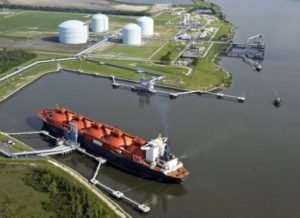
 This is an early test for how the Biden administration, specifically Biden’s pick to run the Federal Energy Regulatory Commission (FERC), Richard “Dick” Glick, will respond to requests for additional infrastructure related to fossil fuels. Last week Venture Global filed a “pre-filing” request with FERC ultimately looking for permission to build a major new LNG export facility next door to another facility (Calcasieu Pass Project) Venture Global is currently building. The new project is dubbed CP2 and will come with a (gasp) 87.5-mile greenfield pipeline.

 The very first cargo of LNG to transit the expanded Panama Canal happened in July 2016 (see
  Last week we told you about anti-fossil fuel zealots (including THE Delaware Riverkeeper) attempting to convince the incoming Biden administration to block the now fully permitted and authorized LNG export terminal New Fortress plans to build on the New Jersey shore of the Delaware River in Gibbstown (see