
Buckeye Partners Expanding MI/OH Refined Products Pipeline, Again
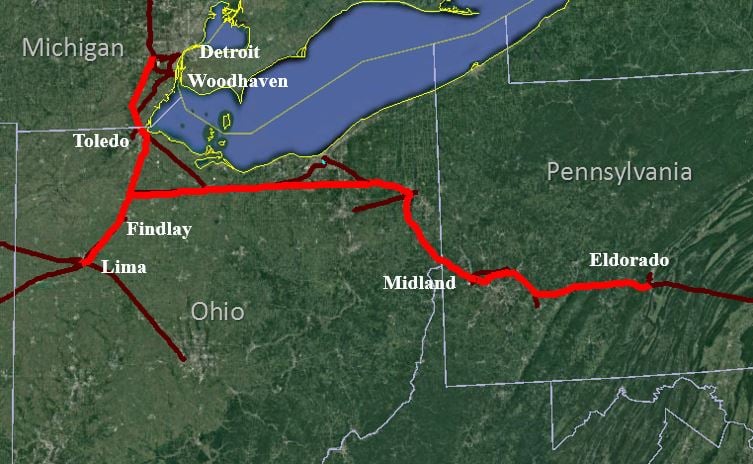
Buckeye Partners is a publicly traded master limited partnership (MLP) that owns and operates 6,000 miles of pipeline. One of those pipelines is the Michigan/Ohio refined products pipeline, which we reported on in April 2015 (see Buckeye Partners Expanding MI/OH Refined Products Pipeline East). At that time Buckeye was pushing its Michigan/Ohio Pipeline Expansion Project to expand the pipeline for “refined petroleum products” (things like gasoline, kerosene and heating oil) to run it from Woodhaven and Detroit, Michigan, and from Toledo and Lima, Ohio, to destination points in both Ohio and Western Pennsylvania. By all accounts the initial expansion was a success, because Buckeye is now conducting an open season for the second phase of the expansion project. Why talk about a gasoline/heating oil pipeline? Because it’s possible that some of the oil that gets refined into gas and heating fuel flowing through this pipeline comes from the Marcellus/Utica…
Read More “Buckeye Partners Expanding MI/OH Refined Products Pipeline, Again”


 It’s no secret that Marcellus and Utica drillers need new pipelines–and they need those pipelines urgently. Especially in Pennsylvania where lack of pipelines is keeping inventories high and prices for natural gas the lowest in the country. However, drillers must deal with reality as it is–today. Pipelines take time to build, and recent efforts to block pipelines are delaying important projects like the Constitution and PennEast pipeline projects. The good news is that some pipeline projects *are* being built in the northeast, some of which are almost done. Drillers like Range Resources are ramping up new drilling now, about six months in advance of when new pipelines are due to go online. That’s about how long it takes to put the pieces in motion. The other good news is that some drillers, like Cabot, are finding new markets that DON’T require new pipelines–like selling a tremendous volume of natgas to new gas-fired electric generating plants situated in close proximity to Cabot’s wells. Here’s an update on which drillers are picking up the pace with the prospect of new pipelines (or new nearby markets), and which drillers are waiting a little longer before they pick up the pace…


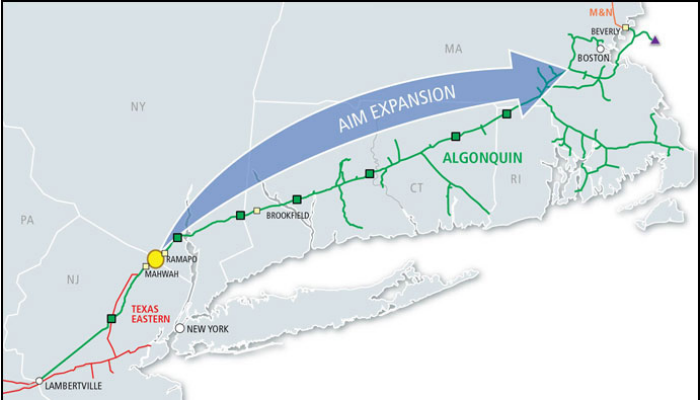
 Last week MDN reported on the decision by the Massachusetts Supreme Court to deny utility companies operating in the state to pass along potential costs of a new natural gas pipeline to electric rate payers–the people who would most benefit from such a pipeline (see
 Gene Barr is the president and CEO of the Pennsylvania Chamber of Business and Industry. The PA Chamber is a big supporter of the Marcellus industry. Writing a column that appears in a recent edition of the York Dispatch, Barr gives full-throated support to three pipelines “critical” to PA’s future: Williams’ Atlantic Sunrise; Sunoco Logistics’ Mariner East 2; and UGI Energy Services’ PennEast. We really liked Barr’s column (read it below). However, we would add a fourth pipeline to his list of critically important pipelines for PA drillers: the Williams Constitution Pipeline. While the three projects Barr names will be mostly built in PA, the Constitution Pipeline will be mostly built in New York State. We suppose that’s all we have to say for you to know why that project is in trouble. At any rate, here’s the reasons Barr offers for supporting the three pipelines he mentions in his column, reasons that equally apply to the much-needed Constitution Pipeline too…
 How low can you go, and still make money? That’s the question TransCanada is testing in a bid to compete with cheap Marcellus/Utica natural gas that is heading to Canada via new pipelines, including Energy Transfer’s Rover and Spectra Energy’s NEXUS pipelines. Last month MDN reported that TransCanada has a plan to use existing pipelines from Western Canada to Eastern Canada–from Alberta to Toronto–to ship more natural gas from west to east (see
 In August 2015, MDN told you that one of the biggest drillers in the Marcellus/Utica, Antero Resources, floated the idea of building a $275 million state-of-the-art frack wastewater treatment plant in Doddridge County, WV (see
  In March 2015, Dominion–a huge natural gas and electric utility as well as a midstream company–announced plans to build the State of Virginia’s largest natural gas powered electric generating plant, in Greensville County, VA (see