MA Supreme Court Ruling Endangers New England Gas Pipelines
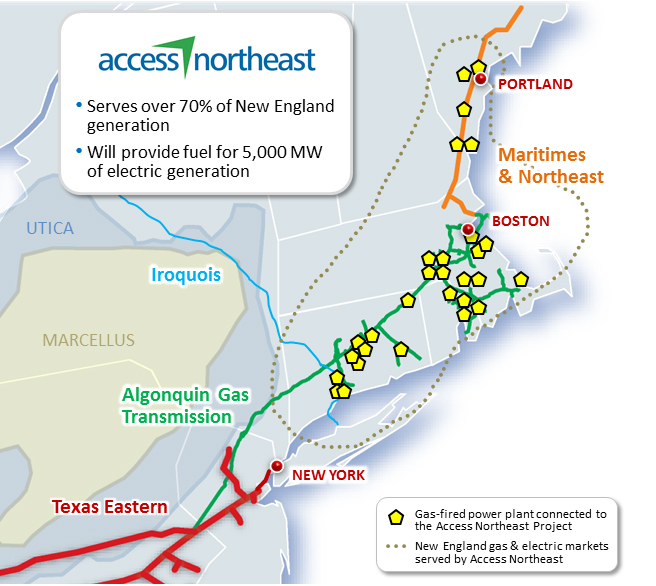
 In September 2015, MDN told you that the Massachusetts Dept. of Public Utilities (DPU) approved long-term contracts for three utilities–Berkshire Gas, National Grid and Columbia Gas–to buy natural gas supplies from Kinder Morgan’s Northeast Energy Direct (NED) pipeline, IF it gets built (see Mass. Approves Plan for Utilities to Buy Gas from New Pipeline). At the time we warned you that the global warming-mongers were not happy and threatening to sue the state. They did. The left-leaning Conservation Law Foundation (CLF) filed an appeal of the DPU’s decision with the Massachusetts Supreme Judicial Court in hopes that they can stop the project from being built if they can dry up demand from utility companies–i.e., prevent the utilities from buying NED gas (see Anti Group Sues to Stop Mass. Utilities from Buying Natural Gas). In the meantime, Kinder Morgan abandoned the NED project (see NED is Dead – Kinder Morgan Suspends $3.3B New England Pipeline). However, the lawsuit lives on. There are more pipelines that may be affected by such a decision, including Spectra Energy’s Access Northeast pipeline project–still very much alive. The worst has now happened. The MA Supreme Court has just ruled that utility companies, which are heavily regulated and the prices they can charge controlled, cannot pass along the cost of a pipeline to electric ratepayers…
Read More “MA Supreme Court Ruling Endangers New England Gas Pipelines”
 We’re sorry to beat a dead horse (or goat, in this case) to death, but we can’t help it. We have another shining example of far-left environmental radicals who are bleating about the Federal Energy Regulatory Commission’s (FERC) change-up in the way they accepted public comments on the PennEast Pipeline project. We first reported the antis are up-in-arms two days ago (see
  With the low low price of natural gas and oil currently in place–and not letting up any time soon–the frenzy of shale drilling has slowed. So fossil fuel haters have turned their focus from fracking and stopping it, to pipelines and stopping them. Antis understand that pipelines are critical to getting natural gas to market–and without pipelines drilling will stop. So money and time and effort is being poured into the effort to stop pipeline projects. Enough! The Consumer Energy Alliance (CEA), a national consumer advocacy group, has just launched a national campaign called “Pipelines for America” to counter the lies and smears coming from fossil fuel haters. The campaign is aimed at educating American consumers about the vital importance of our pipeline infrastructure–and that more pipelines are needed to keep energy prices low AND to protect the environment. Here’s the CEA announcement of this important new initiative…
 Pennsylvania residents: It’s time to (once again) show your support for the Atlantic Sunrise Pipeline project, a $3 billion, 198-mile project running through 10 Pennsylvania counties to connect Marcellus Shale natural gas from PA with the Williams’ Transco pipeline in southern Lancaster County. It is a much-needed pipeline to move more Marcellus gas south, to new markets. In the past MDN has asked you to sign letters going to the Federal Energy Regulatory Commission (FERC) and to the PA Dept. of Environmental Protection (DEP). And you, our dear readers, have been the most responsive audience to get behind the effort to support this project. Thank you! We’re coming to you again with a new request.
 All the way back in February MDN brought you exclusive news that Shell had begun approaching landowners in Beaver County to get them to sign easements for two ethane pipelines to feed the mighty cracker plant they plan to build in the county (see
  In July MDN reported that the Federal Energy Regulatory Commission (FERC) has approved Eastern Shore Natural Gas’ (ESNG) System Reliability Project (see
 The Federal Energy Regulatory Commission (FERC) has issued a favorable environmental assessment (EA) for three Spectra Energy projects: Access South, Adair Southwest and Lebanon Express. The three are part of an expansion of the Texas Eastern Transmission (Tetco) pipeline. The combined projects will transport an additional 662,000 dekatherms per day (or 662 million cubic feet) of Marcellus and Utica Shale gas from Pennsylvania to Ohio, Kentucky and Mississippi. This is great news indeed!…
 We have been making the point, loudly, for the past year, that IF New York State blocks the Constitution Pipeline, as they have now done, the state runs the very real risk of having the federal government strip away their right to make such decisions about any federally-approved pipeline project. We’ve previously warned that New York is in grave danger of losing their power by attempting to block the Constitution. We wrote the following in October 2015: When MDN editor Jim Willis attended the Shale Insight conference in Philadelphia in September, he listened to a panel discussion of midstream (pipeline) experts, including a former FERC commissioner. He got to ask a question and the question, roughly, was this: “The NY DEC is currently holding up the FERC-approved Constitution Pipeline. What if the DEC refuses to issue the necessary permits? What happens next?” The answer Jim got was, “It depends.” The bottom line seems to be that it’s likely FERC (and Williams) will need to take the DEC to court. The DEC frankly has no legal right to prevent a federally approved project from being built. That’s the bottom line. It may take a court to force the DEC (and Gov. Cuomo) to act, but in this matter the law is on our side. This is not a question of “if,” it is a question of “when” the pipeline will get built (see
  Time to do a happy dance. THE (arrogant) Delaware Riverkeeper has lost yet another court case–one of many such cases they continuously file to stop any fossil fuel-related project in the northeast. In March MDN told you that THE Delaware Riverkeeper had sued the Federal Energy Regulatory Commission, challenging their decision to approve the Williams Transco Pipeline’s Leidy Southeast Expansion from PA to New York City (see
  It’s not often we miss something that happens in the Marcellus. No, we’re certainly not omniscient. But not much (we hope) escapes our eye when it comes to drillers, midstreamers and other participants in the Marcellus/Utica region. Here’s one that did! Unit Corporation is a Tulsa-based, publicly held energy company engaged through its subsidiaries in oil and gas exploration, production, contract drilling, and gas gathering and processing. Pretty much the whole upstream and midstream pie. In January 2016 Unit completed 49 miles of gathering pipelines in Centre County, PA. That’s the part we missed. Below are a few excerpts from their recent second quarter 2016 update talking about what they call their Snow Shoe Gathering system, along with a couple of screen shots from the most recent company PowerPoint presentation…