
WV Governor Inexplicably Vetoes Bill to Plug Abandoned Wells
 What happened? Just a few weeks ago MDN told you that the West Virginia legislature had passed a bill with bipartisan support (and support from both the drilling industry and surface owners) that would redirect monies from low-producing oil and gas wells to fund a program to plug old abandoned wells (see WV Legislative Session Closes w/Several Pro-Drilling Bills Passed). WV Gov. Jim Justice vetoed the bill last week.
Read More “WV Governor Inexplicably Vetoes Bill to Plug Abandoned Wells”
 Anti-fossil fuel radicals are making noises, threatening noises, about how they may react when and if (as seems likely) the Federal Energy Regulatory Commission (FERC) decides to overrule New York State and allow the Williams Constitution Pipeline to finally, after five years, get built.
 We spotted a story that says India’s GAIL (formerly known as Gas Authority of India Limited) has put yet another one of its contracted LNG shipments of Marcellus Shale gas coming from Dominion’s Cove Point LNG export facility, up for sale. In fact, it’s already sold and on its way to be unloaded at a port in Belgium.
 Pennsylvania House Bill (HB) 827, which would make a permanent frack ban by the Delaware River Basin Commission (if adopted) a government “taking” or seizure of a citizens’ property liable for compensation, passed the House Environmental Resources and Energy Committee yesterday with a bipartisan vote of 16-9.
 In October 2016, Indeck Energy announced a plan to build a $1 billion electric generating plant (powered by natural gas) in Niles, Michigan, not far from Chicago (see
  Andrew Cuomo, contrary to the picture he attempts to paint for gullible voters and the even more gullible mainstream news reporters, is a very weak “leader.” In what has become an identifiable pattern, when Cuomo is put under pressure by the fringe left environmental lobby, he folds to that pressure like a cheap suit. Totally gives in and accedes to whatever weird demands they make–like no new gas pipelines. Even when it economically hurts the state.
 Next Wednesday the Pennsylvania Dept. of Environmental Protection will hold a public hearing on plans to drill a shale well(s) on the property of U.S. Steel Corporation’s Edgar Thomson Plant in a Pittsburgh suburb. What’s so unusual about the well(s) is that U.S. Steel itself will be “the sole consumer of the natural gas extracted.” That is, U.S. Steel will use the gas to power/feed the steel plant.
 In 2016 Crestwood Equity Partners formed a joint venture with New York City’s largest utility company, Consolidated Edison Inc., to operate a critical link of pipelines and storage facilities in the heart of the Utica/Marcellus, called Stagecoach Gas Services (see
  In February Pennsylvania State Sen. Lisa Baker introduced Senate Bill (SB) 305, which would make a proposed Delaware River Basin Commission (DRBC) frack ban officially a government “taking” under eminent domain (see
  The Ohio Environmental Protection Agency (OEPA) will hold a public hearing on April 15 to consider draft permits the agency has floated to allow two frack wastewater injection wells (Class II) in Coshocton County to be reclassified as Class I wells, allowing them to accept waste other than frack waste.
 Two days ago MDN brought you news about a new bill in the Pennsylvania House of Representatives, HB 247, which would allow fully leased parcels that are part of one drilling “unit” to be combined with parcels in a different unit (see
  The Federal Energy Regulatory Commission (FERC) is conducting a series of four public meetings (called scoping sessions) for both the Williams Leidy South Project (see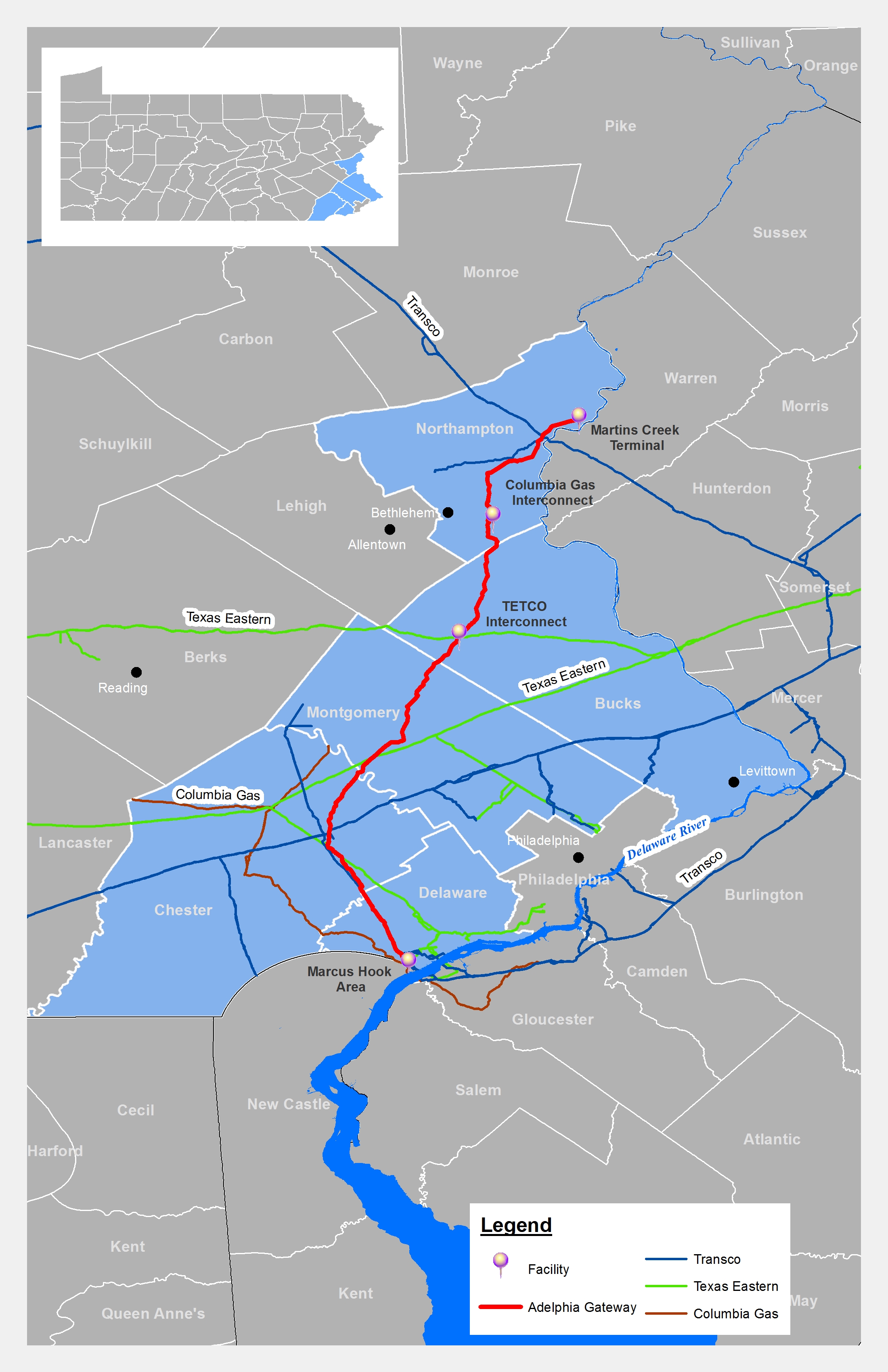
 Last May, Liberty Utilities, located and operating in New Hampshire, announced a new pipeline project called Granite Bridge–27 miles of new natural gas pipeline to be buried along Route 101 from Stratham to Manchester, along with an LNG storage facility located midway along the pipeline (see
  Witch hunts take a loooong time when it’s the U.S. government doing the hunting. We told you back in 2015 that the U.S. Dept. of Labor was unfairly targeting the Marcellus industry, looking at every time slip, to see if they could bag companies violating federal overtime regulations–not paying their workers overtime (see