
Shell Holding Career Expo in SWPA Oct 12 to Discuss Cracker Jobs
 While the Teamsters are holding a job fair today and tomorrow in Harrisburg to recruit for pipeline workers (see today’s lead story), next week Shell and the Community College of Beaver County (CCBC) will hold two back-to-back career expos on the other side of the state, in the Pittsburgh region, to “inform residents about all the current and emerging job opportunities” at Shell’s ethane cracker plant. On Thursday, Oct. 12, Shell will host the Pennsylvania Chemicals Military Petrochemical Day from 8am to 2pm–for former military service members. The event will be held in room 9103 of CCBC’s Learning Resources Center. Then at 6pm on the 12th, a free career expo will be held at the CCBC Dome–open to the public. Preregistration is not required, but is encouraged. This is your chance to meet with folks face-to-face who can help you land a job working on (or in) the mighty Shell ethane cracker. Don’t miss it!…
Read More “Shell Holding Career Expo in SWPA Oct 12 to Discuss Cracker Jobs”
 Last week the radicals at Big Green group PennFuture launched an advertising campaign that targets both U.S. Steel Corp. and the might Shell ethane cracker. The ad campaign, called “Your Toxic Neighbor” includes big ads on the sides of buses and on billboards in the Pittsburgh region. From the beginning of PA Gov. Tom Wolf’s administration, PennFuture radicals have populated his administration. Two PennFuture radicals previously in the Wolf cabinet are now gone: former Secretary of Policy, John Hanger (now gone, supposedly to spend more time with his wife and daughter in Massachusetts) and former Secretary of the Dept. of Environmental Protection, John Quigley (fired for conspiring with Big Green groups and getting caught doing it). The one remaining PennFuture radical still in the Wolf cabinet is Secretary of the Dept. of Conservation and Natural Resources (DCNR), Cindy Dunn. Time for Wolf to show her the door too (see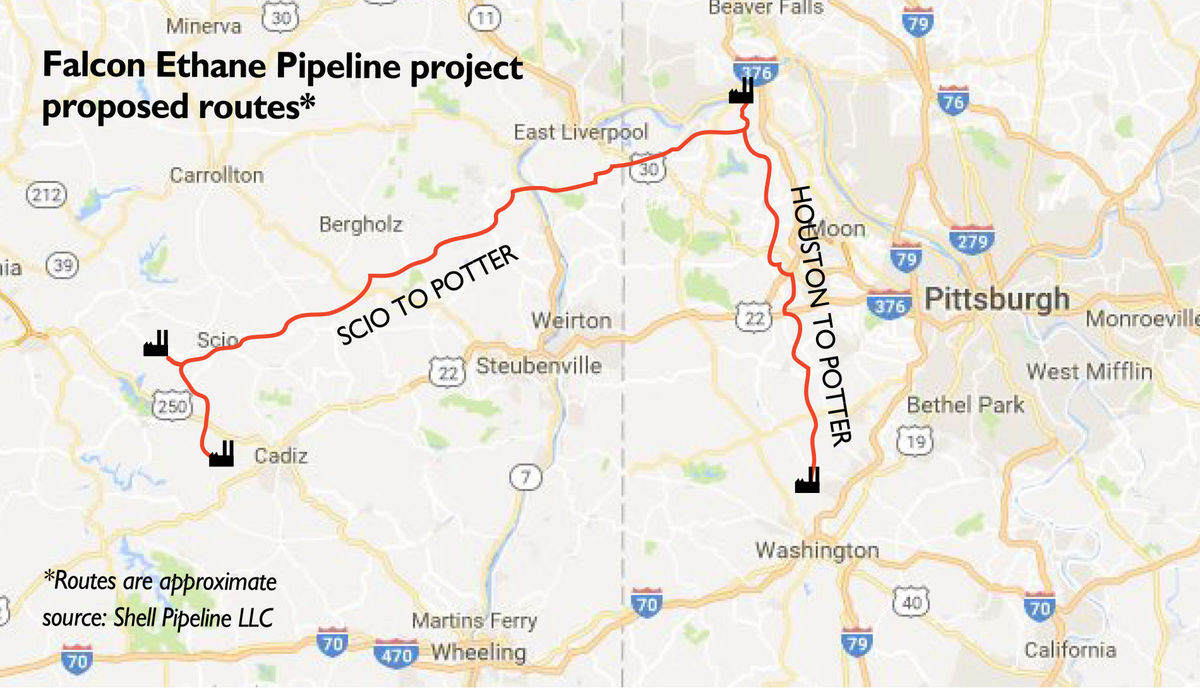
 Shale Insight 2017 is now in the books. Another year, another great show. MDN editor Jim Willis is back in the office, chained to his computer. Next week Jim will share notes he took at the conference. For now, below are highlights from other news source from Day Two of the event. Unfortunately Jim had to leave before the closing keynote, given by former Trump White House Press Secretary Sean Spicer. But others were there to hear what Spicer had to say. Day Two began with a focus on the Shell ethane cracker. Members of the Shell team were on hand to describe how this critical project affects the region, and where it fits in the Marcellus/Utica landscape. One of the Shell team members said the skyline at the Beaver County site will change dramatically over the next 12 months as the buildings housing the various components are built. It was a fascinating talk with lots of information. Below is a roundup from Day Two…
 Looking to land a job at Shell’s $6 billion ethane cracker plant when it’s up and running in a few years? A new program set up by Shell with the Community College of Beaver County (CCBC) may give you a leg up. CCBC offers a program in process technology that leads to an associate’s degree. As of this spring, 45 people were enrolled. CCBC expects 70 people to enroll this fall. CCBC’s process technology degree is just one part of their effort to train people for advanced manufacturing careers with Shell and other petrochemical companies. CCBC is partnering with businesses, nonprofits, other colleges to form the Tri-State Advanced Manufacturing Consortium which will help prepare students and retrain workers to meet the needs of energy and manufacturing companies throughout the region. More deets on getting trained for a future cracker job…
 Earlier this week MDN reported that Shell had settled an action brought by Big Green groups against an air permit issued for their now under construction ethane cracker plant in Beaver County, PA (see
  Exactly two years ago, two Big Green groups–the Philadelphia-based Clean Air Council and the Washington, DC-based Environmental Integrity Project (both disgusting litigation factories)–filed a complaint against Shell to block the air quality permit needed to build the $6 billion ethane cracker in Monaca, PA (see
  As the mighty $6 billion Shell ethane cracker begins construction in Beaver County, PA, plenty of local (and regional) businesses are asking the question: How can we get in on the action? How can we win contracts for goods and services? The Beaver County Chamber of Commerce aimed to help answer that question yesterday at a 3-hour event held at the Club at Shadow Lakes. The “Doing Business in the Era of Shell” seminar drew a crowd of 300+. Some of the speakers were from Louisiana–where they went through a similar process when SASOL built an $11 billion petrochemical project there. Here is some of the wisdom passed along to those who attended…
 MDN has been tracking the prices paid by Shell to landowners to run an ethane pipeline under their land to feed the might cracker plant the company is just now beginning to build in Beaver County, PA. Why? So landowners in Beaver (and other locations) have a useful metric for judging the offers they receive. To be fair, a company that wants to run a local gathering pipeline across someone’s land will pay a lot less than Shell is willing to pay–given you can’t move the cracker plant. Interstate pipelines will likely pay something less too. But still, we find it interesting and useful to know what Shell is up to in Beaver. We don’t have a lot of data points, yet. In June, we learned that Shell paid roughly $75 per foot for 3,138 linear feet of pipeline space in Greene Township (see
  Shell officials held the fourth (so far) public meeting in Beaver, PA to talk with local residents about the mammoth, $6 billion ethane cracker plant the company is building in their midst. For the most part, the event was uneventful. More than 150 people came out to hear what the petrochemical giant had to say. A table at the event held polyethylene pellets–the stuff that will be manufactured by the plant. Also on the table were a variety of products made from those pellets, including bottles, food packaging and more. One local resident opposed to the plant told a reporter she had to restrain her potty mouth because Shell officials would not answer her questions from the floor–in front of the crowd. Shell (and others in the o&g industry) have wised up. They post representatives at tables who are happy to answer private questions privately, but they don’t throw open the floor to antis who want to bleat and blat in front of an audience. We think it’s a wise precaution. The woman could get her questions answered, and express her unhappiness–but she wanted to do it in front of a crowd and in front of cameras and microphones. No thanks. Organize your own meeting if you want to do that…
 Good news if you’re a welder, or interested in a welding career, and you live in southwestern Pennsylvania. Shell needs you. Shell is in the process of building a massive, $6 billion ethane cracker plant in Beaver County, PA (northwest of Pittsburgh). Cracker plants have lots of pipes that need to be welded as the plant goes up. While these jobs are not long-term, as in “the rest of you career,” they’re long enough, likely lasting several years. Steamfitters Local 449 is right now recruiting new apprentices, offering a free 17-week apprentice training program. Local 449 is holding an open house this Saturday…
 One would hope a $6 billion ethane cracker project like the one being built by Shell in Beaver County, PA would consist of 100% American-made parts. But alas, such is not the case. The biggest story to hit Beaver County, likely ever, keeps reporters at the Beaver County Times busy (“busy beavers”–groan). The ace reporting staff at the local newspaper noticed a job posting from Bechtel Corp., one of the major contractors on the project, on LinkedIn. The job posting advertised for a project superintendent for the Shell cracker plant–a position located in Houston and in Tampico, Mexico. The ace reporters followed it up and got confirmation that some of the components for the cracker plant will be manufactured in Mexico and shipped to PA. No doubt in an effort to tamp down what could become a firestorm, Shell quickly confirmed the Mexico connection and pointed out that “more than 80%” of the individual components for the plant will be built in the U.S. Will this news about Mexico parts make a difference in the larger scheme of things?…
 An article published in the anti-drilling Pittsburgh Post-Gazette is quite bizarre–even by Post-Gazette standards. The article reports concerns expressed by residents in Beaver County, PA at a recent meeting of the Ambridge Water Authority. The opener quotes one resident this way: “‘No one knows what’s going to happen when the explosions are set off,’ said Bob Schmetzer, 70, of South Heights, referring to the underground blasting required in the fracking process. ‘God forbid that the dam would breach and take out human lives down Raccoon Valley … that would be a national catastrophe.'” Uh, Mr. Schmetzer sir…and “reporter” Eliza Fawcett…there IS NO FRACKING involved with installing a pipeline. Perhaps they’re both a bit confused? Mr. Schmetzer’s confusion likely comes from working with a local anti-fracking group, the Beaver County Marcellus Shale Awareness Committee. The meeting appeared to have gone downhill from there, with wild claims that “volatile compounds” from the Shell cracker plant will “settle” in the Ambridge Reservoir, endangering everyone who drinks water from it. And that the area will become “Cancer Valley”…
 It was more than six months in the making, but finally the Pennsylvania Dept. of Environmental Protection has granted Shell a permit that allows the facility to discharge wastewater and storm water into the Ohio River. Which may sound like Shell just got a permit to pollute the Ohio River–but that’s not what is happening. Shell is building their mighty $6 billion ethane cracker on a site formerly used as a zinc smelter. The old Horsehead Corp. plant held a permit that allowed the plant to discharge wastewater with some total dissolved solids (TDS) into the Ohio. When Shell bought the site, they also inherited the Horsehead permit for wastewater discharge. Shell filed a plan back in December with the PA DEP to modify that permit for the forthcoming cracker plant (see