
Cabot O&G 1Q18: Important New Markets Opening Up Now
 Note: A previous version of this post incorrectly stated Cabot is pumping 3.75 Bcf/d of natural gas now. The correction is that according to the CEO, the company has the capability to pump that much as soon as all pipelines are in place and existing planned wells are online–likely in 2020. We regret the error!
One of our favorite Marcellus drillers, Cabot Oil & Gas, provided their first quarter 2018 update on Friday. Cabot never disappoints! What did we learn from the update? For one thing, when all pipeline infrastructure is in place and all planned wells are drilled and online, the company will be pumping a massive 3.75 billion cubic feet per day (Bcf/d) of natural gas out of Susquehanna County, PA. Cabot is working with Williams to increase the capacity of their gathering system to support even more gas than 3.75 Bcf/d. It would not surprise us if Cabot becomes the first 4 Bcf/d Marcellus/Utica driller in the next few years. So Cabot has plenty of production. What about demand? Lots of production with little or no demand equals prices in the basement. There was good news on the demand front too. Cabot said there are two gas-fired electric plants starting up by June 1st–both of them powered with Cabot Marcellus gas. Add to that the now-operational Cove Point LNG export plant with Cabot’s contract to sell gas to Japan–and it equals a massive increase in demand for Cabot’s gas going into the second quarter. Later this year, in the second half sometime, Atlantic Sunrise will come online increasing Cabot’s flow to new markets even more. We’d call Cabot’s Friday 1Q18 update the “stars are finally in alignment” update for Cabot. Here are some more pickings from the update, along with a copy of the full update…
Read More “Cabot O&G 1Q18: Important New Markets Opening Up Now”
 This is a story that continues to bug us. The state of Pennsylvania, specifically the Dept. of Conservation and Natural Resources (DCNR), is grabbing money that we think belongs to private landowners. The DCNR has been, for years, claimed that under a centuries-old law that the state of PA “owns” the property under “navigable” waterways–including rivers and streams (see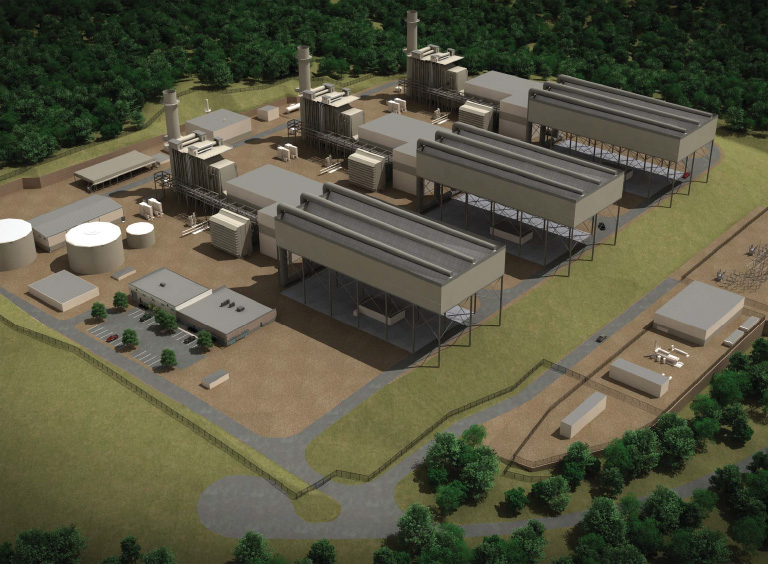

 In February MDN told you that XTO Energy, the shale drilling arm of Exxon Mobil, has plans to begin drilling five new shale wells in Armstrong County, PA on a former golf course (see
  For more than a year, Marcellus/Utica ethane and propane have been flowing through the converted Mariner East 1 (ME1) pipeline safely, hauling the two natural gas liquids (NGLs) from southwest PA all the way to the Marcus Hook refinery near Philadelphia. The primary shipper using ME1 has been Range Resources, although other companies like CNX Resources use it too. However, ME1 was suddenly switched off on March 3 by order of the Pennsylvania Public Utility Commission (PUC) after a sinkhole opened up under the pipeline in Chester County, exposing some of the bare steel to the open air (see
  We’ve written a number of posts over the years about the ongoing, sometimes quiet sometimes not, civil war between Pennsylvania landowners and some (not all) drillers who use inflated post-production deductions to pad their own bottom lines, leaving landowners with peanuts–sometimes with no royalties at all (see
  Hypersensitive: excessively or abnormally sensitive. That’s the word we would use to describe what’s happening in Chester County, PA–a suburb of Philadelphia–with regard to underground horizontal directional drilling work (HDD) being performed by Sunoco Logisitics Partners on the Mariner East 2 pipeline project. The company keeps having “inadvertent returns”–which we call leaks. Drilling mud (bentonite) used to cool the drill bit goes down the hole, and sometimes it pops back up on the surface in a different place from where it went down. Since the drilling mud is non-toxic clay and water (same stuff used to make kitty litter, toothpaste and lipstick), it’s no big deal. Unless there’s thousands of gallons of it turning up in a creek where it can smother fish and aquatic life. There’s cracks in the ground near the surface and sometimes the mud leaks out of those cracks. Sunoco must track leaks of down to less than one gallon. Antis look at the numbers and make wild claims that the pipeline has leaked “over 100 times” since drilling began. While technically true, many of those leaks are nothingburgers–not worth tracking or talking about (a few gallons at most). However, some of the leaks are big and yes, those do need talking about. Over the past week or so another four leaks have occurred in Chester County, totaling 8,000 gallons. Fortunately none of it ended up in a creek. Because of the leaks, the state Dept. of Environmental Protection (DEP) has, once again, shut down any further HDD work in Chester County…
 NOTE: A previous version of this post reported a total price of $3.2 million, now changed to account for the addition of an extra $2.4M for required SEPs. See below.
 The Penn State campus in Erie County (called Penn State Behrend) has been tapped by the PA Dept. of Community and Economic Development (DCED) to be the “lead partner” for developing business and market opportunities for the state related to the mighty $6 billion Shell ethane cracker–currently under construction in Beaver County. Erie County where Behrend is located is certainly not next door to the cracker, not nearly as close as some other Penn State campuses. So why was Behrend selected? In a word, plastics. “The strength of Erie’s plastics industry and the success of Penn State Behrend’s School of Engineering, which offers one of only six accredited U.S. plastics undergraduate programs, makes Erie of particular interest to DCED.” According to DCED’s Denise Brinley, senior energy adviser, “Penn State Behrend can provide critical connections to research support, materials testing and a talent pipeline that will add value to this large-scale petrochemical investment and associated growth in the plastics sector.” Penn State is kicking in a $250,000 grant to their Energy University Partnership for oil and gas strategies, to help prime the pump…
 Our favorite government agency, the U.S. Energy Information Administration, yesterday took a close look at natural gas production in Pennsylvania and how it has grown. A few interesting factoids: PA averaged a record high 15 billion cubic feet per day (Bcf/d) of natural gas production in 2017–3% higher than 2016. Most of PA’s natural gas production comes from the Marcellus Shale. PA production accounted for 19% of total U.S. marketed natural gas production in 2017. PA produces more natural gas than any other state except Texas. Several key pipelines have helped move some of PA’s enormous production to other markets. Here’s the insightful look at PA natgas production from expert number crunchers at EIA…
 MDN previously reported on a promising brine wastewater treatment plant planned for Coudersport, PA by Epiphany Water Solutions. After JKLM Energy walked away from the project, in pretty short order the Coundersport Area Municipal Authority (CAMA) voted to revoke agreements it had with the project, which recently led us to declare the project dead (see