Sunoco Says ME1 Ready to Restart, but PUC is Dragging its Feet
 Ethane and propane had been flowing through the converted Mariner East 1 (ME1) pipeline safely for more than year, hauling the two natural gas liquids (NGLs) from southwest PA all the way to the Marcus Hook refinery near Philadelphia. However, ME1 was suddenly switched off on March 3 by order of the Pennsylvania Public Utility Commission (PUC) after a sinkhole opened up under the pipeline in Chester County, exposing some of the bare steel to the open air (see PA PUC Shuts Down Mariner 1 Pipeline Due to Mariner 2 Sinkhole). Sunoco Logistics Partners, the owner of ME1, is building a new set of pipelines called Mariner East 2 (ME2) close to the existing ME1. Construction work in the area on ME2 led to the sinkhole that exposed ME1. The PUC shut down ME1 until further notice, requiring Sunoco to conduct a study of the area and provide the PUC with evidence to reassure them that ME1 is OK and will not leak or explode. Sunoco conducted the study, provided its results, and has told the PUC it’s time to restart ME1. But the PUC is dragging its feet, taking its time to review Sunoco’s work, and in no particular hurry to restart ME1–even though the outage is impacting the drilling program at companies like Range Resources…
Read More “Sunoco Says ME1 Ready to Restart, but PUC is Dragging its Feet”
 Right around Earth Day politicians become even nuttier than they usually are. This year is no exception. A truly breathtaking, totally insane pair of bills have just been introduced in the Pennsylvania legislature, in observance of Earth Day, that would force all Pennsylvanians to use electricity generated from 100% so-called renewable sources by the year 2050. It’s totally preposterous and lunatic–but there you have it. Actually being in your right mind is no longer a requirement for high office–at least in PA. Democrat Rep. Chris Rabb introduced the bill in the PA House, and Democrat-lite (i.e. RINO) Sen. Charles McIlhinney introduced the bill in the PA Senate. Unsurprisingly they’re both from the Philadelphia area, where living in the real world doesn’t exist. The object of the proposed law is to dump the use of all “fossil fuels” and instead rely on unreliable wind and solar to produce all electricity in the Keystone State. Do you know how much of PA’s electricity is produced by wind and solar today? A piddly 2.8%. Nuclear generation is the #1 source of electric in PA at 41%, followed by coal at 29.6% and natural gas at 25%. Do you really, in your heart of hearts, believe PA can generate 100% of its electricity from wind and solar by 2050? It’s a fantasy, totally unconnected with reality. Yet that’s all we’ll hear and read for the next few days until, blessedly, we get past so-called Earth Day…
 We have an update to a story we first brought you yesterday, that someone(s) has stolen a bunch of dynamite and the blasting caps needed to detonate it from a construction site for the Atlantic Sunrise Pipeline in Lancaster County, PA (see
  Approximately 640 pounds of dynamite and 400 blasting caps were stolen from a locked trailer at a construction site for the Atlantic Sunrise Pipeline in Marietta (Lancaster County), PA this past weekend. Because the theft involved explosives, the federal Bureau of Alcohol, Tobacco, Firearms and Explosives (ATF) has been called in to investigate. The ATF is offering a $10,000 reward for information that leads to an arrest and conviction. We sincerely hope the perp(s) are caught and go to jail–for a long time. If you know anything, call the ATF hotline at 888-ATF-BOMB (888-283-2662). Not sure who thought up that phone number for the ATF, but it’s certainly memorable! Here’s the details…
 In February Sunoco Logistics Partners agreed to pay a massive (historically high) $12.6 million fine to the PA Dept. of Environmental Protection (DEP) for “permit violations related to the construction of the Mariner East 2 pipeline project” (see
  Southwestern Energy has just taken the next very important step in a process that frankly has us holding our breath. Two weeks ago MDN brought you the news that the Pennsylvania Superior Court handed down a decision that has the power to greatly restrict, perhaps even stop, Marcellus drilling in PA (see
  Perhaps our headline for this article is a tad misleading. Maybe the better question is, Was a meeting held yesterday in Towanda, PA on the topic of gas royalties *meant* to resolve anything? The answer of which is, “Probably not.” PBS StateImpact Pennsylvania organized and hosted a forum yesterday on the topic of PA landowners getting screwed over by energy companies with respect to royalty payments. Both sides were well represented at the forum. We think it’s a cool concept, to get both sides talking about a very important issue. However, StateImpact, funded and controlled by Big Green backers including the William Penn Foundation and Heinz Endowments, is not an impartial, unbiased news organization that wants to honestly explore this important issue. StateImpact is NOT an impartial broker. Their purpose is to play both sides against each other and enjoy the chaos that ensues. Whip up more animosity between both sides. Make no mistake: StateImpact abhors shale drilling and prefers it not happen at all in PA. With that as the proper context to understand the event, some good points did emerge from the discussion, despite StateImpact’s bad intentions…
 Underground horizontal directional drilling (HDD) work done by Sunoco Logisitics Partners in Chester County to install the twin Mariner East 2 (ME2) pipelines has led to the development of three large sinkholes (see
  Bet you didn’t know that if a pipeline company waits until antis leave the treetops where they’ve been perched because of concerns about high winds, and then the pipeline company nips in early in the morning and cuts down those vacated trees (legally), it’s considered a “predawn timbering raid.” That’s the hilarious headline given to yet another anti-pipeline, anti-drilling article in the Pittsburgh Post-Gazette, covering news about cutting down three trees on a property in Huntingdon County, PA. For the past two years the Gerharts have used illegal protest tactics to stall tree cutting on their property. Out-of-state Big Green radicals, along with the Gearharts’ own daughter, have lived on-and-off in the tops of three white pine trees, building magic tree houses so they can lay around and do whatever. The tree occupation has prevented Sunoco Logistics Partners from cutting the trees, which are in the path of the Mariner East 2 pipeline project. At daybreak on Sunday, April 8th, after observing the greenie weenies had left the night before scared of impending high winds, Sunoco snuck in and cut down the trees, much to the consternation of the Gerharts who called it a “underhanded and cowardly attack.” We call it funny! And smart. So much for the dedication of antis. They scamper down trees when it gets a tad windy up there–something to keep in mind…
 The Pennsylvania Dept. of Environmental Protection (DEP) released the results of it’s industry-leading program to monitor oil and gas wells for methane (and oil and brine) migration–that is, for anything would impact groundwater. The Mechanical Integrity Assessment Program, as it’s called, is “the most rigorous routine well integrity assessment program to protect groundwater in the United States,” requiring quarterly inspections by operators of their wells. The DEP is in the process of releasing the results of those reports for the past four years–from 2014-2017. They’ve just released results for 2014 (full copy below). What did the DEP find? “[L]ess than 1 percent of operator observations indicated the types of integrity problems, such as gas outside surface casing, that could allow gas to move beyond the well footprint.” In other words, there is virtually no methane migration happening from shale (and conventional) natural gas wells because of good well casings and regular checks. It is hard to overstate how important these findings are. The DEP’s own evidence disproves wild claims that methane is migrating from shale wells everywhere, claims made by anti-fossil fuel radicals and a colluding media (
 It’s always fun to talk about strippers here on MDN. Uh, stripper wells that is. Background: In 2012 Pennsylvania passed the Act 13 drilling law that includes an impact fee on wells targeting shale layers, including the Marcellus. Snyder Brothers, headquartered in PA, drills mostly conventional (vertical only) wells in southwestern PA. In 2011-2012 they drilled 45 vertical-only wells targeting the Marcellus. All 45 of the vertical-only wells were fracked. Initially those wells produced more than 90 thousand cubic feet per day (Mcf/day), but by December of the year in which they were drilled, the wells produced less than 90 Mcf/day. The way the 2012 Act 13 law is written, if a well produces less than 90 Mcf/day during “any” month it is considered a stripper well and exempt from paying the impact fee. The state’s Public Utility Commission (PUC) assessed the fee anyway because for 11 months the wells produced more than 90 Mcf/day, arguing the word “any” is not a get-out-tax-jail-free card. Snyder Bros. sued and after an appeal of the case, Snyder Bros. won the case in March 2017, exempting those wells from paying impact fees (see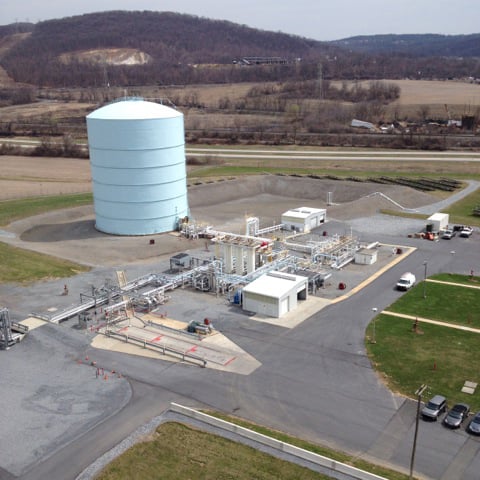
 Big Green groups are objecting to a plan to exempt Pennsylvania’s mom and pop conventional oil and gas drillers from regulations meant to apply to unconventional (shale) oil and gas drillers. The anti-drilling Environmental Defense Fund (EDF) along with the anti-drilling Pennsylvania Environmental Council (PEC) co-authored a letter to PA Senators encouraging them to vote against a bill now working its way through the Senate (and House). In March, two identical bills were introduced, one in the Senate, the other in the House, that would “roll back” (more like “lock in”) regulations that govern conventional PA drilling to the Oil and Gas Act of 1984 (see
  In March the Pennsylvania House State Government Committee debated and voted to approve a slate of five bills aimed at fixing not only the slowmo way the state Dept. of Environmental Protection (DEP) approves shale permits, but also roll back some of the egregious regulatory overreach that exists in PA (see