
Anadarko | Chesapeake Energy | Energy Companies | Industrywide Issues | Lease & Royalty Payments | Litigation | Pennsylvania | Statewide PA
Chesapeake Royalty Lawsuit at PA Supreme Court – Can of Worms?
 Yesterday MDN brought you the news the Pennsylvania Supreme Court has agreed to hear a case challenging whether or not the state Attorney General’s office has the right to use a consumer protection law to prosecute companies like Chesapeake Energy and Anadarko over royalty payment shenanigans (see PA Supremes to Consider Long-Running Chesapeake Royalty Lawsuit). The law the AG’s office wants to use has never been used that way before. According to legal experts, drillers are very concerned if the AG’s office wins this one.
Read More “Chesapeake Royalty Lawsuit at PA Supreme Court – Can of Worms?”
 In December 2015, Pennsylvania’s felony-indicted Attorney General, Kathleen Kane (who later was convicted and did jail time) brought a lawsuit against Chesapeake Energy and Anadarko accusing them of royalty fraud (see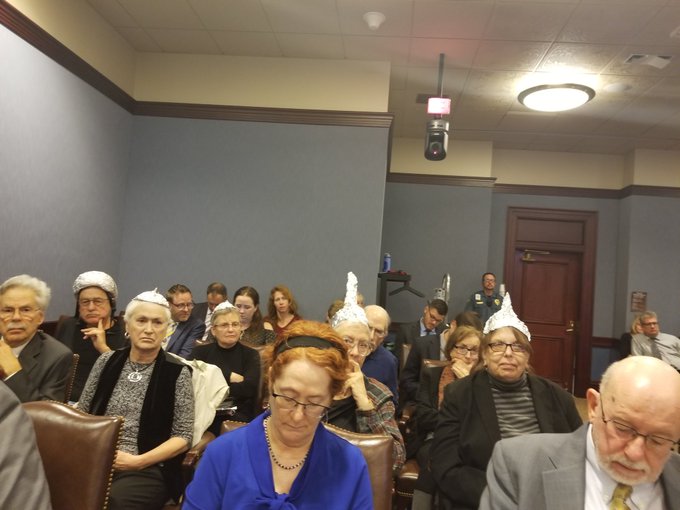

 Opposition to Pennsylvania Gov. Tom Wolf’s plan to have PA join with northeastern states in the so-called Regional Greenhouse Gas Initiative (RGGI) continues. Big opposition. Earlier this month Pennsylvania Gov. Tom Wolf went completely off his rocker with a power-grab to force PA into a regional alliance to tax natural gas-fired electric plants out of existence (see
  Yesterday the Pennsylvania House Environmental Resources and Energy Committee “reported out” (i.e. approved) Senate Bill (SB) 694, which is the Senate version of what was House Bill (HB) 247, a bill which allows fully leased parcels that are part of one drilling “unit” to be combined with parcels in a different unit–“cross unit drilling.” The full Senate voted to approve the bill on September 25 by a vote of 49-0 in favor. Yes, a unanimous vote, with both Republicans and Democrats voting to approve it in the Senate. We’re now one vote away from final passage–the full House. There’s little doubt it will pass.
 Earlier this month Pennsylvania Gov. Tom Wolf went completely off his rocker with a power-grab to force PA into a regional alliance to tax natural gas-fired electric plants out of existence (see
  The Pennsylvania Dept. of Environmental Protection (DEP) has drafted up new “technical guidance” on “radioactivity monitoring at solid waste processing and disposal facilities” specifically targeted at the shale industry. Translation: new regulations for how dumps (and drillers) monitor and report on radioactivity levels from incoming loads of drill cuttings. The DEP has posted their proposed new guidance document for public comment, after which they will adopt the new regs.

 Last year the Pennsylvania Department of Environmental Protection (DEP) issued administrative orders requiring three oil and gas companies–Alliance Petroleum Corporation (a subsidiary of Diversified Gas & Oil), XTO Energy, and CNX Resources–to plug 1,058 abandoned oil and gas wells across Pennsylvania (see
 Leftist Democrats in Pennsylvania are still hopping mad that they couldn’t block Invenergy’s 1,480 megawatt, $1 billion Marcellus gas-fired electric plant called the Lackawanna Energy Center, located near Scranton, PA (see
  The so-called FracTracker Alliance is a group of leftist anti-fossil fuelers who heavily shade the truth (i.e. lie) about the “health impacts” of shale drilling in western Pennsylvania. In May some two dozen FracTracker “volunteers” visited the Pine Creek Watershed in parts of Clinton, Lycoming, Potter and Tioga counties. Their stated purpose was to “catalog the impacts of the unconventional oil and gas industry and related infrastructure on the landscape.” The effort resulted in a false map misrepresenting even basic facts about shale drilling in the region. The Marcellus Shale Coalition could not keep silent about FracTracker’s false and misleading narrative, and wrote to set the record straight.
 We have an ongoing problem. Some of the more radical protesters in the “environmentalist” movement–those who tend toward anarchy–illegally enter work sites for pipelines and other fossil fuel infrastructure under construction, and block the work being done in an attempt to cost companies money. Typically they chain themselves to a piece of equipment with a device that takes law enforcement authorities hours to remove. They cause delays and endanger themselves and workers and law enforcement with their illegal actions. It’s time to make the penalties for these dangerous, willful and illegal acts stiffer. Pennsylvania State Senators have introduced a pair of bills to help put a stop to this nonsense.
 In September MDN brought you news of the U.S. Court of Appeals for the Third Circuit ruling that disallows PennEast Pipeline from using the delegated power of eminent domain to cross properties either owned by, or with easements granted to, the state of New Jersey (see