
H&H Drilling in Upper Burrell Gets Final Approval, Raucous Crowd
 Normally when you read about a raucous crowd at a public meeting dealing with shale gas, it’s raucous because of misbehaving antis. This time the shoe is on the other foot. Huntley & Huntley has plans to drill four shale wells in Upper Burrell Township (Westmoreland County), PA. As MDN reported in June, a landowner in Upper Burrell filed an appeal against Upper Burrell’s zoning ordinance that allows drilling in rural, agricultural districts (see Westmoreland Zoning Challenge Heads to Court, Delays H&H Drilling). H&H plans to drill a well near where the woman lives, and she’s arguing such drilling will violate the state’s environmental rights clause and “devalue her property.” The case was supposed to go to township’s Zoning Hearing Board, but all of the (many) lawyers involved agreed to instead move it to county court, making the process faster and less expensive. The same woman then sued the town claiming the town’s very right to issue conditional use permits in agricultural-residential districts is unconstitutional (see Frivolous Lawsuit Delays H&H Drilling in Westmoreland County, PA). Even though legal wrangling may prevent a final outcome any time soon, the town is moving forward anyway. The Upper Burrell Planning Commission voted two weeks ago to approve H&H’s drilling plans, passing it back to the board of supervisors for a final sign-off (see H&H Drilling Plan for Upper Burrell Still on Pause, Some Progress). Yesterday the supervisors voted–in favor of approving the wells. Supporters of H&H’s plan far outnumbered those against at the meeting–and they made themselves heard…
Read More “H&H Drilling in Upper Burrell Gets Final Approval, Raucous Crowd”
 As we have said for years, ever since the Pennsylvania legislature modernized and updated drilling regulations to account for shale drilling in 2012, known as Act 13, anti-fossil fuel nutters have attempted first to destroy Act 13, and later subvert it. Act 13 originally provided for uniform zoning across the state with respect to siting wells. But seven selfish townships sued and eventually won (at the PA Supreme Court) the right to retain their own zoning regulations with respect to oil and gas wells (see
  Huntley & Huntley has plans to drill shale wells in Upper Burrell Township (Westmoreland County), PA. As MDN reported in June, a landowner in Upper Burrell filed an appeal against Upper Burrell’s zoning ordinance that allows drilling in rural, agricultural districts (see
  In August 2016, energy giant Tenaska (headquartered in Omaha, NE) broke ground to build a 925-megawatt natural gas-fueled power plant in South Huntingdon (Westmoreland County), PA (see
  In an incredible story of how Marcellus Shale drilling benefits local communities, the Municipal Authority of Westmoreland County (i.e. the water authority) reports that it expects royalties received from 52 shale wells drilled on authority-owned land will jump another $1 million this year, to a total of over $3 million. The authority is still pushing forward with a three-year rate hike plan that began in 2016–so customers will get a 7% rate hike this year. Even though the authority has all of that extra cash. Why not suspend the rate hike because of the extra royalty money? Because, says an authority official, “The rate hikes were designed to help pay for a $140 million loan finalized last year for capital improvements to the water system that serves more than 120,000 customers in five counties as well as nearly 25,000 sewer customers.” What will the authority do with the extra $1 million they hadn’t planned on receiving? It’s “more money to be reinvested into the system.” Here’s the lowdown on Westmoreland’s windfall from gas royalties, and why royalties are jumping this year…
 Huntley & Huntley has plans to drill shale wells in Upper Burrell Township (Westmoreland County), PA. As MDN reported in June, a landowner in Upper Burrell filed an appeal against Upper Burrell’s zoning ordinance that allows drilling in rural, agricultural districts (see
  Huntley & Huntley has plans to drill shale wells in Upper Burrell Township (Westmoreland County), PA. As MDN reported in June, a landowner in Upper Burrell filed an appeal against Upper Burrell’s zoning ordinance that allows drilling in rural, agricultural districts (see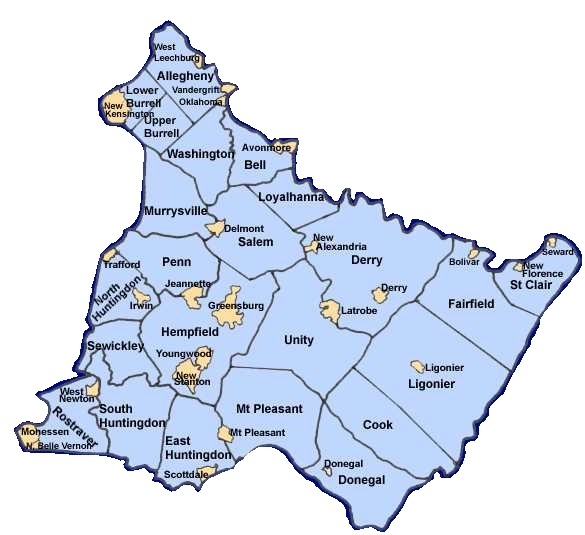


 Westinghouse Electric tried “an ambitious new approach to building nuclear power plants” by building sections of the plants in one location before sending them to the construction site for assembly. They tried the process with two nuke plants–one in Georgia and the other in South Carolina. The process they “innovated” failed and took the company down–into bankruptcy. What does that have to do with the Mariner East 2 (ME2) Pipeline project? Westinghouse Electric is headquartered just outside of Pittsburgh and owns a fair amount of land. Mariner East 2 intends to cross a portion of that land. Sunoco Logistics Partners, builder of ME2, attempted to negotiate a payment for an easement to cross Westinghouse’s land–but Westinghouse wanted more than ME2 offered. So ME2 filed paperwork to use eminent domain and “condemn” the Westinghouse property. In other words, let a judge decide how much is fair. Westinghouse joined the chorus that “ME2 isn’t really a public utility”–sounding no different than the Sierra Club and others who oppose the project. That strategy went nowhere, so Westinghouse eventually came back to the bargaining table and this time, worked out a deal–to sell some of their land to ME2. Now Westinghouse is asking the bankruptcy judge in charge of their case to approve the land sale, ahead of the judge’s decision on other matters to do with the bankruptcy. Here’s an account of the high stakes of “chicken” between Westinghouse and ME2…
 In May 2016, MDN told you that the Penn Township (in Westmoreland County, PA) zoning board voted to refuse to grant a permit to Apex Energy to build a DEP-permitted well pad in the town (see
  The Pittsburgh, PA region has been truly blessed by the Marcellus Shale industry. Largely because of the Marcellus, last year (2016) saw the biggest year ever for capital investment in the 10-county Pittsburgh region–a mind-blowing $10.2 billion of investment! It is the highest capital investment in a single year ever. Now mind you, not all of that money actually got invested last year. Some of it will come in dribs and drabs over the next several years. But all of that $10.2 billion was committed to in 2016. Last week the Pittsburgh Regional Alliance (PRA) issued its annual Business Investment Scorecard. The report (read it below) finds that more than half of last year’s capital investments pledged to Pittsburgh region came from a single project–the $6 billion Shell ethane cracker. The report also found another $3.11 billion worth of investment related to shale gas (processing plants, gas-fired power plants, etc.). Add it all together, and over $9 billion of the $10.2 billion committed last year is due to the Marcellus industry. To which we say, Pittsburgh should bow down and kiss some shale rock…
 It’s hard to keep track of all the Marcellus and Utica Shale-fired electric plants being planned, built and going online. We recently highlighted a list of 11 such projects getting built in Ohio (see
  In July 2014, MDN told you the water wells for two of three families living near a WPX recycled frack wastewater impoundment (i.e. “pond”), near Ligonier (Westmoreland County), PA, were determined to have been contaminated by that impoundment. That is, the Kalp impoundment leaked into the ground, according to the PA Dept. of Environmental Protection (DEP), and that caused a long-term problem with those wells (see