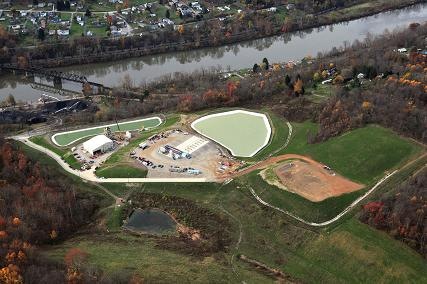
West Virginia

  • | | |

    Anti-drilling Crowd Calls for “Balance” Between Energy and Environment

    Poughkeepsie Journal (Oct 8):
    Outdoors: Balance must be struck between energy, environment

    More misinformation from the anti-drilling crowd. The “reporter” for this article, Bill Conners, starts with general information that is of interest for everyone in New York:

    According to the New York State Department of Environmental Conservation, there have been more than 75,000 oil and gas wells drilled here since the late 1800s; some 14,000 remain active.

    He then briefly describes hydrofracturing, and moves on to cite the Dunkard Creek problem of fish dying along the border of Pennsylvania and West Virginia. As previously noted in MDN, the problem is about an overgrowth of algae, of a strain of algae not normally found in the creek. There may or may not be a tie with gas drilling. The link that is being made is “perhaps” the algae somehow got onto drilling equipment and trucks used in drilling and hitchhiked to the Dunkard Creek. This is highly speculative at best. More science please!

    But the anti-drilling crowd is in a rush to tie Dunkard Creek to the thought in readers’ minds that “drilling causes fish to die where ever it’s used.” Mr. Conners, in this article, does not detail the issue of Dunkard Creek, he merely mentions lots of fish dying and that it is somehow tied to drilling–leaving the impression that chemicals are the cause. Here is the sum total, in context, of what he says on the matter:

    Unfortunately, there are risks associated with using the [hydrofacturing drilling] technique. The various fluids used can, and sometimes do, damage aquifers and nearby water bodies. In early September in Blacksville, W.Va., residents started noticing dead fish along Dunkard Creek, just below the border of Pennsylvania. It wasn’t long before the entire fish population was wiped out along 35 miles of the previously fertile stream. It is virtually impossible to know how long it will take for the damage to be mitigated, whether by remediation or by Mother Nature.

    There are charges flying back and forth, and there is an ongoing investigation as to whether or not the damage to Dunkard Creek came as the result of a spill from a drilling operation along the creek. Nationwide, it is estimated that 90 percent of the wells are drilled using fracking. It is not hard for things to go wrong, and when they do, property is damaged and lives turned on end.

    Here is the story as told in the Pittsburgh Post-Gazette from last week:

    An invasive toxic algae, blamed for contributing to the massive Dunkard Creek fish kill along the Pennsylvania-West Virginia border, may have hitchhiked to the region aboard equipment used in Marcellus shale drilling.

    And this:

    But the West Virginia agency [Department of Environmental Protection] doesn’t know how the algae got into the creek.

    “We might never know how it got there,” said spokewoman Kathy Cosco. “We are trying to determine if it’s present already in other water bodies or has spread.”

    Investigators also are looking at the possibility that someone illegally dumped drilling wastewater into the creek.

    Yes, wastewater from drilling is one of the possible scenarios being looked at, but that, as well as “hitchhiking algae” are pure speculation right now. There is no science, no proof, no direct tie-in with drilling. But you won’t find that in this story because it doesn’t fit the template of the anti-drilling crowd. Read your news carefully.

  • | | |

    Wheeling, WV Drilling Vote Delayed

    Intelligencer Wheeling News Register (Oct 7):
    Drill Vote Delayed

    Wheeling, WV city council members have delayed a vote to allow Chesapeake Appalachia (a subsidiary of Chesapeake Energy) to begin drilling on city-owned land. From the article:

    Though the Wheeling Park Commission has approved the lease allowing the company to drill on its property at Wheeling and Oglebay parks, city officials want to gain more information about the potential environmental impact of Chesapeake’s work before allowing the company to drill on city property.

    Council members want to visit some of Chesapeake’s other drilling sites first to see first-hand what they look like. No complaints here. Council members should satisfy themselves that it will be safe and beneficial to the local community (which it will be), and then move forward.

  • | | |

    Toxins tied to fish kill may have hitchhiked: Investigators weigh whether mining equipment is culprit

    Pittsburgh Post-Gazette (Oct 4):
    Toxins tied to fish kill may have hitchhiked: Investigators weigh whether mining equipment is culprit

    A highly speculative and irresponsible article trying to tie an algae buildup along the Pennsylvania-West Virginia border to drilling for natural gas. I would go as far as saying it’s pure fantasy. But that’s what passes for “news” these days. Part of the article ties in completely unrelated news, like the Cabot problems in Northeast PA, with this one–a favorite tactic of people who don’t have a case.

  • |

    West Virginia DEP Wants Your Comments on Water Use in Marcellus Drilling

    From an article in the Charleston Daily Mail (obviously adapted from a press release):

    CHARLESTON, W.Va. — The state Department of Environmental Protection announced it is seeking public comment on a draft document that addresses drillers’ water use and disposal in the Marcellus Shale formation.

    Department secretary Randy Huffman said in a prepared statement, “New advancements in drilling technology have created increased interest in exploring the Marcellus Shale formation in New York, Pennsylvania, and recently in West Virginia. What we are concerned about is the increase in the amount of water used and the disposal of wastewater that results from using these new drilling techniques.”

    The department will accept comments about the document until April 17. The document can be viewed online at www.wvdep.org/marcellusguidance. Comments about the draft can be submitted by e-mail to DEP.Comments@wv.gov or mailed to the Public Information Office at 601 57th Street SE, Charleston, WV 25304.

    Make your voice heard! You have until two days after tax day to comment.

    Direct link to the draft document: www.wvdep.org/FrontNews/Marcellus Guidance Document.pdf

  • | | | | |

    Gastar Exploration’s 42,000 Acres in the Marcellus – No Development Until a Partner is Found

    Energy company Gastar Exploration reports the following about their Marcellus commitment in a recent quarterly financial filing:

    In the Marcellus Shale we hold approximately 42,000 net acres in northern West Virginia and southwestern Pennsylvania. To date, we have drilled 10 shallow wells, which will allow us to hold the related leases with production. Currently, we are seeking a joint venture partner to help us further develop this play. We do not expect to drill additional shallow wells until we secure a joint venture partner or until natural gas prices improve. We will continue to maintain our leases through renewals, extensions and renegotiations of drilling commitments.

    Read the press release: Gastar Exploration Reports Fourth Quarter and Full Year 2008 Financial and Operational Results

  • |

    Drilling in the Monongahela National Forest Put on Hold

    Recently the U.S. Bureau of Land Management stopped a proposed auction for new oil and gas leases in the Monongahela National Forest (W. Va.) after protests from the Friends of Blackwater Canyon and The Wilderness Society. However, just because the auction is canceled for now, it doesn’t mean there won’t be an auction in the future, according to Bureau spokesman Terry Lewis. An article in The Charleston Gazette reports:

    There are an estimated 280 billion cubic feet of federally owned natural gas beneath the forest. When combined with privately held resources, there could be as much as 860 billion cubic feet, according to the forest’s latest land and resource management plan.

    Forest officials say there are 17 production wells on forest property, 16 of them tapping federally owned gas deposits.

    For the past 50 years, drilling has focused on the Oriskany and other formations. It’s unknown how much gas is held in the Marcellus shale, which stretches from New York to West Virginia and is thought to hold trillions of cubic feet of natural gas. There are no Marcellus wells in the forest.

    Read the full article: Monongahela drilling debate continues

  • | |

    West Virginia Professor Touts Benefits of Shale Gas

    A positive opinion article by Donald W. Lyons, professor of engineering at West Virginia University, recently ran in the Huntington, W.Va. Herald-Dispatch. Among the points he makes are these:

    The United States needs to greatly reduce the amount of imported oil. To achieve this, we need more energy conservation, more wind, solar and nuclear energy and more bio-fuels. But even as we work to increase all of these, we also need more domestically produced natural gas. The failure to diversify our energy policy will lead to further consumer pain and a continued dismantling of key portions of our economy.

    The economy of West Virginia can benefit by the production of Marcellus shale natural gas. West Virginia is fortunate that the state will continue to be a major contributor to the “fuels of the future” and the good jobs associated with energy production.

    Read the full article: Shale gas could move U.S. toward energy independence