
EQT Midstream Plans 1.2 Bcf/d Hammerhead Pipeline to Feed MVP
 EQT Midstream, which is about to be renamed to Equitrans Midstream Corp. in a few weeks, recently issued its third quarter 2018 update (same day that EQT the driller issued its update). As you know, the two are about to split and become two independent companies. As part of the EQT Midstream update, the new midstream company leaders spoke about Mountain Valley Pipeline (MVP), a 303-mile pipeline from West Virginia into southern Virginia. MVP has experienced a lot of setbacks, most of them from a campaign of lawsuits filed by Big Green organizations (like the odious Sierra Club). A new pipeline project related to MVP was mentioned prominently in this week’s quarterly update. The pipeline is called Hammerhead.
Read More “EQT Midstream Plans 1.2 Bcf/d Hammerhead Pipeline to Feed MVP”
 When shale drilling activity ramps up, the people who are needed to do all those jobs show up. In droves. Some come from out-of-state. Some are local, and some from in-state but not local. Regardless, they all need a place to sleep. A home away from home (if they aren’t local). Increasingly those places are campgrounds. Problem is, there aren’t enough campgrounds for workers to park their RVs. So enterprising farmers in West Virginia are turning some of their acreage into campgrounds, to profit by hosting shale workers. Some establish small campgrounds, with just a handful of (2-4) sites. But beware–there’s a pile of permits required to operate a campground of any size. Some farmers are skipping the permit process, which is NOT recommended.
 Although EQT Midstream’s 303-mile Mountain Valley Pipeline (MVP) project has experienced a number of legal and regulatory setbacks and is currently blocked from constructing pipeline across/under/near any river, stream, or wetland in all of West Virginia and all of Virginia (some 1,100 different locations), believe it or not there are still many places where MVP can and is still installing pipeline (see
  A near-capacity crowd (over 300 people) filled the Storer Ballroom at Shepherd University in Shepherdstown, WV on Wednesday to hear and talk about the Mountaineer Gas Eastern Panhandle Expansion Project–a project to deliver natural gas to a new industrial facility in Berkeley County, WV, and provide gas to other local businesses and residents in the Tri-State area. The meeting (a public hearing) was hosted by the West Virginia Public Service Commission. It was moved to Shepherdstown from Charleston at the request of fussing Sierra Clubbers.
 Dominion’s 600-mile Atlantic Coast Pipeline (ACP) from West Virginia to North Carolina has had its share of setbacks. But these days, it appears the project is building momentum and government/regulatory decisions are breaking in ACP’s favor. The project is on track to finish by the end of 2019, so says Dominion. The latest win for ACP came yesterday when the Federal Energy Regulatory Commission (FERC) granted permission for ACP to begin construction pretty much in all locations in West Virginia. The only prohibitions are small areas in National Park Service land and a few locations where there may be Indiana bats.
 Although EQT Midstream’s 303-mile Mountain Valley Pipeline project has experienced a number of legal and regulatory setbacks and is currently blocked from constructing pipeline across/under/near any river, stream, or wetland in all of West Virginia and all of Virginia, there are still places where MVP can build (see
  We thought that all of Mountain Valley Pipeline’s (MVP) permits issued by the U.S. Army Corps of Engineers for stream and wetland crossings had been pulled in both West Virginia and Virginia, but alas, no. One of the regions where permits issued by the Army Corps (called NWP 12 permits), in the northern panhandle of WV, is issued by a different Army Corps district office (in Pittsburgh). That office has now revoked MVP’s permits in Wetzel and Harrison counties–another 59 stream and 62 wetland crossings. Which now makes it complete: MVP cannot engage in any construction across/under/near any river, stream, or wetland in *all* of WV and *all* of VA. That is, until they get the NWP 12 permit reworked and reissued.
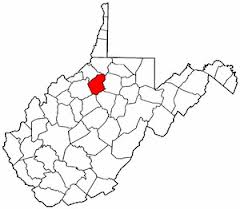 According to Anne Blakenship, executive director of the WV Oil & Natural Gas Association (WVONGA), Doddridge County leads WV’s 55 counties in “oil and natural gas production.” She said Doddridge will “remain at the epicenter” of the state’s oil and gas industry “for years to come.” While Doddridge is indeed the #1 natural gas producing county, replete with a number of gas processing plants (and pipelines), Doddridge is not the #1 oil producing county.
 Mountain Valley Pipeline, a project of EQT Midstream, continues to work on constructing its 303-mile long project from West Virginia into Virginia–despite a recent court order overturning some of the permits for the project (see
 Diversified Gas & Oil continues its mission to buy as many non-shale (conventional) oil and gas wells as it can in the Appalachian Basin. In June, MDN brought you the exclusive news that Diversified had purchased EQT’s Huron Shale assets in Kentucky, Virginia and West Virginia for $575 million (see
  In March 2016, MDN brought you news that Primus Green Energy, a gas-to-liquids (GTL) technology company, planned to build a 160 metric tons per day (MT/day) methanol plant at “a manufacturing site in the Marcellus shale region” in 2017 (see
  Each large (over 475 megawatts) gas-fired electric power plant is an economic bonanza. The plants cost hundreds of millions of dollars to build–over a billion dollars for the largest plants. They provide hundreds of jobs during construction, jobs that last several years. They provide millions in tax revenue to local municipalities and schools. And best of all, each one of these plants uses an enormous amount of Marcellus and Utica Shale gas. There are 29 of these incredible projects already built or in various stages of planning and construction in PA, OH and WV. We have the list below.
 Each year MDN partners with the Oil & Gas Awards to promote their Northeast Awards–a way for companies in the oil and gas industry that operate with distinction to get recognized by their peers. In March 2019 the Northeast Oil & Gas Awards will celebrate their 7th year! We hope that you and your colleagues will be able to share *your* successes and participate in the greatest celebration of our industry at the Oil & Gas Awards in Pittsburgh in March 2019. The deadline to enter is Dec. 12. MDN has what we consider a way you and your company can gain an “unfair” advantage–stacking the deck in favor of your company winning.
 Some 200 business and government leaders in West Virginia attended the state’s Economic Outlook Conference in Charleston this past Wednesday. A key focus of the event was a panel discussion on the topic of “downstream” natural gas development–meaning ethane cracker plants and manufacturing plants to take advantage of the coming flood of cheap plastics from cracker plants. The speakers spoke of urgency, to prevent a generational opportunity from slipping away.