
Dominion’s SC Canadys Gas-Fired Power Plant Doubles in Price
 In February 2024, members of the South Carolina Public Service Commission approved a proposed project to build a 1,020-megawatt (MW) gas-fired power plant in the state’s Lowcountry, in Colleton County (see SC PSC Approves Gas-Fired Power Plant Proposed for Edisto River). The project, estimated to cost $2.5 billion, is a 50/50 partnership between Dominion Energy (formerly South Carolina Electric & Gas) and Santee Cooper (South Carolina’s state-owned electric and water utility). The plant location is at the retired coal-fired plant Canadys Station. Suddenly, the price has skyrocketed—doubling to around $5 billion. Why? Read More “Dominion’s SC Canadys Gas-Fired Power Plant Doubles in Price”
 Hell has officially frozen over. New York Governor Kathy Hochul is seeking to revise the state’s 2019 Climate Act, recognizing that its mandates for a 40% reduction in greenhouse gas emissions by 2030 are financially unsustainable for New Yorkers and have become a major election issue due to rapidly rising energy costs. This move follows a court ruling compelling the state to either change the law or issue the “infeasible” regulations by a February 2026 deadline, a task the Department of Environmental Conservation (DEC) had previously avoided due to the “extraordinary and damaging costs” it would impose. The law’s implementation is further complicated by state electric power “plans” that rely on non-existent technology, highlighting the impossibility of meeting the 2030 target and setting the stage for a significant political battle as the law finally hits an economic wall. But that’s not all…
  OTHER U.S. REGIONS: $700M natural gas pipeline upgrade comes online in Wisconsin; NATIONAL: U.S. natural gas futures extend winning streak; Democrats forget about energy affordability (again) and oppose expanded offshore leasing; COP 30 – Get U.S. out of this air travel UN offset scheme!; Bill Gates helps break the moral monopoly against fossil fuels; States must regulate renewable energy just like oil and gas; INTERNATIONAL: Oil retreats on strong greenback; To reach net zero carbon emissions by 2070, India needs $21 trillion; ‘Green’ obsession feeds orthodoxy and starves growth; OPEC+ hit ‘pause, not stop’, HSBC highlights.
  Antero Resources, the largest Marcellus/Utica (M-U) driller in West Virginia, released its Q3 2025 update with two significant announcements. One is that newly appointed CEO Michael Kennedy is “excited” for the company to return to dry gas drilling after “more than a decade,” with the first new dry gas well specifically intended to service the data center market. Second, we can confirm our prior speculation to say that Antero is officially marketing its Ohio Utica assets for sale. We previously brought you that rumor in early September (see
  Last week, CNX Resources issued its third quarter 2025 update. Notably, the company did not drill, frack, or complete any new wells in 3Q25. The company reported a profit of $202.1 million for the quarter, compared to a profit of $65.5 million in 3Q24. The company generated $226 million in free cash flow, marking the 23rd consecutive quarter of FCF generation. Production was 161.3 Bcfe (billion cubic feet equivalent) in 3Q25 — which works out to 1.75 Bcfe/d — up from 134.5 Bcfe last year (a 20% increase). The reason for the sizeable increase was that CNX closed on the purchase of Apex Energy during the first quarter, and Apex’s production numbers were fully added to CNX’s numbers beginning in 2Q25.
  Marcellus/Utica natural gas production is rebounding in November, increasing by about 700 MMcf/d to an average of 35.5 Bcf/d recently, as drillers react to rising in-basin pricing and tightening regional fundamentals due to higher seasonal demand. This increase signifies an easing of the production shut-ins carried out during the third quarter when loose supply-demand dynamics pushed prices, which averaged $1.40-$2.97/MMBtu, to an average of below $2/MMBtu on more than a third of days.
  AltaGas is a Canada-based corporation that owns and operates both midstream (pipeline) and utilities businesses. AltaGas is a minority owner of the 303-mile Mountain Valley Pipeline (MVP), which stretches from Wetzel County, West Virginia, to Pittsylvania County, Virginia. AltaGas issued a press release yesterday stating that it has decided to continue owning its minority stake in MVP (a 10% ownership stake) and, instead of selling its stake to raise capital, will issue new common stock to raise $400 million. The company will not only retain its ownership stake in the original MVP, but also its stake in expanding MVP by another 600 MMcf/d (called MVP Boost) and in extending MVP into North Carolina (called MVP Southgate).
  Deep River Data, a company with connections to the cryptocurrency industry, wants to drill for natural gas in Lee County, North Carolina. However, production from the well would not be used to power crypto mining, but instead to fuel an AI data center. If approved, the project would be the first commercial well drilled into the Triassic Basin, a natural gas repository underlying North Carolina and other Eastern Seaboard states. The well that is planned is conventional, not shale, so it involves no (or very little) fracking.
 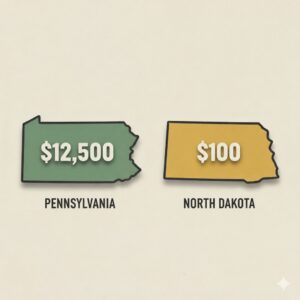 North Dakota’s regulatory framework is a model of simplicity. Companies pay a modest $100 fee for drilling permits, compared to $12,500 in Pennsylvania, and typically receive approval in 20 to 30 days. That efficiency has proven pivotal since 2010, when horizontal drilling and hydraulic fracturing significantly expanded the Bakken Formation’s potential for commercial-scale production. Of course, there’s a big difference between PA and ND—companies drill for oil in ND and natural gas in PA. So it’s not like a driller would say, “Screw it, we’ll leave PA and go drill in ND where it’s easier, faster, and cheaper.” However, drillers can/are leaving PA for Ohio and West Virginia, where it’s easier, faster, and cheaper. We bring you this masterclass on how ND makes drilling better, so perhaps, just perhaps, someone at the PA DEP (and the politicians involved in approving permit fees) will wake up and improve the experience in the Keystone State.
  In an announcement issued yesterday, the PJM Interconnection electrical grid forecasts adequate power supplies to meet this winter’s expected conditions, with 180,800 megawatts (MW) of operational capacity available to serve a record-high forecasted peak demand of approximately 145,700 MW. Despite this positive outlook, the grid operator warns that reserve margins are tightening, dropping to 7,500 MW, because electricity demand is growing faster than the addition of new generation.
  The NYMEX futures price for natural gas was a rocket ship over the past two weeks. The NYMEX price closed at $4.1240/MMBtu on Friday, breaking the $4 barrier barely a month after we struggled to break the $3 barrier. In October, the NYMEX front-month contract rose an astounding 82.10 cents per MMBtu, or 25%. In one month! October was the largest one-month gain since August 2022, and the largest one-month percentage gain since February 2025. Zooming out a bit, the NYMEX price was up $1.127 or 38% over the last two months. However, spot prices (at least in the Marcellus/Utica) are more of a mixed bag.
  Pennsylvania’s Attorney General, Dave Sunday, pretends to be a Republican, but he’s really a Democrat. He’s also anti-shale, as evidenced by a wild attack against Seneca Resources launched on Friday. Sunday’s office filed three separate criminal complaints against Seneca, charging the company with 64 counts of criminal violations of the Solid Waste Management Act and 36 counts of criminal violations of the Clean Streams Law. Sunday, like his left-wing predecessors, is turning what should be regulatory enforcement actions into crimes. No wonder some drillers are saying “screw you” to Pennsylvania and moving their drilling operations to West Virginia and Ohio.
  On October 22, Coterra Energy reported a well control incident during fracking the 12H well on the Lauer pad in Susquehanna County to the Pennsylvania Department of Environmental Protection (DEP). A loss of control resulted in the high-pressure release of an unknown quantity of fracking and production fluids, along with natural gas, causing the fluid to “spray” on and off the well pad. Coterra, which was fracking five wells simultaneously, called in Cudd Well Control Services and did not regain control until 49 hours later on October 24, after installing a second bridge plug.
  Capital & Main is a left-leaning news outlet based in California. Capital & Main is about as left as left gets, yet pretends to be a legit news outfit [uncontrolled laughing]. Capital & Main has repeatedly targeted CNX Resources to smear the company and its Radical Transparency initiative. In September, we brought you Capital & Main’s latest hit piece alleging CNX’s operations are polluting and causing ill health for those who live nearby. The article also said CNX’s drilling program is anything but transparent (see
 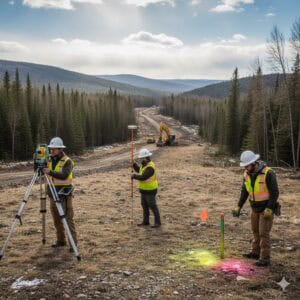 In April, MDN told you about a new greenfield expansion of Kinder Morgan’s Elba Express pipeline into South Carolina to serve growing demand for natural gas in the state (see