Finally! PA DEP Issues Final Permits for Mariner East 2 Pipeline

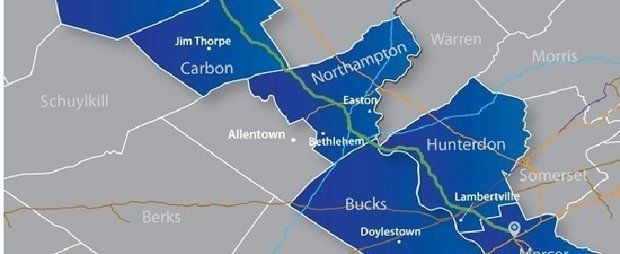
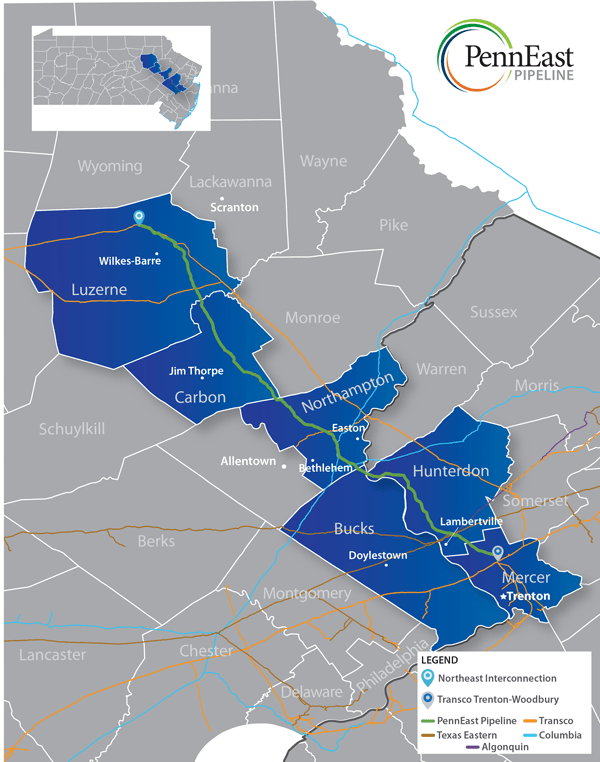
Game, set and match. Finally, after five circuses, er, a, public hearings, and 29,000 form letter comments, the Pennsylvania Dept. of Environmental Protection (DEP) has issued the final Chp. 105 (Water Obstruction and Encroachment) and Chp. 102 (Erosion and Sediment Control) permits for the Mariner East 2 pipeline project. PA has cleared the project to begin construction–there are no more permits required from PA. However, before the bulldozers start, there is one remaining hurdle: permission from the U.S. Army Corps of Engineers (which under President Trump, is a foregone conclusion). Mariner East 2, as a reminder, is a $2.5 billion, 306-mile natural gas liquids (NGL) pipeline that will run from eastern Ohio through the state of Pennsylvania to the Marcus Hook refinery near Philadelphia. It will flow mostly ethane, but also propane and butane. There have been numerous legal battles and roadblocks thrown up by some of the townships along the route–but that’s now behind us. Oh, there’s still a few troublemakers (see Towns Near Philly Collude with CAC to Block Mariner East 2 Pipe?), but their troublemaking will go nowhere. This has been a long time coming, and a cause to celebrate…
Read More “Finally! PA DEP Issues Final Permits for Mariner East 2 Pipeline”
 Noble Energy, a driller with a significant presence in the Marcellus but with a bigger presence in other shale plays, (and operations in other countries and offshore), announced in February that of the four shale plays they operate in onshore in the U.S.–the DJ Basin, Eagle Ford, Delaware and Marcellus–in 2016 they plan to focus on the first three and scale back in the Marcellus, limiting their Marcellus activity to completing previously drilled wells (see
  Yesterday MDN’s favorite government agency, the U.S. Energy Information Administration (EIA), issued our favorite monthly report–the Drilling Productivity Report (DPR). The DPR is the EIA’s best guess, based on expert data crunchers, as to how much each of the U.S.’s seven major shale plays will produce for both oil and natural gas in the coming month. For the past four reports, estimating production for November, December, January, and February, Marcellus natgas has increased. The trend continues in this latest report, which forecasts production for the coming month of March. In fact, EIA says natgas production for six of the seven major shale plays will go up–by a lot. In fact, if the numbers prove to be true, the combined natural gas production for the seven major plays will hit a new record high of 49.1 billion cubic feet per day (Bcf/d) in March. Two months ago the EIA predicted natgas production in the Marcellus would zoom up by 160 million cubic feet per day (MMcf/d). Last month EIA predicted Marcellus production would go up another huge 188 MMcf/d. This month, it’s even higher: March production will go up 192 MMcf/d! The other big story (for us) is just how much natgas production is rising in the Texas Permian Basin–up another 129 MMcf/d. But wait, the Permian is an oil play, right? Correct. However, more than just oil comes out of the ground–plenty of “associated” natural gas also comes out, along with the oil. The Permian is seeing white hot levels of new drilling. The more oil drilling, the more associated natural gas that comes along with it. Below we have the latest report, long with some analysis…
 In December the Pennsylvania Dept. of Environmental Protection (DEP) unveiled new regulations to clamp down on methane emissions and other other air pollution that allegedly comes from shale drilling sites (see
  Some farms not only produce products like milk, meat, eggs and/or crops–some farms produce energy. Would it surprise you to learn that in 2014 (the most recent year with stats available), energy companies paid farmers a staggering $2.9 billion for the energy extracted from private farms? The U.S. Dept. of Agriculture posted a brief blurb from their Amber Waves magazine yesterday, recounting stats from a report released last November. The report, “Trends in U.S. Agriculture’s Consumption and Production of Energy: Renewable Power, Shale Energy, and Cellulosic Biomass” (full copy below) points out it’s not just oil and gas extraction that farmers receive income from. Some farmers lease their land for solar and wind generation. Some biomass. However, it was one particular chart and stat that caught our attention: About 9.6% of Pennsylvania farms received energy income in 2014. The average amount received, per farm? $157,000! Almost all of that revenue came from the Marcellus Shale…
 Gulfport Energy, an Oklahoma City-based independent oil and natural gas exploration and production company (“driller”) that is a “top 5” driller in the Ohio Utica Shale, released their fourth quarter 2016 and full year 2016 operational update in mid-January (see
  Seventy Seven Energy (SSE) is the former Chesapeake Oilfield Operating company, the oilfield services subsidiary of Chesapeake Energy that Chessy spun out into its own company in July 2014 after it couldn’t find anyone to buy it (see
  West Virginia University (WVU) has joined a national effort to “turn natural gas into valuable products and do it at the well.” There are many locations in the Marcellus (and Utica) where pipelines don’t yet connect. Wells drilled but not hooked up to production. WVU has joined the newest branch of the U.S. Department of Energy’s National Network of Manufacturing Institutes. Called Rapid Advancement in Process Intensification Deployment institute, or RAPID, the institute “will focus on using advanced manufacturing to develop breakthrough technologies to boost the productivity and efficiency of some of industrial processes by 20 percent in the next five years.” That is, they plan to design modular reactors–think of them as teeny tiny crackers–that can be carted around well site to well site, converting methane, ethane and other hydrocarbons into new chemical products. It’s a very exciting concept. WV in particular has a lot of hilly terrain that makes installing pipelines difficult. This is a potential solution to that problem…
 As we pointed out to you last December, evil corporate raider Carl Icahn (invests in companies so he can fire a bunch of people, boost the stock and pocket the profit) had fired Cheniere Energy CEO Charif Souki (see
  The “best of the rest” – stories that caught MDN’s eye that you may be interested in reading. In today’s lineup: M-U pipeline capacity could overwhelm supply–someday; more M-U pipelines will lower Henry Hub price in the future; NY AG Schneiderman colluded with enviro activitists before launching Exxon “probe”; Cuomo’s risky solar jobs bet backfiring; Utica rig count drops; what’s going on with the DUC count; Wall Street pouring money into o&g; Mexico & Middle East buying “record amounts” of US natgas; and more!
 On Friday MDN ran a story of keen interest to both mineral rights owners and drillers in West Virginia–about an effort pushing new legislation this year in lieu of forced pooling, something called “co-tenancy” and “joint development” (see
  Paul Sidorek, an accountant representing some 60 northeastern Pennsylvania landowners who receive royalty income from drilling, is also a landowner himself. In 2009 Sidorek leased 145 acres, a lease that was eventually sold to Chesapeake Energy. Because of the troubles encountered by others, Sidorek wrote into his lease a 20% royalty and made sure the lease explicitly stated that no expenses could be deducted from the sale of the gas produced on his property. That is, NO post-production expenses could be deducted. And yet, Chesapeake disregarded the lease and deducted as much as 30 percent from his royalties, attributing it to “gathering” and “third party” expenses, an amount that adds up to some $40,000 a year (see
  The colorful new Governor of West Virginia, Jim Justice, is wasting no time in showing his support and appreciation to the natural gas industry. During Justice’s State of the State address last week, he ordered his new head of the WV Dept. of Environmental Protection, Austin Caperton, to stop saying “no” to businesses that show up with requests (including the drilling industry). During a rambling address, Justice had this to say: “Now, I underline — underline, underline, underline — nobody loves the outdoors as much as me. Nobody loves water as much as me. We’re not going to break the law. We’re got going to do anything to damage the environment to the very best of our abilities. Or our waters. But we are not going to just say no.” And we have perhaps the first instance of that philosophy in action. The previous Gov. Earl Ray Tomblin Administration had enacted certain restrictions in WV permits for compressor stations–establishing noise and light restrictions to protect nearby residents. At the request of the West Virginia Oil and Natural Gas Association (WVONGA), Caperton removed those restrictions…
 If you’re in business, you’ve no doubt heard of “leading indicators” and “lagging indicators.” Example: When it comes to employment, a leading indicator would be an increase in work at temporary agencies (a rapid ramp-up in new employees), which means the economy is about to heat up and do better. A lagging indicator would be the official unemployment numbers–higher unemployment means an economy doing worse, lower unemployment means an economy doing better. When it comes to drilling activity, MDN has long used two metrics as leading indicators–that drilling activity is about to pick up. One is new permits issued. Drillers don’t spend big bucks to apply for permits they don’t intend to use–and use soon. However, there’s another, even earlier leading indicator, a predictor that more drilling is on the way in the next 6-12 months. That indicator is packed record halls at the local county clerk’s office. Before lease deals are signed, sealed and delivered, drillers must first ensure there is a clear title–that the person who says he/she owns the mineral rights for a given property, actually does. That’s where abstractors come in. Abstractors research deed records at the county clerk’s office. In the past we’ve noted there are some counties where there is a waiting line to get in to access records (see