
Carl Ichan Sells Rest of his Chesapeake Stock, Good Riddance

Now that the damage has been done, evil corporate raider Carl Ichan has sold off the rest of his Chesapeake Energy stock–completely exiting the company. The one solace we have is that Ichan didn’t make any money from his dalliance with the company. He lost something like over $1 billion, according to our best guess (back in 2014 it was already $633M, see Carl Icahn Has Lost $633 Million on Chesapeake Gamble…So Far). We’ve chronicled the rise and fall of Ichan, and of Chesapeake, over the past four years. The purpose of investing, for people like Ichan, is to seize control of the company, fire a bunch of people, sell off a bunch of assets, which leads to a rise in the stock price. Said corporate raider then sells his shares and makes boatloads of money. Except that didn’t happen with Ichan’s investment in Chesapeake…
Read More “Carl Ichan Sells Rest of his Chesapeake Stock, Good Riddance”
 Turns out anti-fossil fuel protesters, behaving like the petulant children they are, couldn’t stop the adults in the room last night in Philadelphia. You may recall we told you yesterday that wackos from a fringe-left group called 350 Philadelphia threatened to “swarm” a meeting of SEPTA (Southeastern Pennsylvania Transportation Authority) where a vote was scheduled on a plan to build a Marcellus gas-powered electric plant that would provide electricity to SEPTA’s northern Regional Rail lines (see
  Earlier this week we ran the news that Canadian pipeline giant TransCanada’s plan to radically lower the cost to pipe natural gas from the western regions of Canada to the eastern part of the country, in an effort to undercut Marcellus/Utica gas from flooding into the region, failed (see
 Earlier this week MDN brought you the news that the New Jersey Division of the Rate Counsel (NJDRC)–a state government agency responsible for representing the interests of residents, businesses and other rate payers in dealing with regulated public utilities and insurance firms–responded to PennEast Pipeline’s release of a study obliterating the NJDRC’s claims that the pipeline isn’t needed (see
  Last week MDN brought you an article from the Seeking Alpha investors website, written by an analyst/investor pointing out the financial troubles at the world’s fourth largest oilfield services company, Weatherford (see
  It seems old Mom Earth has a major case of flatulence (i.e. farting). Researchers who have been mapping the ocean floor have discovered “an active strip of seafloor called the Cascadia Subduction Zone is bubbling methane like mad” off the coast of Washington, Oregon and California. [Quick, somebody call Cornell prof Bob Howarth! There’s fugitive methane escaping!!] Big Green advocates get their knickers in a twist over fugitive methane because, ‘ya know, it causes global warming. But this time mankind is nowhere to be found as the cause. This massive methane leak off the West Coast is Mom Earth, all by herself, farting away and killing herself without even knowing it. How tragic. And how funny!…
 Each year MDN partners with the Oil & Gas Awards to promote their Northeast Awards–a way for companies in the industry that operate with distinction to get recognized by their peers. In March 2017 the Northeast Oil & Gas Awards will celebrate their 5th year. Over the past five years there have been thousands of entries and hundreds of finalists and winners. While the O&G Awards boys keep their ears to the ground to discover stellar performers, they want to know who YOU think are the best companies in the region. We are now 4 weeks out until the submission deadline for the 2017 Northeast Oil & Gas Awards (Dec. 14). Here’s how you can nominate your, or someone else’s, company for this year’s awards…
 A quick reminder that MDN editor Jim Willis is hosting a webinar today at 2 pm Eastern. Jim’s special speaker is Alex Epstein, delivering a talk on his book: “The Moral Case for Fossil Fuels.” Jim guarantees you will find what Alex has to say challenging and enlightening. He will help you understand why fossil fuels are BETTER than renewables. Controversial? You bet. What else would you expect from MDN?! Jim has lifted the limit of 100 for the number of attendees. We already have 197 people signed up.
 The “best of the rest” – stories that caught MDN’s eye that you may be interested in reading. In today’s lineup: Rockefellers admit paying Columbia J-School to target Exxon; OH production up, but value of production down; US exporting shale gas…to Middle East!; US Silica takes advantage of downturn to buy more assets; green light for UK shale drilling; and more!
 In true environmental Nazi fashion, a group of profoundly stupid people have pledged to “swarm” and shut down a SEPTA (Southeastern Pennsylvania Transportation Authority) meeting where a vote will be taken to build a Marcellus gas-powered electric plant that would provide electricity to SEPTA’s northern Regional Rail lines–a win/win for all Pennsylvanians. The reason the enviro Nazis want to shut down the meeting is to stop the vote because the clean-burning plant would burn a “fossil fuel” and these poor, lost souls grew up watching Captain Planet cartoons and believe burning natgas will toast Mom Earth. That is, they were brainwashed children who grew up to be maladjusted adults…
 As MDN reported in September, the Maryland Dept. of the Environment (MDE) beat the Oct. 1 deadline to release onerous new fracking regulations (see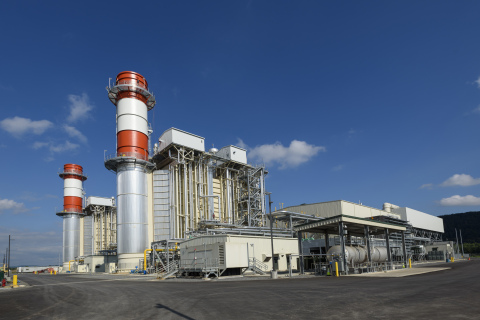
 Last month MDN wrote a post outlining an initiative to begin regulating small, low-pressure gathering pipelines–something not now done (see
  Companies in the oil and gas sector often split the ownership of assets into different companies (on paper) for various reasons: tax purposes…to attract investment…to give us laypeople headaches. CONE Midstream, a joint venture between CONSOL Energy and Noble Energy (CO from CONSOL and NE from Noble Energy) was formed in summer 2014 (see