
US Exports More NatGas than Imports in Nov; First Time in 60 Yrs!
 The import/export picture for natural gas into and out of the U.S. has, in recent decades, been mostly imports and not exports. With the rapid scale-up in shale drilling, the supply picture here at home radically changed. For years we’ve exported natgas to Canada and Mexico, but we’ve also imported a lot of gas from Canada (via pipeline). In the end, we’ve always imported natgas on balance–both by pipeline and by LNG carrier ships. But that all changed with the construction and operation of Cheniere Energy’s Sabine Pass LNG export facility in southern Louisiana. Platts is reporting that for the first time in 60 years the U.S. will export more natural gas than it imports during the month of November. It happened for a few days in September, but in November the balance of trade has finally tipped and we are once again a net exporter of natural gas. How cool is that?! A big part of the reason why is the Marcellus/Utica…
Read More “US Exports More NatGas than Imports in Nov; First Time in 60 Yrs!”
 Looking to land a job in the Marcellus/Utica industry? One of the best ways to do it is to go back to school. If you’re lucky enough to get into Pennsylvania College of Technology (an affiliate of Penn State), and if you graduate from one of their programs with a degree, you stand a 96% chance of landing a job. Other programs include ShaleNET, a service that helps train you and then helps find you a job in the industry. Not every job requires a two or four year degree. Often a certificate will suffice. Here’s more info on going back to “school” and what kind of education you need to land a job in the shale industry…
 Some of the first businesses that will profit from the mighty Shell ethane cracker being built in Beaver County, PA will be small, local businesses. Restaurants, banquet halls, hotels, drug stores, real estate…the list goes on. But even small businesses that want a piece of the Shell cracker plant action don’t automatically have smooth sailing. Trying to get Shell to promote a business to its workers is hard work. Businesses report talking to Shell and being told that the company won’t help them by promoting them to cracker plant workers (a bit un-neighborly if you ask us). But that’s the life of an entrepreneur. You encounter brick wall after brick wall and you find a way to go through it, or over it, or around it, or under it. That’s what several small businesses in Beaver County are doing with Shell…
 The Pennsylvania Department of Labor and Industry recently released employment numbers for the first quarter of 2016 for the Keystone State. Those numbers show that employment in PA’s oil and gas industry, which includes the Marcellus, dropped some 10,000 jobs from 1Q15 to 1Q16. That’s about one-third of the o&g workforce. Ouch. Still, PA employs twice as many people in o&g right now than they did when the Marcellus boom got underway in 2008. Here’s the lowdown on the latest PA employment numbers…
 In June, Massachusetts-based Clean Energy Future broke ground on their $800 million, 940-megawatt Utica gas-fired electric plant in Lordstown (Trumbull County), OH (see
  Are those war drums we hear beating? Perhaps! If you are involved in the oil and gas industry in just about any capacity, it’s hard to miss the story of the Dakota Access Pipeline (DAPL) and the paid criminal protesters who are trying to stop it (see
  It’s a smallish project in Michigan, but it’s important for the Marcellus/Utica nonetheless. Construction is almost complete on a $240 million, 145-megawatt natural gas-fired electric plant in Holland, MI. The plant will go online in February 2017. At least some of the natural gas that will supply the plant will come from the Marcellus/Utica, according to an official. When the plant goes online, it will provide around two-thirds of the electricity used in Holland. From one small power plant. Don’t you just love clean-burning, home-grown energy?…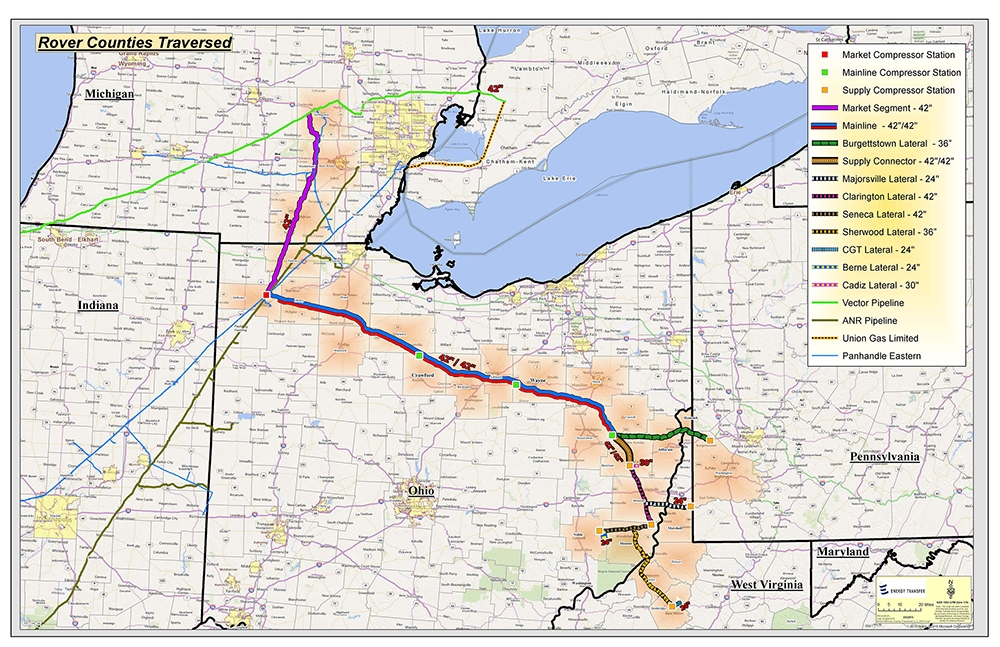
 Events related to drilling in the Marcellus and Utica Shale, primarily pro-drilling.
 The “best of the rest” – stories that caught MDN’s eye that you may be interested in reading. In today’s lineup: Upstate NY towns oppose mammoth wind turbines (for good reason); big TX oil find won’t hurt OH Utica shale; Bowling Green, OH to vote on NEXUS offer; OH drilling picking up–slowly; JKLM ramps up drilling in Potter County, PA; FERC denies Sierra Club rehearing request; Dakota Access Pipeline “protester” gets serious injured; Trump to roll back some onerous o&g regulations; fracking blazed the trail for renewables; China getting second LNG shipment from US; and more!
 Not even a year go–in December of last year–one of the biggest and brightest stars in the midstream firmament for the Marcellus/Utica, MarkWest Energy, sold itself to Marathon Petroleum (see
 In May of this year, the federal Environmental Protection Agency issued more shale-killing regulations. The EPA issued 600 pages of new regulations that require drillers to install expensive new equipment to locate so-called fugitive methane that may or may not be leaking from wells, pipelines, etc. (see
  It’s always nice when our favorite government agency, the U.S. Energy Information Administration, says nice things about the Marcellus/Utica. Today the EIA, publishing in its Today in Energy online publication, highlights the Utica Shale and the very necessary pipeline projects that promise to bring more “takeaway” capacity from the ever-expanding Utica. EIA looks at four key pipeline projects: Rover, NEXUS, Leach Xpress and Rayne Xpress. If you add them all together, those four new projects (all due to be completed by end of 2018 or before), will add an additional 6.8 billion cubic feet per day (Bcf/d) of takeaway capacity out of the Utica…
 In early November Canadian midstream giant TransCanada announced they were going on a fundraising bender to get money to pay for their recent $10 billion acquisition of Columbia Pipeline (see