
Diversified Buys Canvas Energy, Adds 250K Acres, 570 Wells in Okla.
 Diversified Energy, which owns significant assets in the Marcellus/Utica region (and other regions, too), is…diversified! The company owns approximately 8 million acres of leases with close to 70,000 oil and gas wells, mostly conventional wells (by number of wells). However, the company now produces over 40% of its production from shale wells. The company’s business model is to buy already-drilled, lower-producing wells on the cheap and find ways to make them more productive. They do a great job at it. Diversified also owns midstream (pipeline) assets in addition to a well-plugging subsidiary called Next LVL. Earlier this morning, the company announced a deal to acquire Canvas Energy (the entire company) for $550 million. Read More “Diversified Buys Canvas Energy, Adds 250K Acres, 570 Wells in Okla.”
 A growing coalition representing America’s energy and manufacturing sectors is urging Congress to act swiftly to (finally) modernize the permitting system and unlock new energy investment. With Congress’s return to the swamp, a diverse group of business and energy organizations sent letters to House and Senate leaders calling for bipartisan permitting reform. In a letter to Congress signed by the Independent Petroleum Association of America (IPAA), the U.S. Chamber of Commerce, National Association of Manufacturers (NAM), Data Center Coalition, American Council on Renewable Energy, National Ocean Industries Association, and more, the business and energy groups wrote: “The time has come to modernize our nation’s permitting systems so that our communities can build the infrastructure necessary to grow our economy, create good-paying jobs, and meet the challenges of today and tomorrow.” It seems the message was received. Congress has scheduled hearings on permitting reform beginning today.
 Boston Consulting Group (BCG) published a study yesterday that is intriguing (and useful). The study is called “Strategies to Ride the Surge in US Natural Gas” (copy below). It begins with understanding three trends that have driven the growth of natural gas production over the past 10 years: (1) the change from coal- to gas-fired power; (2) the rise of LNG exports; (3) commercial demand in the U.S. for natural gas soared by 28% from 2010 to 2024. Operating from those three trends/facts, BCG postulates that the natural gas industry could face any one of five futures, which they outline along with strategies for adapting to those scenarios.
 MARCELLUS/UTICA REGION: WV leads coalition urging Supreme Court to keep pipeline case in fed court; OTHER U.S. REGIONS: Gas production in Permian reached new highs; NATIONAL: U.S. natural gas futures settle higher; Gas roars back into the power mix; Wright dismisses global climate efforts as “silly”; INTERNATIONAL: Oil steadies after OPEC+ output hike.
 Last week, the rig count bleeding stopped, at least temporarily, with the addition of one rig to the Baker Hughes U.S. rig count. We ended the week with 537 active rigs. The count has been down 16 of the last 19 weeks, beginning on May 2. Fortunately, the Marcellus/Utica count has remained constant for the past seven weeks, at a combined 36 active rigs. PA operated 18 active rigs. OH ran 11 rigs. And WV operated 7 rigs. Twenty-four rigs targeted the Marcellus and 12 rigs targeted the Utica last week. Baker Hughes said oil rigs rose by two to 414 last week, while gas rigs fell by one to 118.

 Two weeks ago, Marietta, OH, officials, including the city’s Republican mayor, law director, water superintendent, and a majority of city council members, asked the Ohio Department of Natural Resources (ODNR) Oil and Gas Chief Eric Vendel to deny a permit application from DeepRock Disposal Solutions for the Stephan #1 injection well, which would be the company’s fifth injection well in the area (see

 There is a disagreement brewing between those who operate the PJM Interconnection power grid and Big Tech, including Amazon, Google, Microsoft, and others, regarding the issue of adding data centers to the PJM grid. PJM recently proposed a fast-track stakeholder process to develop rules by the end of the year for interconnecting data centers to its system while ensuring the region has enough power supplies. The proposal would treat new data centers over 50 megawatts (MW) as “non-capacity-backed load” (or NCBL). Under the proposal, PJM could curtail (reduce or cut off) power deliveries to data centers with NCBL status before the grid operator moves to pre-emergency load curtailments for other electricity users. Big Tech doesn’t like it one little bit.
 According to the doom and gloomers at Bloomberg, U.S. LNG developers are “racing” to cash in on the nation’s natural-gas export boom while they still can, as global LNG supply will exceed demand by 2027. They’ve got to grab the money now before it disappears, according to Bloomberg. Four U.S. LNG projects with the capacity to export 63 million tons of LNG a year are still awaiting final investment decisions, while $35 billion in U.S. plants already under construction “face headwinds.” To add tension to the article, it points out that by 2030, rival Qatar will have finished its own years-long LNG buildout. By 2031, a massive pipeline expansion by Gazprom PJSC could begin funneling more of Russia’s natural gas to China. Yes, these LNG exporters along the Gulf Coast may as well hang it up right now because, you know, it’s all doom and gloom.
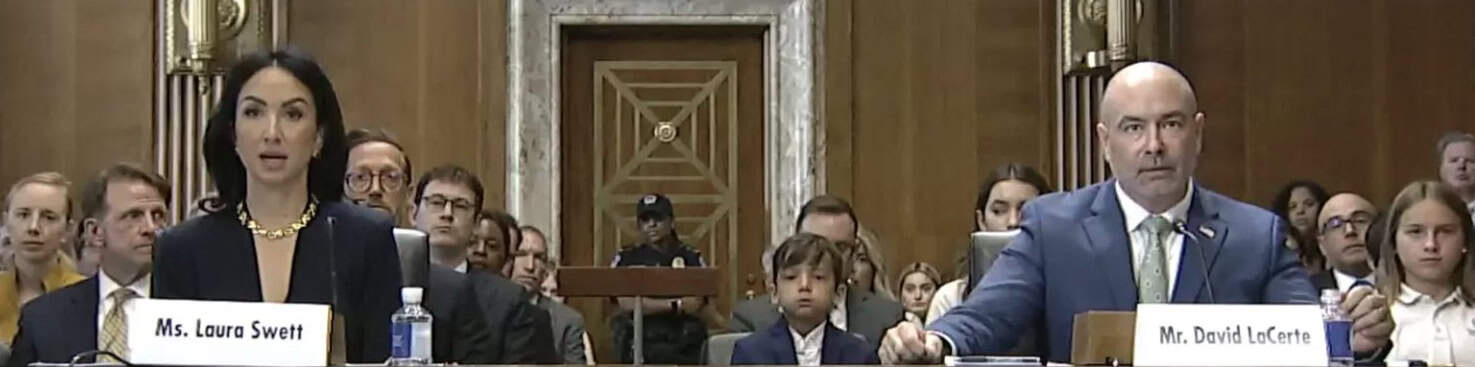 We’re still waiting for the Federal Energy Regulatory Commission (FERC) to gain two new members, which would give the commission its full complement of five members (with three of them Republicans). In June, President Trump nominated Laura Swett of Vison & Elkins to replace Republican Mark Christie, who had been elevated to Chairman under Trump (see
 For the week of August 25 – 31, the number of permits issued to drill new wells in the Marcellus/Utica decreased from the previous week. There were 19 new permits issued across the three M-U states last week, down from 30 issued two weeks ago. Pennsylvania issued just six new permits, with two going to CNX Resources in Greene County. Another two went to EQT (including Rice Drilling), also in Greene County. Seneca Resources and Formentera Operating both received a single permit in Cameron and Lycoming counties, respectively.
 Last week, MDN brought you the news that Freeport Township, located in Greene County, PA, declared a Disaster Emergency on June 23, 2025 (see
 Upper Burrell (Westmoreland County, PA) town supervisors have historically been receptive (or at least tolerant) to the Marcellus Shale industry that has so blessed their town and Westmoreland County. But attitudes seemed to change last December, at least with respect to wastewater injection wells (see
 Unlike Ohio, with its over 200 oil and gas wastewater injection wells, Pennsylvania operates just 18 such wells (