
PA County Receiving Most Impact Fee $$ Not the State’s Top Producer
 Last week, MDN brought you the great news that the Pennsylvania impact “fee” (tax on drilling) generated $243.8 million in fees collected from producers for the 2025 reporting year, a whopping 48% increase over 2024 (see PUC Distributes $244M of Impact Fees (Up 48%) to PA Communities). While we included the full report in that post, this post delves deeper into the numbers by county. Which counties received the most revenue? Would it surprise you to learn that the county with the highest production did NOT receive the most impact fee revenue? Read More “PA County Receiving Most Impact Fee $$ Not the State’s Top Producer”
 In March, we told you about a deal made by Maryland Eastern Shore developer TeraWulf to acquire the retired Morgantown Generating Station in Charles County (on the Potomac River), proposing to transform the site into a massive natural gas-powered data center campus (see
  A new report from UConn’s Connecticut Center for Economic Analysis, bought and paid for by the anti-fossil fuel Connecticut League of Conservation Voters (meaning it’s useless propaganda), argues that the state’s past expansion of natural gas saddled customers with costly infrastructure upgrades without lowering fuel prices. The so-called report says most of the increased gas demand went to power plants—including three new or expanded facilities—rather than heating homes. The propagandists claim that Connecticut, a net electricity exporter, supposedly “absorbed pollution costs,” while benefiting neighboring states.
  Last week, the Federal Energy Regulatory Commission (FERC) launched a sweeping investigation into how power grids and utilities divide the soaring costs of supplying electricity to data centers. FERC issued six “show-cause” orders directing regional grid operators—PJM, SPP, MISO, CAISO, ISO New England, and NYISO—to prove that data center connection rates are “just and reasonable” and shield ordinary ratepayers from cost-shifting, or face federal fixes. FERC wants regional grids to speed up data center connections while protecting residential ratepayers. And they WILL do it, or else.
  MARCELLUS/UTICA REGION: Methane-powered tractors added to WVU farm thanks to New Holland gift; OTHER U.S. REGIONS: Permian natural gas production increased faster than crude oil; NATIONAL: U.S. natural gas futures rise on moderate storage build; Calls for permitting reform grow louder in Washington; US natural gas in a dominant position for decades to come; INTERNATIONAL: Oil rises as Iran talks are delayed; Oil keeps flowing through Hormuz despite Iran saying it’s shut; Hormuz crisis sparks a Middle East pipeline boom; Dozens injured, 18 missing after blast during restart at giant Qatar LNG site.
  Today, June 19th, is a stock exchange and bank holiday. Juneteenth is a federal holiday in the U.S. commemorating the emancipation of enslaved African Americans. Juneteenth marks the anniversary of the announcement of General Order No. 3 by Union Army General Gordon Granger on June 19, 1865, proclaiming freedom for enslaved people in Texas. Originating in Galveston, the holiday has been celebrated annually on June 19 in various parts of the United States, often marking a broad celebration of African-American culture. The day was first recognized as a federal holiday in June 2021, when President Joe Biden signed the Juneteenth National Independence Day Act into law. As with other bank holidays, and as we have since 2022 (our fifth year), MDN will not publish today to honor and commemorate Juneteenth.
 Devon Energy completed its merger with Coterra Energy just over one month ago, on May 7, paying Coterra $21.4 billion in Devon stock (see
  This is one of those “man bites dog” (or in this case, “woman” bites dog) stories. Rebecca Tepper has, for years, worked for Maura Healey—first when Healey was Attorney General of Massachusetts, and later (now) in Healey’s role as Governor of the state. Tepper is Healey’s Secretary of Energy and Environmental Affairs. Healey is her boss and directs the policies that Tepper executes. So it was a complete shock for us to receive an email from Tepper’s office with a letter attached (see it below) that Tepper sent to Dan Dolan, President of the New England Power Generators Association. The letter encourages (we’d call it demands) New England’s power generators to sign up to receive natural gas during Enbridge’s open season for the recently announced Project Beacon.
  Norway’s Equinor (formerly Statoil) held its Capital Markets Day 2026 on Tuesday, offering investors and analysts a chance to hear directly from the company’s top management and ask questions. The event made clear that, while the Norwegian Continental Shelf (NCS) remains the company’s center of gravity, its Appalachian (Marcellus) gas position is being repositioned from a quiet, low-cost cash-flow engine into a strategic linchpin connecting upstream gas to the fast-growing U.S. power and data-center economy. Equinor is in love with the Marcellus.
  EQT Corp’s mixed-index natural gas product blends NYMEX Henry Hub futures with one or more physical basin indices (such as Dominion South) into a single sales contract, often weighted toward Henry Hub for hedging liquidity. Splitting exposure between national futures and local spot dynamics dilutes price swings, helping power generators, LNG exporters, and large industrials reduce earnings volatility while retaining some upside from favorable regional spreads.
 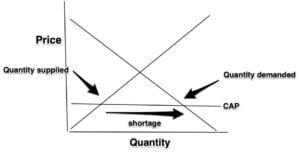 Pennsylvania’s Senate Republicans are speaking truth to power, calling out PA Democrat Governor Josh Shapiro’s policies as one of the primary reasons why PA residents pay more for electricity. And Joshie doesn’t like being called out. State Senate President Pro Tempore Kim Ward argues the state is losing out under a roughly $325-per-megawatt-day price cap on PJM Interconnection’s capacity auctions, approved by the federal government after a lawsuit by Gov. Josh Shapiro (see
 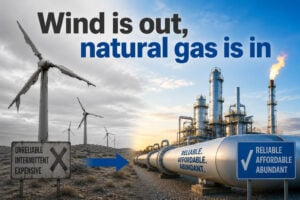 Invenergy announced Wednesday it is surrendering offshore wind leases in New Jersey, New York, California, and Maine, pivoting instead to natural gas and geothermal projects. Under a settlement with the Justice and Interior Departments, the Chicago-based developer will receive a $765 million partial refund (money it paid the government for the leases) and will invest in gas-fired plants in Indiana, Wisconsin, Iowa, Kansas, and Missouri, as well as Western geothermal projects. Big Wind is out, natgas is in! Wow, what a change.
  Rising natural gas demand across the U.S. Northeast and adjacent southern and western regions is driving a wave of pipeline projects that will let Marcellus/Utica producers boost output into the 2030s. A fourth installment of RBN’s series about gas market dynamics in the Northeast groups the planned expansions into five buckets: Pennsylvania projects, regionwide enhancements, MVP/Transco-tied projects, expanded Ohio capacity, and more distant related efforts. Highlights include National Fuel Gas’s Pennsylvania builds, Enbridge’s TETCO “Appalachia to Market II” upgrades that add compression and looping, and the MVP Boost Project, which expands Mountain Valley Pipeline from 2 Bcf/d to 2.6 Bcf/d by mid-2028 (via additional West Virginia and Virginia compression).
  In February, MDN told you about the Kriley v. XTO Energy lawsuit (see
  In February 2024, members of the South Carolina Public Service Commission (PSC) approved a proposed project to build a 1,020-megawatt (MW) gas-fired power plant in the state’s Lowcountry, in Colleton County (see