
Mason County, WV Data Center: 3 Bldgs, 984 NatGas, Diesel Engines
 In January, MDN reported that Fidelis New Energy and 8090 Industries together had launched a new company, American Intelligence & Power Corporation (AIPCorp), to develop the Monarch Compute Campus in Mason County, West Virginia (see Huge New Data Center Coming to Mason County, WV with 2 GW Gas Power). This 2,380-acre microgrid project provides behind-the-meter power for AI and hyperscale data centers, bypassing standard grid delays. In March, AIPCorp announced it had sold itself to Nscale Global Holdings Limited, one of the fastest-growing hyperscalers in the world (see Mason County, WV Data Center Project (Gas Powered) Sold to Nscale). The new owners filed an application (on April 20, just coming to light now) for a construction permit. The application reveals some important new details about the project. Read More “Mason County, WV Data Center: 3 Bldgs, 984 NatGas, Diesel Engines”
 Antero Resources, the largest Marcellus/Utica (M-U) driller in West Virginia, released its Q1 2026 update last week. Antero placed 20 Marcellus wells to sales during Q1 with an average lateral length of 11,652 feet. Thirteen of these wells have been online for approximately 60 days with an average rate per well of 25 MMcfe/d, including 1,457 Bbl/d of liquids per well. Antero’s drilling and completion capital expenditures during Q1 were $222 million. In addition to capital invested in drilling and completion activities, the company invested $25 million in land during the first quarter. Through its land investment, Antero added approximately 5,400 net acres, representing 24 incremental drilling locations at an average cost of approximately $900,000 per location.
 OTHER U.S. REGIONS: Trump approves “Keystone Light” Canada-U.S. oil pipeline; NATIONAL: Natural gas rises as markets wait for warmer temperatures; Occidental announces CEO succession; ‘Republican’ Green energy fantasies and casualties; The EIA launches pilot surveys on data center usage; US shatters crude, diesel, gasoline export records; Affordability continues to collide with misguided climate policies; Amazon’s AI spending boom signals massive energy needs ahead; INTERNATIONAL: Oil slips as Iran talks hang in balance; European natural gas prices jump amid ongoing Hormuz uncertainty.
  The Marcellus/Utica region received 12 new drilling permits last week, Apr. 20 – 26, down 10 from the 22 permits issued two weeks ago. Pennsylvania issued all 12 of last week’s permits. Neither Ohio nor West Virginia issued any new permits. What a disappointment! The drillers who received new permits in PA last week included: Expand Energy, PennEnergy Resources, and Snyder Brothers.
 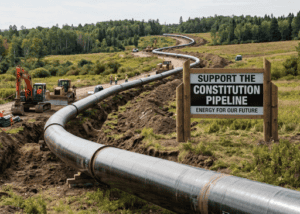 This is a critical moment for reliable, affordable energy in the Northeast, and your voice can make a difference. The Federal Energy Regulatory Commission (FERC) is currently accepting public comments on the Constitution Pipeline, representing an important step toward finally advancing this long-delayed project and a key opportunity for supporters to be heard. If you support building the Constitution Pipeline, please take a few minutes to submit a brief comment to FERC by May 4, 2026, because your input truly matters. We have instructions below on how to file a comment (it takes just a couple of minutes).
  Data centers are driving significant growth in natural gas demand in the Midwest, leading to several pipeline expansion projects. East Daley Analytics is tracking 24 GW of potential power generation capacity from Midwest data centers, which could create over 5 Bcf/d of new gas demand in a high-case scenario. The region’s appeal stems from ample land, water resources, and low-cost electricity, with Illinois and Wisconsin showing the largest potential growth (if the Democrat machine in those states doesn’t block it). To meet this demand, over 3.2 Bcf/d of pipeline expansions are planned for six different pipelines. While some of the pipelines flow molecules from other regions, they ALL flow at least some Marcellus/Utica molecules. We have the list of pipelines looking to expand below.
  In December, the Pennsylvania Environmental Quality Board (EQB) accepted a petition by radical green groups, including the Clean Air Council and Environmental Integrity Project, to “study” the issue of increasing setbacks for shale drilling so far that it would ban ALL new Marcellus/Utica drilling in the Keystone State, which is no exaggeration (see
  The Rover Pipeline is a 711-mile, $6.3 billion natural gas transmission pipeline operated by Energy Transfer, transporting up to 3.25 billion cubic feet per day (Bcf/d) of Marcellus and Utica Shale gas. It connects supply areas in West Virginia, Pennsylvania, and Ohio to markets in the Midwest, Great Lakes, and Canada. As of April 29, 2026, Blackstone (via its Energy Transition Partners funds) has sold its entire 32.4% ownership stake in Rover to Ares Management. Blackstone originally acquired its ownership stake in 2017 to fund the construction of the pipeline.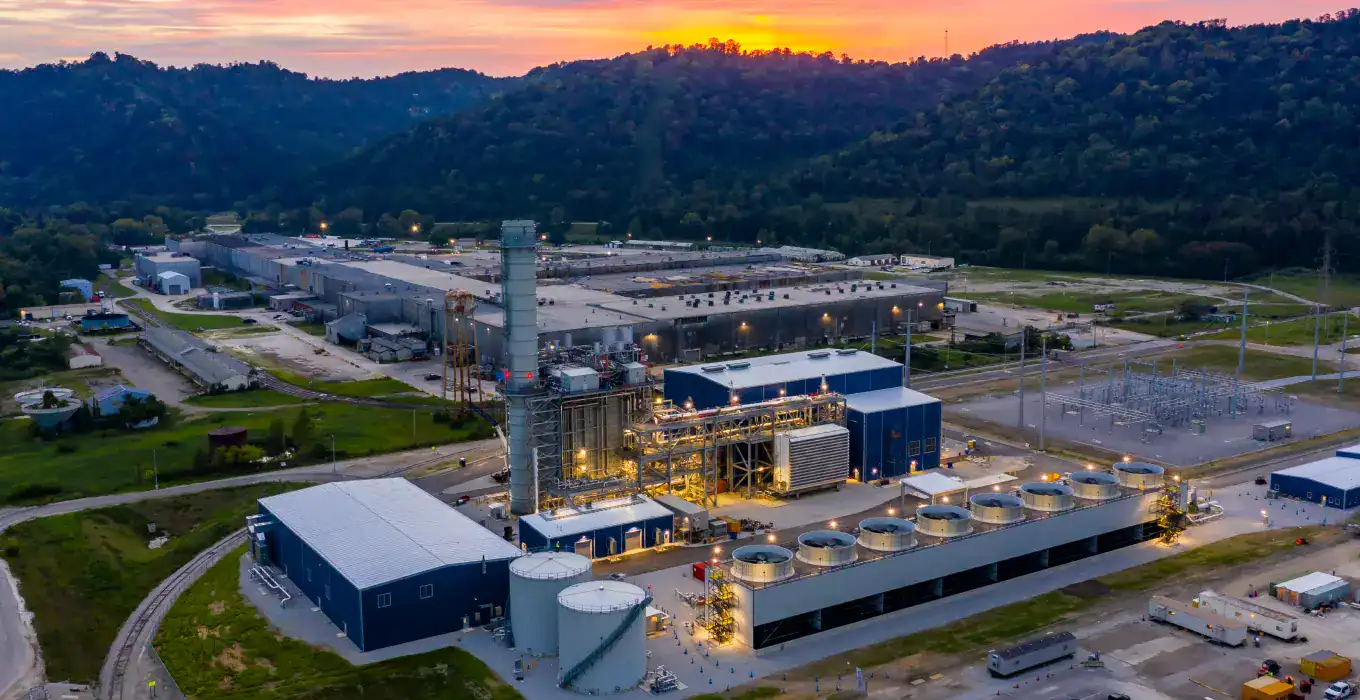
 Expand Energy turned in its first quarter 2026 update yesterday. Across all of its operations in the Marcellus/Utica and the Haynesville, Expand operated an average of 13 rigs during the first quarter, drilling 60 wells and turning 49 wells in line, resulting in net production of approximately 7.44 Bcfe/d (93% natural gas). In 2026, Expand Energy expects to run 11 to 12 rigs and invest approximately $2.85 billion, yielding an estimated daily production of approximately 7.5 Bcfe/d. We have a detailed breakdown below of how much of that activity is in the M-U. The Expand board fired its successful CEO, Nick Dell’Osso, in February (see
  Just yesterday, MDN told you that three left-wing judges from the 4th Circuit (“Circus”) who hate the Mountain Valley Pipeline (MVP) were back at it, badmouthing an extension of MVP into North Carolina, called Southgate (see
  We’ve been tracking a story that we consider an ongoing tragedy for more than a decade. American Water Management Services (AWMS) owns a wastewater injection well in Trumbull County, Ohio, that supposedly caused a low-level earthquake (that nobody could feel) in 2014. Actually, there are two injection wells located at the site, both operated by AWMS. They were both “temporarily” shut down by the Ohio Department of Natural Resources (ODNR) following the quake nobody could feel (see
  Although Pennsylvania Governor Josh Shapiro (J.S.) has just hired a lapdog to attack the PJM Interconnection grid as part of his campaign for president (see
  New York’s electric grid faces its lowest reliability margins in recent history this summer, with only 417 MW available under baseline conditions, according to the New York Independent System Operator (NYISO). This critical situation stems from extreme weather, an aging generation fleet, and a lack of new dispatchable resources. NYISO’s annual Summer Reliability Assessment (copy below) says an extended heat wave of three days or more, with temperatures around 95 degrees, could result in a capacity deficit of -1,679 MW, increasing to -3,370 MW at 98 degrees, potentially leading to blackouts. NYISO can implement emergency measures like purchasing energy or voluntary curtailment to mitigate shortfalls, but the overall margin for error is extremely narrow.