
Summit Midstream 1-for-15 Reverse Stock Split Avoids NYSE Delisting
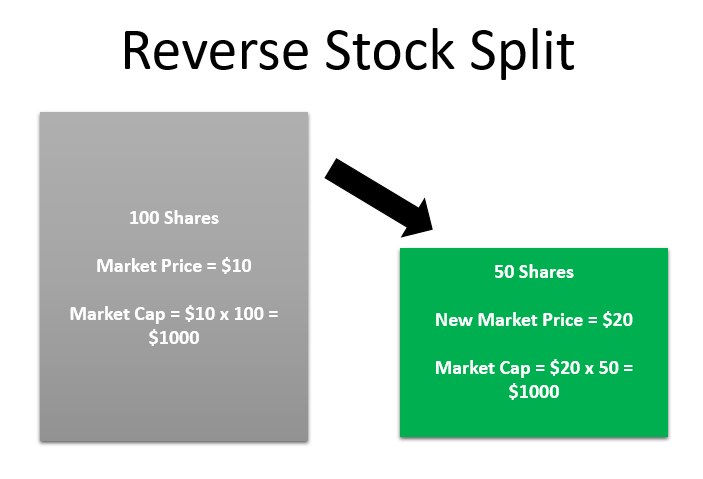
Summit Midstream Partners, formed in 2009 and headquartered in The Woodlands, Texas, operates natural gas, crude oil, and produced water gathering (pipeline) systems in six unconventional resource basins, including the Marcellus and Utica. The company concentrates its time and money on four “core focus areas” including the Utica, the Williston (i.e. Bakken), the DJ Basin, and the Permian. Last week the company’s board of directors approved a reserve stock split, trading (consolidating) 1 share for 15, beginning next Tuesday.
Read More “Summit Midstream 1-for-15 Reverse Stock Split Avoids NYSE Delisting”
 Last week we were jazzed when noticed the price of natural gas at the NYMEX Henry Hub had soared, up over $0.30 to $3.30/Mcf (see
 Here’s something we didn’t know (to further depress us): It’s not against the law for American-based nonprofits to accept big contributions from foreign entities. It should be against the law, but it’s not. We previously told you that the Sierra Club and National Resources Defense Council (NRDC) are funded, in part, by Russia (see
 NATIONAL: In 2019, the U.S. imported $13 billion of energy goods from Mexico, exported $34 billion; U.S. out of Paris agreement as country’s political future uncertain; Energy and race: the media’s new intersectionality; Biden would “transition” your standard of living.
 During the Williams third-quarter 2020 update yesterday, CEO Alan Armstrong shared some very interesting, and relevant (to the Marcellus/Utica) comments. Armstrong said that two important pipeline projects to carry M-U gas to other markets, the Southeastern Trail expansion project and the Leidy South project, are both in the midst of coming online–ahead of schedule.
 Equitrans Midstream, the lead partner and builder of the 303-mile Mountain Valley Pipeline (MVP) project, announced yesterday it has (once again) pushed back the in-service date for the pipeline, from 1Q21 to the second half of 2021 (meaning by December), and pushed up the cost of the project, from $5.4 billion to as high as $6 billion. You can thank the jobs-and-economy-destroying Sierra Club for the delays and increase in cost.
 We’ve

 An article in yesterday’s Wall Street Journal says there is a “split reality” emerging for U.S. shale drillers. Shale oil drillers are struggling to survive, while shale gas drillers, particularly in the Marcellus/Utica, are slowly seeing signs of financial recovery. The upshot is that you should consider investing in shale gas drillers (and not shale oil drillers).
 Last week Pennsylvania issued 16 new shale well drilling permits, and West Virginia issued 7 new shale well permits. Ohio issued no new shale permits last week.
 In July, when Dominion Energy announced it had decided to exit the natural gas pipeline business by selling it to Warren Buffett and cancel the much-needed Atlantic Coast Pipeline project, the company said it would retain a 50% ownership in its Cove Point LNG export facility and sell a 25% interest to Buffett’s company (see
 Southwestern Energy Company released its third-quarter 2020 update last Friday. The company previously announced it is buying out and merging in Marcellus/Utica driller Montage Resources. During the 3Q conference call, CEO Bill Way said the company expects to close on the deal immediately after Montage Resources shareholders vote on the deal November 12. Also from the 3Q update: Southwestern managed to reduce the cost of drilling for one of their PA Marcellus wells down to $491 per lateral foot!
 In August Pennsylvania hiked its permit fee to drill a new shale well to be the most expensive of any state in the country, from $5,000 to $12,500 (see
 “It’s dangerous! It’s a killer! It will flow evil, nasty fracked gas! It’ll explode and kill everyone within a mile, and if it doesn’t explode, emissions from the plant will poison everyone around it anyway!” Those are the faux arguments used by radicals in Weymouth, Massachusetts to smear a compressor station built by Enbridge. All of those arguments have just magically disappeared. The price tag to make it happen? Enbridge will pay $10 million now, and $28 million later, for a grand total of $38 million.
 The New Jersey Highlands Water Protection and Planning Council (“Highlands Council”) is a regional planning agency that works in partnership with municipalities and counties in the Highlands Region to help them implement the state’s 2004 Highlands Water Protection and Planning Act (the Highlands Act). The Highlands Council has just given its blessing for a Tennesee Gas Pipeline (TGP) compressor station in Passaic County, NJ, near the border with Westchester, NY.