
MDN Exclusive: 7-Figure Utica Mineral Deal Covers 116 Wells
 Here’s a story you won’t read anywhere else. Strata Petroleum, LLC buys oil and gas mineral rights, and it has quietly sold its mineral interests in 116 producing Ohio Utica wells to Dallas-based Rising Phoenix Royalties. The deal closed effective October 5. Strata managing partner Justin Wainwright reached out to MDN with the news. He won’t disclose the exact price, but he told us it was “well into 7 figures.” The wells are operated by two of the biggest names in the Ohio Utica, EOG Resources and Ascent Resources, and they’re spread across six of the play’s core counties. Strata says it isn’t leaving the region. It plans to keep buying minerals across Ohio, West Virginia, and Pennsylvania. Read More “MDN Exclusive: 7-Figure Utica Mineral Deal Covers 116 Wells”
 PJM Interconnection, the outfit that runs the electric grid for 13 states (including PA, OH and WV) plus DC, has picked its first three projects for a brand-new fast lane to get big power plants hooked up to the grid. Two of the three are giant battery projects from ENGIE. The third is the one that caught our eye: LS Power plans to add 455 megawatts (MW) to its existing Hunterstown natural gas-fired power plant near Gettysburg, in Adams County, PA. By MDN’s math, that expansion will need roughly 60 million cubic feet of natural gas per day once it’s up and running. Guess where that gas is coming from?
  Last Wednesday, MDN told you about the Allegheny County Board of Health’s latest move against shale drilling (see
  The rest of the country is heading into winter swimming in natural gas. Production is at record highs, storage is above average, and Henry Hub January futures are trading below $4. Yet traders are paying more than $20 per MMBtu for gas delivered into parts of New England in January. That’s more than five times the national benchmark. The problem isn’t a shortage of gas. It’s a shortage of pipe. New England sits just a few hundred miles from the Marcellus Shale, one of the most prolific gas fields on the planet, but more than a decade of blocked pipeline projects means it can’t get enough of our gas when the weather turns cold.
  Six weeks. Same number. The Marcellus/Utica held at 33 rigs again for the week ended October 9, while the national count jumped by five to 603 — the first time it has topped 600 in the current run-up, and a new 52-week high. Oil rigs did all the lifting (up six). Gas rigs slipped by one. Frac spreads jumped by seven, the biggest weekly gain in a while. And on the price board, natural gas climbed back over $3, settling at $3.22 per MMBtu. Plus: a familiar name pops up on the Enverus permit list for the first time.
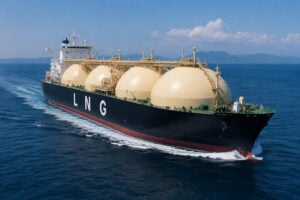 Finally, a little justice. An international arbitration panel ruled that Venture Global (VG) breached its contract with Portugal’s Galp by delaying the declaration of its Calcasieu Pass LNG export plant in Louisiana as “commercially operational.” That official start date, called COD (commercial operation date), is what triggers deliveries to long-term customers. For more than three years, VG shipped cargo after cargo of LNG from Calcasieu Pass, much of it sold on the sky-high spot market after Russia invaded Ukraine, all while insisting the plant was still in its “commissioning” (startup) phase. Galp, which signed up in 2018 to buy 1 million tonnes per year (MTPA) of LNG for 20 years, waited. Galp now joins BP as the second customer to beat VG in arbitration. The catch? Galp’s payday is capped at $170 million, and the check won’t be written until after a damages hearing in 2027 or 2028.
  MARCELLUS/UTICA REGION: Head of WV energy development and competitiveness exits Morrisey administration; How rural Pennsylvania’s $165M data center fight became a bipartisan battle against AI; OTHER U.S. REGIONS: Hochul, Blakeman offer very different views on data centers, energy needs; NATIONAL: U.S. natural gas futures settle higher; 10 downsides to solar farms everyone should be aware of; INTERNATIONAL: Oil advances amid war and hurricane risks; Australia to release final plan to keep more LNG at home; Tanker rates soar to record as oil crisis becomes shipping crisis.