
Rice Brothers Publish Scalding EQT Investor Presentation
 Yesterday Toby and Derek Rice delivered a presentation to EQT investors in connection with EQT’s upcoming annual meeting of shareholders on July 10 (full copy below). The presentation and the accompanying press release take direct aim at EQT’s second quarter preliminary results and postulates that instead of a “free cash flow generating machine,” the final numbers for 2Q19 will show EQT actually lost money during the quarter.
Read More “Rice Brothers Publish Scalding EQT Investor Presentation”
 Although the second quarter isn’t over yet, EQT has just released “preliminary” 2Q19 financial and operational results in a bid to fend off a takeover attempt. EQT’s current management and board of directors is in a tough fight to retain control of the company. Toby and Derek Rice, formerly of Rice Energy (which was sold to EQT in 2017) are making a play to replace the board of directors and all of EQT’s top management.
 A Pennsylvania landowner thought he could finagle extra payments from XTO Energy after his land was drilled under from a neighboring property. The landowner had signed a lease, and the lease contains language that says if XTO were to drill “on” his property (i.e. install a well pad) the landowner would receive an extra payment. The landowner sued saying “on” also means “under” when XTO drilled under his property. The Superior Court of Pennsylvania disagreed, saying “on” means “on the surface” and “under” does not mean “on”.
 Oil and gas giant BP recently released its annual Statistical Review of World Energy–the 68th edition (full copy below). Among the interesting findings in BP’s analysis of global energy last year: wind and solar energy, while growing, only provide a minuscule 3% of the world’s energy supply. Meanwhile fossil fuels–coal, natural gas and oil–accounted for 85% of global energy consumption in 2018. Hey, tell us again how renewables are taking over the world–as we pick ourselves up off the floor from laughing so hard.
 Yesterday the Pittsburgh Business Times broke the news that Range Resources, one of the Marcellus/Utica’s biggest drillers (and in fact the very first driller to sink a Marcellus well, back in 2004), has laid off 40 employees–roughly 5% of its workforce. The layoffs are split between the company’s Pennsylvania and Texas operations.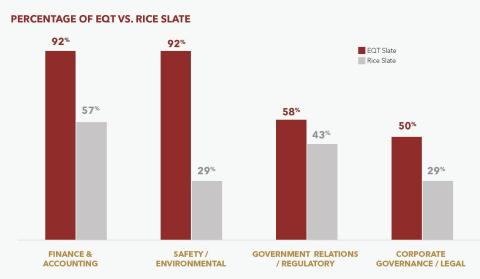
 In Feb. 2016, lawsuits filed by some ~200 West Virginia residents against Antero Resources were combined into a class action (see
  Shale driller Huntley & Huntley (H&H), headquartered in Monroeville (Allegheny County), PA, organized a private meeting last night in Plum, PA for “officials from local municipalities, the state Department of Environmental Protection and the oil and gas industry.” The meeting was an effort at good communication, so local officials know what is and is not allowed, and who regulates what, when it comes to shale drilling. Of course anti-drillers got wind of the meeting and pitched a fit until H&H opened up the meeting to let them attend.
 A grandmother concerned that if Range Resources were to build a well pad three-fourths of a mile from her granddaughter’s school (in Washington County, PA) instead of building it a full mile from the school, tried to gain legal standing to challenge a permit granted to Range by Mount Pleasant Township. Grandma says her granddaughter has a sensitivity to benzene fumes. Yesterday a Commonwealth Court panel ruled she does NOT have legal standing to challenge the permit.
 A West Virginia Circuit Court case in September 2017, Crowder and Wentz v EQT, found in favor of surface landowners ruling that EQT did not have the right to extend underground shale wells to adjacent properties where EQT also owned the mineral rights (see
  Three families who lived near a former drill site and frack wastewater impoundment in Washington County, PA sued Range Resources in May 2012 claiming the air they breathe and the water they drink had been contaminated by Range’s operations at the site (see
  Yesterday Toby and Derek Rice issued another (new) letter to EQT shareholders in the quest to make a case that the existing EQT board and management must be thrown out. A few hours later EQT responded with its own letter to shareholders. Here’s the latest in the proxy war to control EQT.
 It’s hard enough for drillers to get permits town by town in Pennsylvania, where the standards are all different thanks to the seven selfish towns that appealed the Act 13 law passed in 2012 (see
 Antero Resources sued EnerQuest Oil & Gas in a Texas court last year claiming EnerQuest had solicited and received trade secrets for a pair of landmen who live and work in Texas. A lower court dismissed the lawsuit based on a technicality (because the solicitation from EnerQuest came via email), claiming Texas does not have jurisdiction over the case. Antero disagrees and has just asked the Texas Supreme Court to review the case.