
Huntley & Huntley Starts Shale Drilling in Plum, PA Next Month
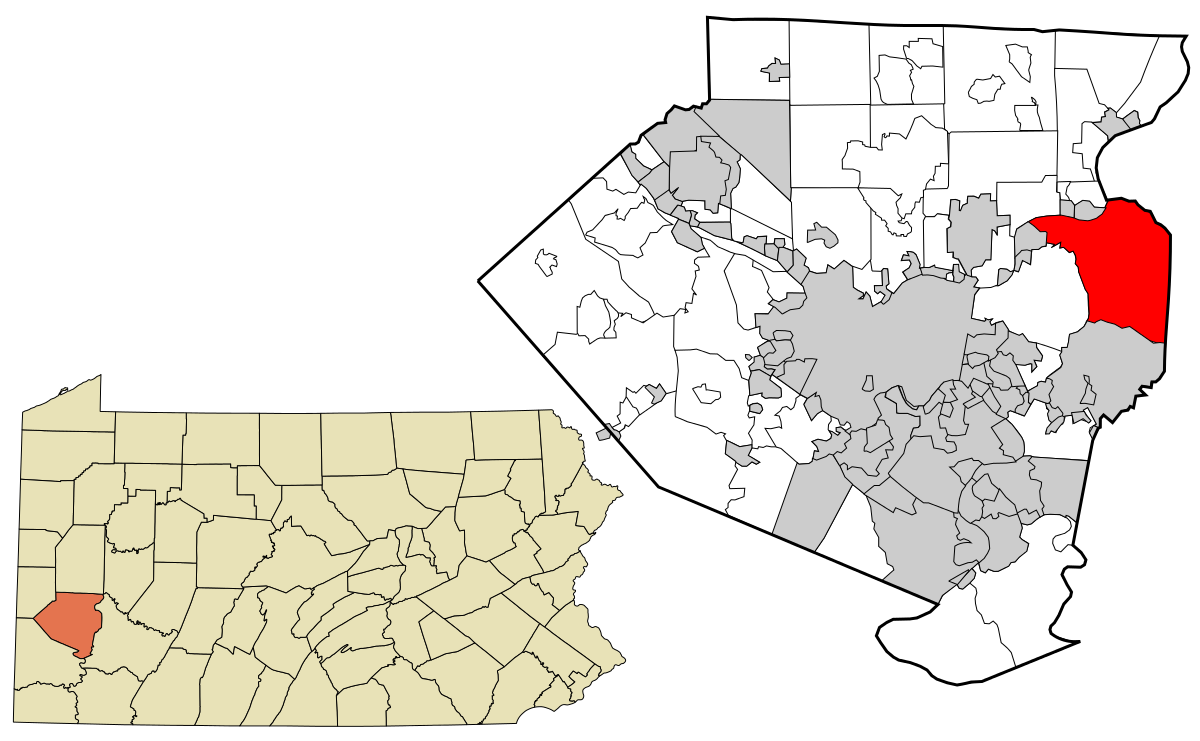
Huntley & Huntley, a Marcellus/Utica driller headquartered in Monroeville, PA (near Pittsburgh), will begin drilling a shale well in Plum (Allegheny County, also near Pittsburgh), PA next month. It will be H&H’s first shale well in the Borough of Plum. Yesterday H&H spokesman Ed Valentas gave a presentation to the Plum Chamber of Commerce, to update them on what to expect and to dispel some of the fear mongering going on with respect to shale drilling. Construction of the well pad in Plum will begin next month. Drilling the first well is scheduled for February, with fracking soon to follow. Currently H&H has just one well pad (multiple wells) permitted in Plum–but they are considering other locations around Plum too…
Read More “Huntley & Huntley Starts Shale Drilling in Plum, PA Next Month”
 An update in the ongoing case of a proposed injection well in Highland Township (Elk County), PA. In 2013 the radical leftist group Community Environmental Legal Defense Fund (CELDF) convinced ignoramuses in Highland Township to pass a so-called Community Bill of Rights. Seneca Resources, a driller with leases and an active drilling program in Elk, had planned to drill an injection well on their own property to dispose of their own flowback and produced water. The CELDF-inspired ordinance in Highland prevented it, and Seneca threatened to sue the town (see
 One of the major themes at last week’s Shale Insight conference was NGLs (natural gas liquids), in particular ethane–and how the petrochemical industry that uses those NGLs will revolutionize the economic landscape of western PA, eastern OH, and northern WV–the tri-state area. One of the hottest of the hot topics is ethane storage. As we reported in early September, a research team from West Virginia University spent the past year studying geologic regions in 50 counties in the Marcellus/Utica Shale region to see if our region would support a proposed $10 billion ethane storage hub (see
 On Wednesday, EQT announced the company has floated $3 billion (yikes!) of IOUs–called “notes” in the financial industry–with various due dates and interest rates payable, in order to make a cash payment due as part of their purchase of Rice Energy. The total deal is worth $8.2 billion, with EQT paying $6.7 billion and assuming Rice’s existing debt of $1.5 billion (see
 We love to connect the dots and reveal information (news) that others miss. Sometimes we get it wrong–but more often we get it right. Here’s another connect-the-dots story. Yesterday we brought you the news that a huge South Korean conglomerate, SK Group, had purchased itself a $100 million slice of ownership in Marcellus/Utica midstream company Eureka Midstream (see
 Shale Insight 2017 is now in the books. Another year, another great show. MDN editor Jim Willis is back in the office, chained to his computer. Next week Jim will share notes he took at the conference. For now, below are highlights from other news source from Day Two of the event. Unfortunately Jim had to leave before the closing keynote, given by former Trump White House Press Secretary Sean Spicer. But others were there to hear what Spicer had to say. Day Two began with a focus on the Shell ethane cracker. Members of the Shell team were on hand to describe how this critical project affects the region, and where it fits in the Marcellus/Utica landscape. One of the Shell team members said the skyline at the Beaver County site will change dramatically over the next 12 months as the buildings housing the various components are built. It was a fascinating talk with lots of information. Below is a roundup from Day Two…
 One of the big announcements coming from Shale Insight 2017 on the first day was the release of a new study tag-team researched by Chevron Appalachia and People’s Natural Gas. As People’s CEO Morgan O’Brien explained it–everyone assumes “someone else” has a master plan, a statewide strategy for how to develop this phenomenal resource. But when you look around you come to the realization that no one has such a plan. So Chevron Appalachia CEO Stacey Olson approached People’s CEO O’Brien and asked for help to research and author a study that would provide such a plan–a plan to unlock what they believe is a $60 BILLION opportunity for Pennsylvania that will create 100,000 new jobs statewide. The result is a study called “Forge the Future: Pennsylvania’s Path To An Advanced, Energy-Enabled Economy” (full copy below), released yesterday. We now have, according to Chevron’s Olson and People’s O’Brien, the road map. What we need is for people in the industry to step up and seize the day and take action to create that amazing future…
 Some big news that both Cabot Oil & Gas and the two families suing them seem to want to keep quiet: they’ve settled out of court. Brief background for those new to MDN and to the “Dimock” story: There were 14 families along the Carter Road area of Dimock Township, PA (Susquehanna County) that reportedly experienced turbidity in their water from methane migrating, supposedly from Cabot’s drilling operations nearby. The state Dept. of Environmental Protection (DEP) investigated in 2010 and declared Cabot guilty and imposed stiff fines and requirements, including a requirement to install permanent water treatment systems at each home and even an offer to each of the families to pay twice what their property was worth at the time (see
 Reuters ran a story yesterday quoting an analyst with Tudor Pickering who says he thinks Chesapeake Energy is actively considering a sale of some (most? all?) of its Marcellus and Utica Shale assets, as a way of helping raise $2-$3 billion which the company previously said it would raise from asset sales this year and next. Idle speculation? Perhaps. There’s no doubt Chesapeake has a real jewel in its Utica and Marcellus acreage–built by Aubrey McClendon back in the day. Would Chessy really consider selling it? The Tudor analyst says yes, because these days the company is concentrating on oil drilling and production more than gas. But is that really true?…
 Yesterday we brought you the “Top 10” drillers in southwestern Pennsylvania, as ranked by the number of permits issued (see
 Last week MDN told you that Community College of Beaver County (CCBC) is operating a program in process technology that leads to an associate’s degree as preparation for a job at Shell’s $6 billion ethane cracker plant, being built now in Beaver County (see
 We came across an interesting press release from a law firm that won an extraordinary settlement for its client against Talisman Energy–a $100 million award. What’s interesting is that the plaintiff that sued Talisman is one of Talisman’s joint venture partners–not landowners. Matrix Petroleum invested in a deal with Talisman as a “non-operating” partner. That is, Matrix put up money, but Talisman did all the drilling and selling of the oil and gas they extracted. Matrix says over a period of five years that Talisman intentionally cooked the books–failing to accurately report how much oil was produced, thereby shorting Matrix on their share of the profits. The jury agreed and awarded Matrix the money they should have gotten if Talisman had not cooked the books. Ouch. All of this happened in Texas–the drilling and the trial. So what does it have to do with the Marcellus/Utica? Perhaps nothing. But we do recall reporting that last year Talisman took on a non-operating joint venture partner in the Marcellus from Thailand–Banpu (see
 Terry Pegula is an interesting guy. He’s a billionaire who owns both the Buffalo Sabres (NHL hockey team) and the Buffalo Bills (NFL football team). Pegula is the owner of East Resources, once a big driller (and holder of acreage) in the Marcellus Shale. Pegula sold off East’s Marcellus assets and used the money, in part, to buy the Buffalo Bills in 2014, which gave rise to MDN calling the team “the Marcellus Bills”–since it was Marcellus money that kept the team in Buffalo, instead of moving to another market (see
 Ever hear the word “delevering” used in a sentence? How about this: “Antero Resources announces completion of $1 billion delevering program.” Yeah, financial mumbo jumbo. What the heck is delevering? We’re not quite sure. But we can interpret Antero Resources’ announcement yesterday for you, which included the aforementioned sentence. Here’s the translation: Antero has raised $1 billion by selling new units (think shares of stock) in its pipeline subsidiary ($311 million raised), and by monetizing its natural gas hedge portfolio ($750 million raised). Yes, back into the financial lingo weeds to figure out what is meant by “monetizing” the company’s “hedge portfolio.” We’ll take a stab at explaining it, below. Bottom line up here at the top: Antero figured out how to raise another $1 billion, used to pay off money Antero had borrowed under its massive $4 billion line of credit. Antero is one of the biggest (and best) drillers in the Marcellus/Utica, which is why we care about where and how they raise money…