Dominion Faces Hostile Crowd in Ithaca re New Market Project
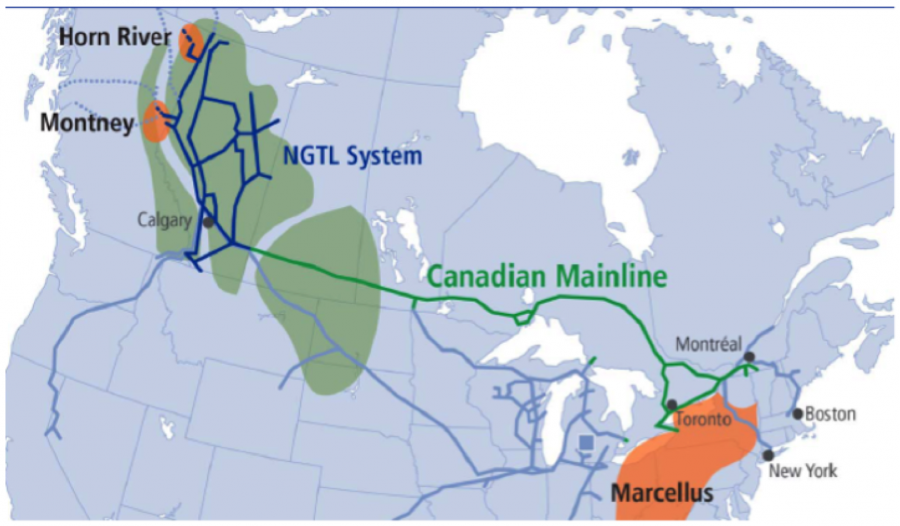
 In June 2014, MDN told you about the Dominion New Market Project–a project that will build two new compressor plants and upgrade one other compressor station in upstate New York–to help flow more abundant, cheap and clean-burning Marcellus Shale gas from Pennsylvania (and beyond) into the northeast (see Dominion Asks FERC for New Compressors in Upstate NY, WV). The project is projected to cost $159 million and provide 112,000 dekatherms per day (Dth/d) of extra natural gas capacity along ~200 miles of existing Dominion pipeline across upstate New York. The existing Dominion pipeline runs through the Horseheads, Ithaca, Syracuse and Albany areas. The Federal Energy Regulatory Commission (FERC) approved Dominion’s New Market Project in October 2015 (see FERC Approves Expansion of Dominion Pipeline in Upstate NY). And then a real miracle happened. The corrupt New York Dept. of Environmental Conservation (DEC) approved the New Market compressor stations on Dec. 23, 2016 (see Miracle! NY DEC Approves Dominion’s New Compressor Stations). Needless to say, anti-fossil fuel freaks are freaked out that the project is now a reality. The lone compressor station that will get an upgrade (not being built from scratch) is located near Ithaca, NY, home of some of the nuttiest of the nutjobs. On Monday night, Dominion personnel donned their armor and held a public meeting to answer questions by a crowd that was, by all accounts, hostile… Read More “Dominion Faces Hostile Crowd in Ithaca re New Market Project”
 Westinghouse Electric tried “an ambitious new approach to building nuclear power plants” by building sections of the plants in one location before sending them to the construction site for assembly. They tried the process with two nuke plants–one in Georgia and the other in South Carolina. The process they “innovated” failed and took the company down–into bankruptcy. What does that have to do with the Mariner East 2 (ME2) Pipeline project? Westinghouse Electric is headquartered just outside of Pittsburgh and owns a fair amount of land. Mariner East 2 intends to cross a portion of that land. Sunoco Logistics Partners, builder of ME2, attempted to negotiate a payment for an easement to cross Westinghouse’s land–but Westinghouse wanted more than ME2 offered. So ME2 filed paperwork to use eminent domain and “condemn” the Westinghouse property. In other words, let a judge decide how much is fair. Westinghouse joined the chorus that “ME2 isn’t really a public utility”–sounding no different than the Sierra Club and others who oppose the project. That strategy went nowhere, so Westinghouse eventually came back to the bargaining table and this time, worked out a deal–to sell some of their land to ME2. Now Westinghouse is asking the bankruptcy judge in charge of their case to approve the land sale, ahead of the judge’s decision on other matters to do with the bankruptcy. Here’s an account of the high stakes of “chicken” between Westinghouse and ME2…
 As construction of the Mariner East 2 NGL (natural gas liquids) pipeline project heats up, thousands of Pennsylvanians are going back to work. Sunoco Logistics Partners (now called Energy Transfer Partners) said it would take some 8,000 workers to build the twin pipelines called Mariner East 2–from eastern Ohio through the state of Pennsylvania to the Marcus Hook refinery near Philadelphia. When Sunoco LP signed a deal to hire union workers for the pipeline, the deal stipulates half of the hires are local–from within PA. Sunoco has lived up to its word, as evidenced by the testimony of the Operating Engineer’s Union (Harrisburg) who has already seen 50 of its members hired to work on the project. What about the other half, the “foreigners” who come from other states? They’re brought in because of required specialized skills. But even the out-of-staters are welcomed–they’re adding big bucks to the local economy…
  Looks like Middletown Township, in Delaware County, PA (Philadelphia suburb), has finally faced reality that the Mariner East 2 Pipeline is coming through town. To be fair, town council came to that conclusion last September when they voted to grant easements to Sunoco Logistics Partners to build Mariner East 2 across four parcels of public land (see
 Fire departments, schools, parks and townships are some of the 44 Pennsylvania organizations in 11 counties that will receive $326,800 in funding *this spring* from Williams–through its bi-annual community grant program. Grants up to $10,000 per organization are being awarded by Williams in communities where the proposed Atlantic Sunrise pipeline project will be constructed and operated. This is the fifth round of grants for areas that will host or be affected by the Atlantic Sunrise Pipeline. All together (including this latest round of $326,800), Williams has now given away $1.79 million to communities on behalf of Atlantic Sunrise. Now that’s something worth celebrating! Is your organization eligible? Grant applications are available at
 Dominion CEO Diane Leopold held a conference call last Thursday to provide an update on progress for the company’s $5 billion, 594-mile Atlantic Coast Pipeline–a natural gas pipeline that will stretch from West Virginia through Virginia and into North Carolina. Leopold said on the call that Dominion has procured 85% of the land, materials, and services it needs to build the pipeline. Nearly all of the land surveying is now done (98%)–and the company now has signed agreements with 60% of the landowners along the proposed route. Leopold expects the Federal Energy Regulatory Commission (FERC) will grant a final approval for the project this fall. In other words, it’s full speed ahead for the Atlantic Coast Pipeline, irregardless of opposition from anti-fossil fuel fanatics, a relative few who continue to vociferously oppose the project…
 Talk about a waste of taxpayer time and money. The so-called leaders of Newtown Township in Bucks County (Philadelphia orbit) took time out to compose, debate, and pass a resolution opposing the PennEast Pipeline. Even though the pipeline isn’t coming anywhere near Newtown Township. What the vote reveals is that Newtown is led by far-left anti-fossil fuelers with nothing better to do than get on their soapbox and prance around discussing issues that don’t affect the residents of the town. Typical leftist politicians that believe they know better than you what’s best for you–even if it doesn’t even affect you…
 In January, MDN highlighted a developing issue in Ohio that potentially impacts Utica/Marcellus shale in the region (see
  As of today, the nameplate on the door that says “Sunoco Logistics Partners” is getting changed to “Energy Transfer Partners” (ETP). On paper (and for investors) Sunoco LP & ETP have been different companies, but functionally both companies have co-existed under the Energy Transfer Equity (ETE) umbrella for years–essentially as different divisions of the same company. Sunoco LP is (currently) best known for its Mariner East pipeline projects–along with the Marcus Hook refinery/terminal. ETP is (currently) best known for the recently completed Dakota Access Pipeline. Sunoco LP’s headquarters will move from Newtown Square, PA to combine with ETP’s HQ in Dallas, TX. For investors, Sunoco LP will stop trading at close of business today and become part of the ETP ticker symbol as of Monday. Shareholders for both companies approved the paper merger on Wednesday…
 The New Jersey Department of Environmental Protection (NJDEP) has temporarily rejected PennEast Pipeline’s Freshwater Wetlands Individual Permit and Water Quality Certificate application, submitted April 6. NJDEP said in their response that PennEast has not provided enough detail about the project–leaving out key pieces of information for two-thirds of the pipeline’s 37-mile trek through NJ. NJDEP says they want the application refiled within 30 days, and if PennEast doesn’t give them what they want within 60 days, the DEP will consider the application “withdrawn.” The news from NJ comes on the heels of the U.S. Army Corps of Engineers also telling PennEast they need more information too. Radicalized antis are rejoicing and their mouthpieces in mainstream media are painting this as a grim development for PennEast–perhaps the death rattle has begun. PennEast, on the other hand, is treating the news as a minor bump in the road–the application has just a “few outstanding items” that PennEast needs to track down and provide to the DEP, and then all will be just fine. We suppose the next 30-60 days will tell the tale…
 On Feb. 3, the Federal Energy Regulatory Commission (FERC) gave its final approval to Energy Transfer’s Rover Pipeline project–a $3.7 billion, 711-mile Marcellus/Utica natural gas pipeline that will run from PA, WV and eastern OH through OH into Michigan and eventually into Canada (see