 New York Gov. Andrew Cuomo’s action to stop progress on the Constitution Pipeline has very real, tangible negative effects on jobs in Upstate New York. This is the true story of two large regional employers in New York’s Southern Tier that would benefit from cheap, abundant, and clean-burning Marcellus Shale gas from northeastern Pennsylvania. Wait. You believed the anti’s lie that all of the gas traveling through the Constitution would be transported to other areas, with much of it exported, and would not in any way benefit local residents? Yeah, that’s a lie. Another 100% lie pedaled by irrational fossil fuel haters. As the Constitution crosses places like Broome, Chenango and Delaware counties in the Southern Tier of New York State (i.e. “Upstate”), the pipeline will be tapped in several locations by Leatherstocking Gas Co.–a small but important local utility company. Leatherstocking will then provide gas to area communities and to two large businesses. One of those businesses is the Amphenol Aerospace plant in Sidney, NY. Amphenol is the largest employer in Delaware County with some 1,100 employees. Amphenol needs cheap Marcellus Shale gas from the Constitution to stay competitive and to keep the plant open. The second business is located in the small Chenango County village of Greene–Raymond Corporation. You know those bright red-colored forklifts you see in warehouses and factories? They’re all built at Raymond, which ships them worldwide. The facility is now owned by Toyota. Raymond also needs natural gas from the Constitution Pipeline. With over
 800 1,600 employees at Raymond, it is the third largest employer in Chenango County. Does Gov. Cuomo really want to play Russian roulette with nearly 2,000 upstate jobs? Here’s the sad story of a corrupt governor bowing to political pressure and screwing his own constituents in Upstate…
Read More “Constitution Pipe Denial May Destroy 2K Existing Upstate NY Jobs”


 Can a single petrochemical facility, like Shell’s proposed ethane cracker plant in Beaver County, “rebirth” all of Pennsylvania’s moribund manufacturing base? That would be a resounding “Yes!” according to Marcellus Shale Coalition president Dave Spigelmyer and Pennsylvania Manufacturers’ Association president Dave Taylor. Writing a column in the Harrisburg Patriot-News, the two Daves make the case for just how big a hairy deal the coming Shell cracker in PA really is…
 There was lots of cracker talk at the first Northeast U.S. & Canada Petrochemical Construction Conference & Exhibition in Pittsburgh yesterday. According to NGI’s ace reporter for Shale Daily, Jamison Cocklin, excitement over the Shell cracker announcement from a few weeks ago was “palpable” at yesterday’s event. There was plenty of talk about the Shell cracker–but the talk coming from the event that interests MDN is talk about both the PTT Global Chemical cracker planned for Ohio, AND the Braskem cracker planned for West Virginia. These other two world class cracker plants (similar in size and scope to Shell’s project) “remain on track.” Now that is news!…
 The good vibes are still reverberating following Shell’s announcement that they will move forward with building a $3+ billion ethane cracker in Monaca, PA (see

 Gentlemen, start your engines! Your economic engines, that is. The news earlier this week that Shell has made the commitment to move ahead and build an ethane cracker plant in Monaca, PA has, as we knew it would, set the region buzzing (see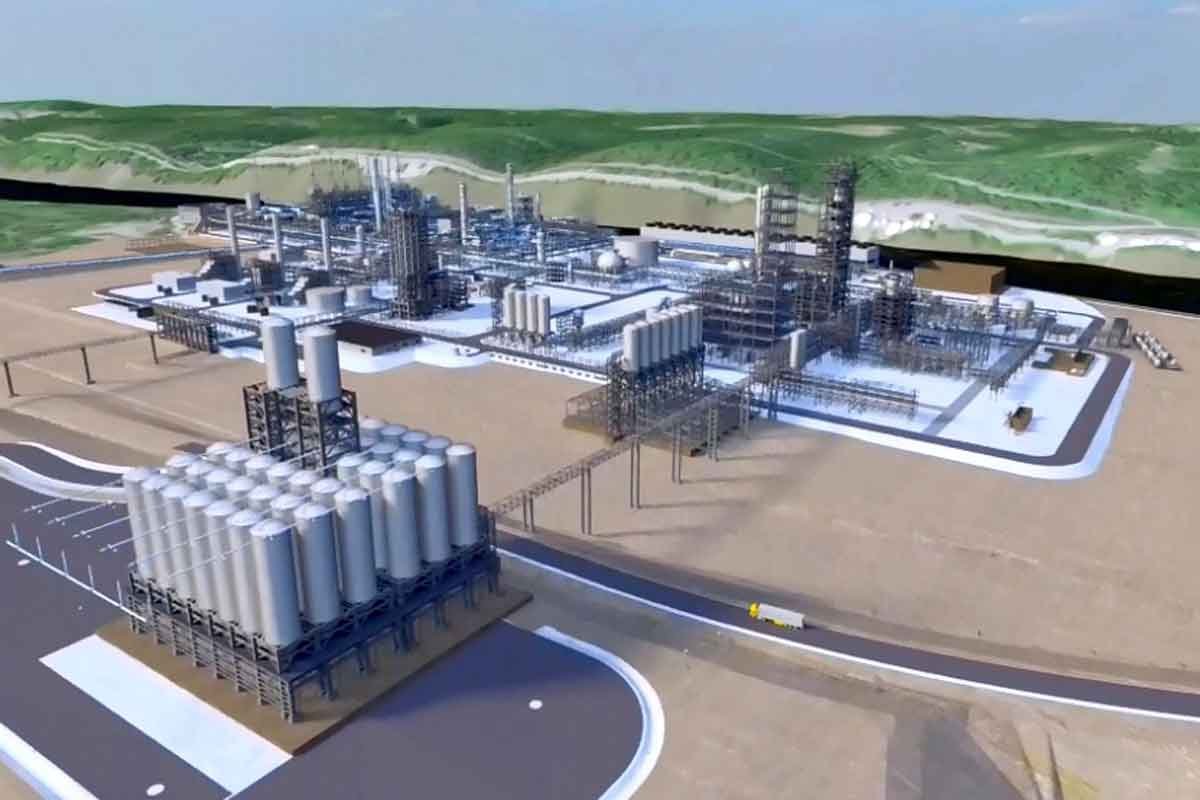
 Forget about a cracker plant in West Virginia. Well, not really–just put it on the back burner for the moment. A researcher from West Virginia University says what the Mountain State and indeed all of Appalachia really needs is ethane storage. Specifically, an ethane storage hub. According to Brian Anderson, director of West Virginia University’s Energy Institute, without ethane storage (and pipelines) the Marcellus/Utica region risks seeing its abundant ethane leave the area, mostly heading to the Gulf Coast. Why is that bad? Because if we can keep ethane in the area, we will attract manufacturers to the region who want to use the results of that ethane–ethylene, the raw material in plastics. Our region can realize a bonanza in manufacturing jobs and investments–if we can store and use the ethane here, at home…
 In the past 12 months, some 27% of all E&Ps (exploration and production companies, what we call “drillers”) have defaulted on some of their bonds–the debt they owe. That’s huge. According to Fitch Ratings, before we turn the corner, they expect that number to grow to 30-35% of E&Ps. Defaulting on bonds doesn’t necessarily mean a company has filed for bankruptcy, but a plethora of bankruptcies have, according to Fitch, driven the bond default number way up. Here’s the latest on bond defaults and the sentiment that “it’s going to get worse before it gets better” from Fitch…
 New research from the once-great Duke University actually supports shale drilling for a change–instead of denigrating it. In the past researchers from Duke, using money from the odious Park Foundation, have been bought off in their research efforts. This latest research, which concentrates on the benefits to local governments from shale drilling, wasn’t funded by Park and appears to be objective for a change. Two Duke U researchers conducted a three-year research project (between 2013-2015) funded by the Alfred P. Sloan Foundation. They traveled far and wide, to 16 states and interviewed over 200 local government officials along with gathering data and facts. The conclusion: on balance oil and gas drilling benefit local communities…
 Everybody knows, anecdotally, that the shale revolution has been great for U.S. manufacturers. Empty plants have roared back to life and new plants have been built, bringing back millions of jobs, due to the huge quantities of natural gas being extracted from shale in the U.S. Now we have a research study to prove what we already knew anecdotally. Yesterday the National Association of Manufacturers (NAM) released a new research report from IHS titled “Energizing Manufacturing: Natural Gas and Economic Growth” (full copy below). The research finds that shale gas has put an extra $1,337 back in the pockets of the average hard-working American family. Wow! Shale gas has also contributed to the creation of 1.9 million jobs throughout the economy. Double wow! Just building natural gas transmission lines has meant more than 347,000 jobs with 60,000 of those jobs in manufacturing. Here’s the best part: All of it is without a government program or taxpayer expense. Read on for more good news about how the shale revolution and the miracle of fracking has benefited every single American…
 New York Gov. Andrew Cuomo’s action to stop progress on the Constitution Pipeline has very real, tangible negative effects on jobs in Upstate New York. This is the true story of two large regional employers in New York’s Southern Tier that would benefit from cheap, abundant, and clean-burning Marcellus Shale gas from northeastern Pennsylvania. Wait. You believed the anti’s lie that all of the gas traveling through the Constitution would be transported to other areas, with much of it exported, and would not in any way benefit local residents? Yeah, that’s a lie. Another 100% lie pedaled by irrational fossil fuel haters. As the Constitution crosses places like Broome, Chenango and Delaware counties in the Southern Tier of New York State (i.e. “Upstate”), the pipeline will be tapped in several locations by Leatherstocking Gas Co.–a small but important local utility company. Leatherstocking will then provide gas to area communities and to two large businesses. One of those businesses is the Amphenol Aerospace plant in Sidney, NY. Amphenol is the largest employer in Delaware County with some 1,100 employees. Amphenol needs cheap Marcellus Shale gas from the Constitution to stay competitive and to keep the plant open. The second business is located in the small Chenango County village of Greene–Raymond Corporation. You know those bright red-colored forklifts you see in warehouses and factories? They’re all built at Raymond, which ships them worldwide. The facility is now owned by Toyota. Raymond also needs natural gas from the Constitution Pipeline. With over
