WV Makes Serious Attempt to Attract AI Data Centers Using NatGas
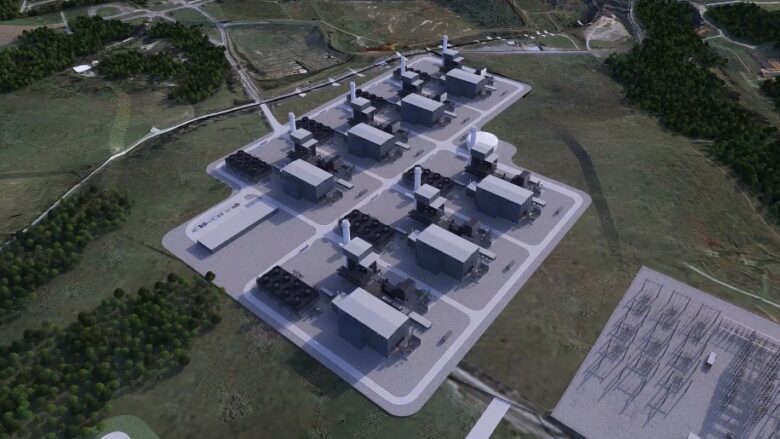
 Pennsylvania and Ohio should be looking over their shoulders regarding new data centers and their decisions on where to locate them. West Virginia is making serious efforts to be THE destination for new AI data centers to locate in the Marcellus/Utica region. The West Virginia Office of Energy’s recent summit highlighted the state’s unique position to power the booming AI and data center sectors through its vast natural gas reserves. Like PA and OH, WV’s homegrown natural gas offers a reliable, cost-effective, and flexible solution for necessary baseload power. What’s beginning to set WV apart from its neighbors is legislation that explicitly targets data centers. Read More “WV Makes Serious Attempt to Attract AI Data Centers Using NatGas”

 Today is data center day here at MDN, given that most of our main stories today revolve around the issue of data centers, facilities full of computers that need enormous amounts of electricity, most of which will be generated by gas-fired power plants. This past summer, Pennsylvania’s newest U.S. Senator, Dave McCormick, convened the Pennsylvania Energy and Innovation Summit in Pittsburgh. Together with the Trump administration, McCormick announced a mind-blowing $92 billion of promised new investment for PA mostly related to AI data centers (see
  Continuing on our data center theme, a new article by MDN friend Gordon Tomb, a senior fellow with the Commonwealth Foundation, makes the case that Pennsylvania needs more energy and sensible regulation to lure data centers. There is a stark contrast to what PA legislators are offering. On the Republican side, legislators are offering a bill that would expedite permits for data center projects that meet or exceed federal standards (see
  We have to (immodestly) say that we spotted the environmental left’s opposition to AI data centers a mile away. We were the first to alert you to PA green groups lining up to oppose data centers based on an irrational hatred of the fossil energy that powers them (see
  More “noise” that will discourage data center development in Pennsylvania: PJM Interconnection’s market monitor, Monitoring Analytics, filed a complaint with the Federal Energy Regulatory Commission (FERC) urging that large data centers be barred from connecting to the grid unless they can be reliably served. The monitor argues that PJM’s consideration of allowing loads that might necessitate periodic blackouts violates its reliability obligations and is unjust. While Monitoring Analytics is independent of PJM, they are usually on the same “side.” Not this time.
  Two weeks ago, Pennsylvania finally passed a budget, four months late. As part of the deal struck between Democrats and Republicans, the Regional Greenhouse Gas Initiative (RGGI) carbon tax scheme was permanently ash-canned (see
  U.S. Secretary of Energy Chris Wright issued an emergency order on November 25 directing PJM Interconnection and Constellation Energy to keep Units 3 and 4 at Pennsylvania’s Eddystone Generating Station (near Philadelphia, in Delaware County) operational through the winter. Effective from November 26, 2025, to February 24, 2026, the mandate aims to ensure grid reliability following PJM’s record winter demand in January 2025. This directive follows two previous orders that kept the aging, dual-fuel units online to support energy security during summer heatwaves. The DOE asserts that despite planned retirements, these 380-MW units remain essential for stabilizing the regional power supply. Big Green is unhappy.
  In June 2023, Dominion Energy announced plans to build four small “peaker” electric generating plants in Chesterfield County near Richmond (see
  In July, MDN told you that Talen Energy, a leading energy producer in the U.S., which owns and operates approximately 10.7 gigawatts (GW) of power infrastructure, had announced the acquisition of two gas-fired power plants: one located near Wilkes-Barre in northeastern Pennsylvania, and the other in Guernsey County, in eastern Ohio (see
  Earlier this month, the Pennsylvania Public Utility Commission (PUC) approved a Tentative Order by a 3-2 vote, proposing a statewide model tariff (tax) to manage the growing impact of large-load customers, such as AI data centers, on the electric grid (see
 I see ghosts! Or is that dead people? The U.S. electricity grid faces pressure from surging demand, primarily from data centers, sparking debates over reliability and cost allocation. EPSA (Electric Power Supply Association) CEO Todd Snitchler warns that “ghost projects”—projects announced and planned/funded but never built—are artificially inflating load forecasts. He argues that regulated utilities use these overstated numbers to justify expensive rate-based generation, benefiting shareholders while forcing customers to bear the costs of potential overbuilding. Competitive energy markets are demanding accurate, data-driven planning to maintain affordability and reliability without wasting capital on unnecessary infrastructure. Please, no more ghosts.