
Constellation Closes on Buying Calpine, Now U.S.’s Largest Power Co.
 Constellation Energy Corporation has finalized its acquisition of Calpine Corporation from Energy Capital Partners, becoming the largest electricity producer in the United States, with a generating capacity of 55 gigawatts. This merger integrates Constellation’s zero-emission nuclear fleet with Calpine’s natural gas and geothermal assets. Prior to the merger, Calpine owned 79 energy facilities across the country, generating some 27 gigawatts (GW) of electricity, with a significant number located in the eastern U.S. Many of Calpine’s facilities use natural gas to produce electricity. Read More “Constellation Closes on Buying Calpine, Now U.S.’s Largest Power Co.”
 Duke Energy breathlessly announced the launch of the DeBary Hydrogen Production Storage System, claiming to be the first U.S. project to demonstrate an end-to-end process for producing, storing, and combusting 100% green hydrogen. Located in Volusia County, Florida (near Daytona Beach), the facility uses solar energy to power electrolyzers that extract hydrogen from water. This stored hydrogen then fuels a turbine modified to burn hydrogen to meet peak electricity demand. Duke thinks that it can overcome the unreliable nature of solar power by using solar when the sun is shining to split water into oxygen and hydrogen, and storing the explosive hydrogen for later use. Below, we bring you the big claims by Duke Energy—in their own words—and then tell you why we consider their claims lacking.
  In November, Pennsylvania finally passed a budget—four months late. As part of the deal struck between Democrats and Republicans, the Regional Greenhouse Gas Initiative (RGGI) carbon tax scheme was permanently ash-canned (see
  Natural gas markets have experienced plenty of changes over the past few years. Some of those changes include rising associated gas production in the Permian, new pipeline and storage capacity, new LNG demand, and gyrations in prices. However, an RBN Energy blog article argues that all this was merely a prelude. RBN says the “main event” — a veritable transformation of gas markets, especially along the Gulf Coast — is about to begin. Buckle up! What’s coming? A doubling of LNG demand (to 32 Bcf/d!). Another 10 Bcf/d of new pipelines out of West Texas, plus at least 15 Bcf/d more along the coast. Production revivals in various shale plays. And don’t forget soaring demand for gas-fired power generation.
  In August 2024, Quantum Capital Group entered into an agreement to acquire Cogentrix Energy, an independent power producer, from another investment firm (Carlyle) for $3 billion (see
  Mixed signals are coming from Virginia’s regulatory agencies regarding a gas-fired project in Chesterfield. In June 2023, Dominion Energy announced plans to build four small “peaker” electric generating plants in Chesterfield County near Richmond (see
  In April, Knighthead Capital Management, Homer City Redevelopment (HCR), and Kiewit Power Constructors Co. announced a plan to convert the former Homer City Generating Station, previously the largest coal-fired power plant in Pennsylvania (Indiana County, 50 miles east of Pittsburgh) into a more than 3,200-acre natural gas-powered data center campus, designed to meet the growing demand for artificial intelligence (AI) and high-performance computing (see
  In August 2014, the Marshall County, WV board of commissioners voted to approve a plan to build a Marcellus Shale-powered electric plant in the county (see
  In April, Knighthead Capital Management, Homer City Redevelopment (HCR), and Kiewit Power Constructors Co. announced a plan to convert the former Homer City Generating Station, previously the largest coal-fired power plant in Pennsylvania (Indiana County, 50 miles east of Pittsburgh) into a more than 3,200-acre natural gas-powered data center campus, designed to meet the growing demand for artificial intelligence (AI) and high-performance computing (see
  In June 2023, Dominion Energy announced plans to build four small “peaker” electric generating plants in Chesterfield County near Richmond (see
 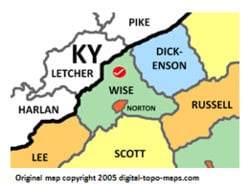 Great news about another new gas-fired power plant coming to Virginia—a plant that will use Marcellus/Utica molecules. Red Post Energy Group and Wise Innovation Hub Venture (OASIS) have signed a Letter of Intent to develop power infrastructure for a major technology and data center hub in Wise County, Virginia, in the southwestern corner of the state. Known as the Maverick Project, this phased initiative aims for a total capacity of 600 megawatts, beginning with an initial 100-megawatt phase.
 In February 2024, members of the South Carolina Public Service Commission approved a proposed project to build a 1,020-megawatt (MW) gas-fired power plant in the state’s Lowcountry, in Colleton County (see