
Nearly 75% of Planned On-Site Power at U.S. Data Centers is Natgas
 A Cleanview report reveals that nearly 75% of planned on-site power for U.S. data centers is natural gas-fired as operators bypass traditional grid connections. Driven by surging AI demands and grid delays of up to seven years, this trend involves 46 projects totaling 56 gigawatts. While developers publicly highlight renewables, immediate capacity remains dominated by gas due to its reliability. Development is concentrated in gas-rich regions like Texas and Pennsylvania. To overcome equipment shortages, some firms use creative solutions, such as repurposed jet engines. This shift underscores natural gas’s vital role in supporting the rapid expansion of American AI infrastructure. Read More “Nearly 75% of Planned On-Site Power at U.S. Data Centers is Natgas”
 The Pennsylvania Department of Environmental Protection (DEP) is seeking public comment on an Individual Stormwater Permit for a 5.8-mile natural gas pipeline in Indiana County. Serving the proposed Homer City Generation LP 4.5 GW power plant and data center, the 30-inch pipeline will traverse Black Lick, Burrell, and Center Townships, involving several stream and wetland crossings. Interested parties have 30 days to submit comments to the DEP’s Northwest Regional Office. While no public hearing is currently scheduled, one may be requested. Additional project details and permit applications are available for review through the DEP’s regional office and website.
  The Tennessee Valley Authority (TVA), the country’s sixth-largest power supplier and the largest public utility company, is initiating its largest-ever capital program, planning 6.2 GW of new generation (most of it natural gas-fired) to address surging demand from population growth and data centers, which are expected to double their energy usage by 2030. To replace retiring coal assets, TVA is currently building two 1.5-GW natural gas plants—one at Cumberland and one at Kingston. Most (if not all) of the natural gas that will feed these new plants, as well as not-yet-announced projects, will come from the Marcellus/Utica.
  On Wednesday, the Pennsylvania Senate approved Senate Bill (SB) 704, known as the Grid Stabilization and Security Act, sponsored by Republican State Senator Gene Yaw. This legislation directs the Department of Community and Economic Development (DCED) and the Department of Environmental Protection (DEP) to collaborate to identify suitable sites for natural gas-powered electricity generation. By streamlining site preparation, the bill aims to address critical shortfalls in electricity generation on the PJM grid and attract new investment in baseload power, which has stagnated since 2019.
  Pennsylvania Governor Josh Shapiro (far-left Democrat) has a plan to address rising electricity costs by “increasing oversight” of investor-owned utilities, which he claims generate “excessive profits” at the expense of Pennsylvania ratepayers. That’s code for take them over and have the government (liberal Dems) run them. Last time we checked, we still live in the USA, land of the free and home of the brave. We don’t live in the USSR.
  Despite claims by anti-fossil fuelers that the Tenaska Westmoreland Generating Station in southwestern PA would spread disease and death if built, it’s been up and running since 2018, producing power and generating revenue for both its builders and the community. Oh, and everyone is in good health. However, the plant has been operating under a state permit since it opened. It needs a federal Title V permit for long-term operation. The state Department of Environmental Protection (DEP) is the agency that issues such a permit and is proposing to do so, which (of course) has antis’ knickers in a twist. In particular, antis complained that no public complaint sessions were scheduled. They got their wish yesterday.
 Last July, President Trump and PA U.S. Senator Dave McCormick attended a meeting in Pittsburgh to announce an amazing $92 billion of private (no taxpayer funding) investment in the Keystone State, mainly in the data center sector (see
  In December, MDN reported that pipeline giant Williams, through its new subsidiary, Will-Power, plans to build a third gas-fired power plant to power a Meta (Facebook) data center complex in Bowling Green, OH (see

 Oilfield services giant Baker Hughes (BKR), a company with its fingers in many different energy pies (not just OFS) and operations in over 120 countries worldwide, issued its fourth-quarter 2025 update last week. We scoured the update, the conference call, and the latest slide deck. The company did not explicitly mention the Marcellus or Utica shale regions. However, several items from the update directly impact the outlook for the M-U region.
  In an op-ed appearing in the Jamestown Post-Journal, New York State Senator George Borrello argues that New York’s energy crisis, marked by potential blackouts and high costs, stems from the politically motivated closure of facilities like the Dunkirk NRG plant. Initially promised a natural gas conversion, the plant was shuttered, forcing the state to import power and damaging the local economy. Borrello contends that while nuclear energy is a viable long-term goal, the state must immediately embrace natural gas to restore energy independence. He urges Governor Hochul to bypass radical interests and reopen the Dunkirk plant to provide reliable, affordable power and vital tax relief for Chautauqua County.
 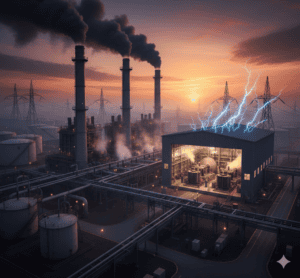 New England’s Democrat-led energy policies have failed spectacularly, leaving the region as an “energy island” during peak winter demand. Despite ambitious “net-zero” goals, a recent snowstorm forced the power grid to rely on oil for 40% of its electricity because renewables like wind and solar contributed less than 2%. New England policymakers like Govs. Maura Healey of Massachusetts and Janet Mills of Maine have created artificial scarcity and price spikes by blocking natural gas pipeline expansions. They insist on unreliable renewables. When a storm like Winter Storm Fern hits, it forces New England to rely on carbon-intensive oil and increases the risk of blackouts. You can’t fix stupid.