
JP Morgan Helps “Behind the Meter” Gas-Fired Power Co. Raise $5B
 J.P. Morgan recently facilitated a $5 billion financing package for VoltaGrid, a U.S. energy company specializing in advanced natural gas and behind-the-meter microgrid solutions (think small gas-fired power generators). This funding, comprising $2 billion in senior secured notes and a $3 billion asset-based loan, supports VoltaGrid’s goal to deploy 4 gigawatts of power by 2028. These decentralized energy systems address surging electricity demands from AI and data centers by providing resilient, on-site generation that reduces grid strain. And yes, there is a connection to the Marcellus/Utica region. Read More “JP Morgan Helps “Behind the Meter” Gas-Fired Power Co. Raise $5B”
 President Donald Trump unveiled the first projects under a $550 billion trade deal with Japan yesterday, including a $36 billion investment in U.S. energy and minerals. In exchange for a 15% reduction in tariffs on imports, Tokyo will fund initiatives in Texas, Ohio, and Georgia to revitalize the industrial base. The centerpiece is a record-breaking $33 billion natural gas power plant in Piketon (Pike County), Ohio, operated by SoftBank’s SB Energy. This 9.2-gigawatt facility—the largest in U.S. history—is designed to create thousands of jobs and support the surging energy needs of data centers and artificial intelligence applications. It will produce enough electricity to power every single home in Ohio! It’s massive.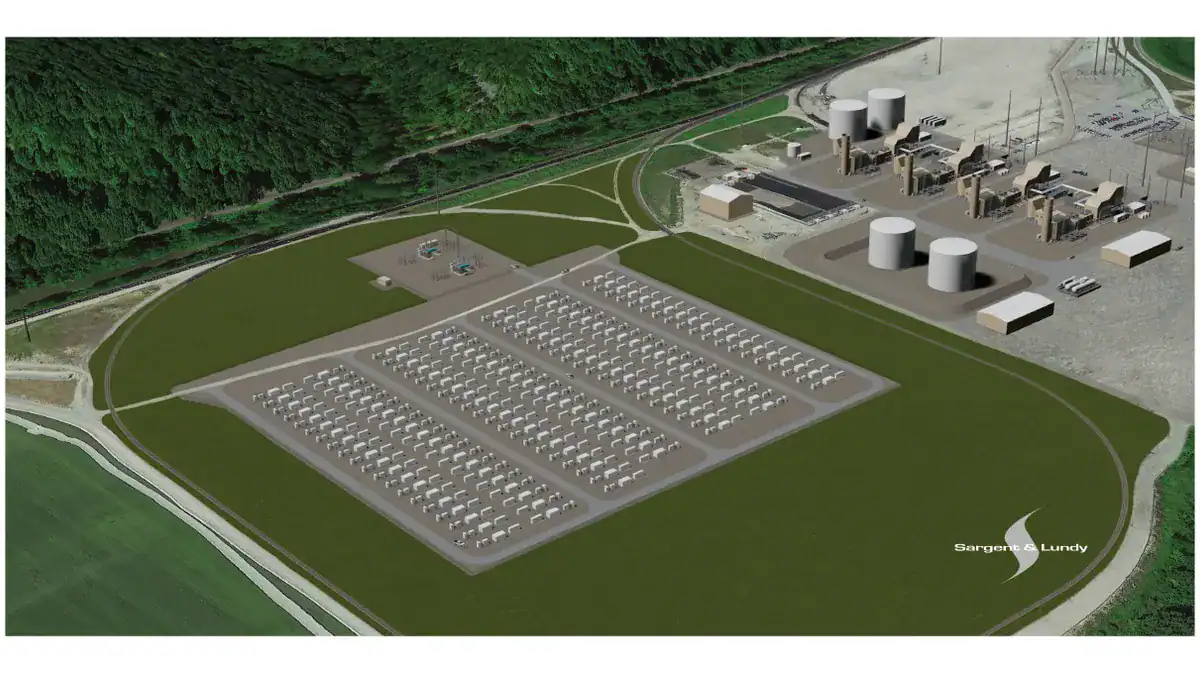
 This is disappointing. The United Mine Workers of America (UMWA) held a press conference yesterday in Charleston, WV, to oppose new natural gas power plants in West Virginia, citing concerns over coal job losses and community instability. UMW International President Brian Sanson criticized proposed projects by Mon Power and FirstEnergy, arguing that these gas-fired facilities threaten thousands of mining careers while providing only “temporary” construction jobs and minimal permanent staffing. He is urging state and federal lawmakers to enact codified legal protections for the coal industry.
  Pipeline giant Williams issued its fourth quarter and full-year 2025 update last week. The company forecasts 2026 profits exceeding analysts’ expectations, driven by surging natural gas demand from AI data centers and crypto mining. Williams is aggressively expanding its footprint, with 7.1 Bcf/d of pipeline projects currently underway and new gas-fired power plants such as the $1.3 billion “Socrates the Younger” project. The company plans to invest up to $6.7 billion in 2026 capital spending to capitalize on the sustained, long-term need for gas infrastructure and power growth.
  In June 2023, Dominion Energy announced plans to build four small “peaker” electric generating plants in Chesterfield County near Richmond (see
  Last week, MDN told you that Maryland State Senator Kevin Harris (Democrat) had recently introduced legislation allowing Big Utilities, such as Exelon, to build and operate power-generation infrastructure using ratepayer funds. We also presented the counterargument to re-regulating what is now a deregulated power market in Maryland (see
  President Donald Trump and EPA Administrator Lee Zeldin announced the “largest deregulatory action in American history” yesterday by officially revoking the Obama EPA’s 2009 “endangerment finding.” This move eliminates the legal mandate for the federal government to regulate greenhouse gases like carbon dioxide. The administration claims the rollback will save taxpayers over $1.3 trillion and reduce vehicle prices by approximately $2,400 by stripping away emission standards for cars and trucks. More importantly, it takes away the left’s ability to block coal- and natural gas-fired power plants. While Trump hailed the decision as a victory for consumer choice and the economy, anti-fossil fuel fanatics vowed to challenge the repeal in court.
  PJM Interconnection, the electrical grid operator that covers Pennsylvania (along with all or parts of 12 other states and the District of Columbia), has once again caved to the political demands of PA Gov. Josh Shapiro to artificially cap prices in its upcoming capacity auctions for the next two years. PJM caved for the July 2025 auction (see
  Anti-fossil fuelers are raising concerns (and stoking fear with county residents) about a potential Duke Energy natural gas power plant in Davidson County, NC, after the project appeared in the company’s long-range planning documents. We first told you about this project three weeks ago (see
  Virginia Senate Bill 253, introduced by State Senator Louise Lucas (D-Portsmouth), aims to shift energy infrastructure costs from residents to data centers, potentially saving households a whopping $65 annually. The legislation requires data centers—which account for 20% of Dominion Energy’s sales—to fund their own electrical substations and cover specific “capacity costs.” If the bill becomes law and the proposals in it receive approval from the State Corporation Commission (SCC), the typical monthly energy bill for data centers would rise by about 16%, while the typical bill for residential and other customers would decrease by 3% to 3.5%. Looks like Virginia, with more data centers than any other state in the union, is now closed for data center business. Too bad.
  Duke Energy, headquartered in Charlotte, N.C., is one of the largest U.S. energy holding companies, serving 8.7 million electric customers and 1.8 million gas customers across six states as of early 2026. While the company dabbles in unreliable renewables like solar and wind, its bread-and-butter, go-to source for new electric power generation is natural gas, which it gets from the Marcellus/Utica. We’ve reported on many of Duke’s announced new gas-fired power plant projects (