
WV Senate Passes Bill for Gas-Powered Data Centers and Microgrids
 The West Virginia Senate approved House Bill (HB) 4983 on Wednesday, establishing the certification process for new data centers and the gas-fired microgrids intended to power them. This is a key piece of the “gas-to-data-center” story we’ve been following. The final version includes new language requiring developers to study water usage, addressing local concerns while still providing a regulatory pathway for the “behind-the-meter” generation projects that are currently the primary bridge solution for the AI industry. Read More “WV Senate Passes Bill for Gas-Powered Data Centers and Microgrids”
 Even a leftist liberal putz like Pennsylvania Governor Josh Shapiro can have a good idea every now and again. (Credit where credit is due.) Shapiro is introducing what he calls GRID (Governor’s Responsible Infrastructure Development) standards to incentivize Pennsylvania data center developers to voluntarily adopt higher environmental and transparency benchmarks. In exchange for committing to water conservation, local hiring, and independent power generation, projects can access “Fast Track” permitting to accelerate construction.
 A study by the Allegheny Conference on Community Development indicates that a proposed 500 to 700-megawatt hyperscale data center at the Zediker site in Washington County, PA, could generate $407 million for the local economy and create 2,364 jobs. Owned by CNX Resources Corp., the former coal mine is being marketed for generative AI facilities, leveraging nearby natural gas supplies and remediated mine gas to power the operation. While no official deal has been struck, the project is expected to yield $67.5 million in tax revenue, positioning the site as a transformative hub for high-tech investment and regional prosperity.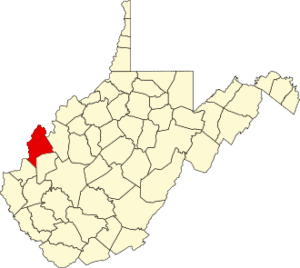
 Two radical environmental groups, the Southern Environmental Law Center and Sierra Club, have sued Georgia regulators over the approval of four clean-burning natural gas turbines at Georgia Power’s Plant Bowen. The radicals claim that the expansion at Bowen (in Taylorsville, Bartow County, Georgia) will release hundreds of tons of smog-forming volatile organic compounds (VOCs) and nitrogen oxides (NOx) annually, thereby worsening air quality in the Atlanta region (Taylorsville is about 40 miles from Atlanta as the crow flies). The lawsuit claims the Georgia Environmental Protection Division bypassed stricter permitting requirements intended for areas with high ozone levels. Typical lawfare tactic.
  Quantum Pleasants has successfully completed a year-long validation of its Omnis Quantum Reformer (OQR) technology at the Pleasants Power Station in West Virginia. This breakthrough ultra-high-temperature pyrolysis technology produces hydrogen on-site at half the cost of existing methods by utilizing the state’s coal and natural gas resources. Independent evaluations confirmed the system’s safety and economic viability, paving the way for the 1,300 MW facility to become the world’s first large power plant to operate on 100% hydrogen fuel. Right here in the heart of the Marcellus/Utica!
  PJM Interconnection recently proposed reforms to its retail BTM (behind-the-meter) generation rules to support data center colocation. The filing, responding to a FERC mandate, introduces a 50-MW threshold for BTM facilities and three new transmission service categories. Under the plan, new loads exceeding 50 MW would be ineligible for “netting,” a process that currently lowers grid charges by balancing on-site generation against consumption. While existing contracts are grandfathered, industrial trade groups warn that removing netting rules threatens the economic viability of combined heat and power facilities, potentially discouraging manufacturing investments while aiming to address regional grid reliability and grid cost-shifting concerns.
  The far-left Southern Environmental Law Center, representing three radical nonprofits, has appealed the Virginia State Corporation Commission’s (SCC) approval of Dominion Energy’s $1.47 billion natural gas plant in Chesterfield County. The challenge is the first under both the Virginia Environmental Justice Act and the Virginia Clean Economy Act. Antis argue the 1,000-megawatt facility would disproportionately “harm” marginalized communities through increased pollution and significant health risks, including premature deaths. Critics maintain that Dominion failed to prioritize renewable alternatives or demonstrate a genuine threat to grid reliability, potentially placing unnecessary financial and health burdens on the public.
  This seems kind of….odd. We’ve been tracking and reporting on what will be the country’s (and possibly the world’s) largest gas-fired power plant, coming to Portsmouth (Scioto County), Ohio. Last week, President Trump unveiled the first projects under a $550 billion trade deal with Japan, including a $36 billion investment in U.S. energy and minerals (see
  Last Tuesday, President Trump unveiled the first projects under a $550 billion trade deal with Japan, including a $36 billion investment in U.S. energy and minerals (see
  In January 2026, New England experienced record-high natural gas prices triggered by an intense cold snap. On January 27, wholesale electricity costs reached $441.8/MWh, a significant jump from the previous January’s average of $135.08/MWh. The problem is not enough natural gas pipelines. But that’s not what the dunderheads who run the blue states of New England believe. They think natgas is the problem and that more unreliable renewables are the solution. You can’t fix stupid, but you can vote it out of office.
  It’s not often MDN gets to report on something happening in our own (relative) back yard. This is a treat! Construction has begun on an eight-megawatt natural gas fuel cell system at the Huron Campus in Endicott, NY, to support future redevelopment. Developed by Bloom Energy and managed by Phoenix Investors, the facility will supplement existing power from the local utility substation to meet the energy needs of upcoming tenants. The project is located on a site recently cleared of former IBM buildings and is expected to be operational by April or May. This infrastructure investment aligns with ongoing efforts to attract new business to the campus, ensuring reliable utility capacity for the modernized industrial space. Natural gas to the rescue!
  President Donald Trump’s proposal for a $33 billion, 9.2-gigawatt gas power plant in Ohio—funded by Japanese investment, including SoftBank—aims to address soaring energy demands from data centers (see
  Despite political rhetoric scapegoating data centers for rising electricity costs, EIA data reveals that electricity price hikes began long before the data center industry’s expansion. States with high concentrations of data centers, such as Virginia and Texas, maintain residential electric rates below the national average, while Vermont has the fewest facilities but significantly higher costs. An excellent article appearing on RealClearEnergy identifies systemic issues—including aging infrastructure and regulatory inertia—as the true drivers of rising bills. Rather than blaming data centers, the article argues for modernizing the grid and aggressively increasing energy production to meet growing demand. Technology can actually create a more efficient, lower-cost electrical system.